Bulgaria Weather: Mixed Easter Forecast With Sun, Rain, and Gradually Rising Temperatures
Holiday weather conditions are expected to remain mixed across Bulgaria, with alternating periods of sunshine and rain showers, according to the forecast
HOT: » Which party would you vote for (if you could) in the upcoming snap vote in Bulgaria on April 19?
 Send to Kindle
Bulgaria’s National Assembly has officially closed the Anti-Corruption Commission (ACC), ending its short-lived existence and leaving questions about the future of anti-corruption efforts in the country. The decision was passed on Wednesday by the still-acting ruling majority, composed of GERB, DPS-New Beginning, BSP, and TISP, without any debate from the ruling parties in the plenary hall. The most vocal during the discussions were members of “We Continue the Change–Democratic Bulgaria” (WCC-DB), who remained divided: WCC pushed for reforming the commission, while DB proposed its closure, which ultimately did not gain majority support. The nationalist party Revival criticized both the ruling coalition and WCC -DB for cooperating with GERB and DPS in the Denkov cabinet.
The Anti-Corruption Commission in its current form was created in late 2023 after WCC-DB, GERB, and DPS split the former Commission for Combating Corruption and Illegally Acquired Property (CCAC) into two separate bodies, amid suspicions that it had been used for political purposes. The ACC’s actions against opposition mayors in summer 2025 fueled public dissatisfaction, with the commission signaling to its European Parliament group that the ruling majority itself was leveraging it to target political rivals. The closure was initially demanded by DPS leader Delyan Peevski, with GERB later submitting a bill to abolish the body in mid-January, which the parliamentary majority supported.
The closure of the ACC has significant political implications. It removes an institution perceived as vulnerable to undue influence from figures such as Peevski and GERB leader Boyko Borissov. Borissov has frequently criticized the commission’s actions, particularly the extended detention of Varna Mayor Blagomir Kotsev from WCC-DB, and previously signed a call for the resignation of ACC acting chairman Anton Slavchev, even though GERB had supported leaving him in the post a year earlier.
Under the new legislation, the ACC’s investigative powers will be transferred to the General Directorate for Combating Organized Crime (GDBOP) within the Ministry of Interior, currently headed by Daniel Mitov of GERB. Tasks related to detecting conflicts of interest and preventing corruption will now fall under the Court of Auditors, which already underwent a politically influenced leadership change in 2023, with Dimitar Glavchev from GERB replacing Tsvetan Tsvetkov - a move later deemed unconstitutional.
Initially, the ruling majority proposed that the ACC hand over archived operational cases to the State Agency for National Security (SANS) and destroy the remaining databases. Following opposition objections, this plan was partially revised: no data will be destroyed, but the information will remain with SANS rather than being transferred to GDBOP. SANS itself is currently led by a temporary chairman, Denyo Denev, appointed by GERB and DPS against the preference of former President Rumen Radev. This highlights the ruling party’s continued influence over intelligence and law enforcement structures.
The closure of the ACC may also have financial consequences. Bulgaria’s Recovery and Resilience Plan (RRP) included the establishment of an independent anti-corruption body as a condition for EU funding. So far, failures to fully implement reforms have cost the country 367 million euros, and experts warn that abolishing the ACC without proper evaluation could lead to further financial losses. Bilyana Gyaurova-Wegertseder from the Bulgarian Institute for Legal Initiatives noted that, under RRP rules, annulled or partially fulfilled measures may require repayment of funds. Former prosecutor Andrey Yankulov criticized the lack of analysis or assessment of the commission’s work before its closure, emphasizing the absence of public oversight.
During parliamentary discussions, only Petar Petrov from Revival presented statistics on the ACC’s work. He noted that most signals of conflict of interest resulted in no violation findings, with no prosecutorial refusals challenged in 2025. In 2024, the commission spent 1.9 million leva on cases it lost in court, dropping to 1.2 million leva in 2025.
The amendments to the Law on the Court of Accounts, which formalized the closure of the ACC, transferred remaining functions to existing institutions. The Court of Auditors will now handle conflict-of-interest checks and manage declarations of public officials’ property, while GDBOP will investigate corruption cases. The specialized directorates of the ACC: “Corruption Prevention,” “Public Register,” and “Conflict of Interest” - will see their staff reassigned to the Court of Auditors or GDBOP, depending on available positions. Unfinished administrative and pre-trial proceedings are to be completed by the Court of Auditors and the competent investigative authorities.
Critics from the opposition warn that the closure reflects a fear of an independent judiciary by GERB and DPS. Lena Borislavova of WCC described the move as a politically motivated attempt to undermine accountability, asserting that the rapid closure prevents meaningful reform. She also highlighted potential repercussions under the Recovery Plan, as Bulgaria may be forced to return funds allocated for reforms that began but remained incomplete. GERB’s Georgi Krastev countered that the bill was drafted with input from the ACC itself, while BSP’s Natalia Kiselova stressed that the broader issue remains the country’s ability to effectively fight corruption, prevent conflicts of interest, and ensure accountability.
With the ACC’s closure, Bulgaria now relies on existing institutions to carry out anti-corruption work, raising concerns over transparency, independence, and the country’s compliance with European standards.

Holiday weather conditions are expected to remain mixed across Bulgaria, with alternating periods of sunshine and rain showers, according to the forecast

Up to 90 percent of construction and renovation workers in Bulgaria are operating outside the legal framework, according to entrepreneur Lozan Lozanov, who raised concerns about the lack of regulation in construction and installation services
The Ministry of Finance has released a broad public dataset covering more than 7,000 public procurement contracts with a combined value exceeding 30 billion euros

The Easter holiday getaway has officially begun in Bulgaria, with traffic leaving Sofia surging as thousands of people set off for the long weekend

A 53-year-old man with a criminal record has been detained in Bulgaria during a targeted police operation against vote buying, carried out in the village of Brestnitsa in the Lovech region

Bulgaria is bracing for an increase in disinformation activity in the run-up to the parliamentary elections on April 19, with authorities warning of coordinated attempts to influence voters and destabilize public trust
Bulgaria is bracing for an increase in disinformation activity in the run-up to the parliamentary elections on April 19, with authorities warning of coordinated attempts to influence voters and destabilize public trust

The Prosecutorial College of the Supreme Judicial Council has declined to remove Borislav Sarafov from his position as Acting Prosecutor General, despite calls from the Justice Ministry to act following a recent Constitutional Court ruling

The government has decided to withdraw all three Bulgarian nominations for the position of European Prosecutor, effectively restarting the procedure after identifying serious flaws in the initial selection process
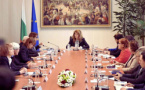
President Iliana Yotova convened a meeting of institutions responsible for the conduct of the early parliamentary elections on April 19, with a focus on assessing preparedness and ensuring that every vote is properly safeguarded

Bulgaria’s caretaker Foreign Minister Nadezhda Neynsky said the announcement of a two-week ceasefire between the United States and Iran brought a sense of relief after weeks of escalating tensions in the Middle East

Acting Prime Minister Andrey Gyurov reported that law enforcement has detained 223 people so far in connection with alleged vote-buying schemes, framing the issue as a central challenge to the legitimacy of Bulgaria’s democratic process

Aniventure Comic Con Returns to Bulgaria with Star Guest Christopher Judge!

Global Fuel Shock: Oil Jumps Over 40% Since Iran War Began