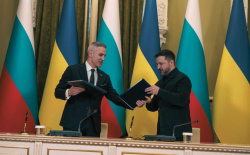
€7.3 Billion on the Table: Is Bulgarian Business Ready for Europe’s Defense Boom?
Europe is undergoing a fundamental shift in how it approaches defense, moving beyond increased spending toward the creation of an entirely new industrial ecosystem
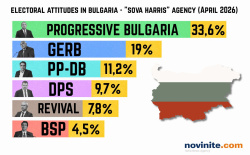
HOT: » Which party would you vote for (if you could) in the upcoming snap vote in Bulgaria on April 19?
 Send to Kindle
 @facebook.com/antispekula
Just one week after the launch of the Antispekula.bg platform and its mobile app, citizens across Bulgaria have begun actively submitting reports of suspected price manipulation, with dozens of signals arriving each day. The majority of these have come from Sofia, followed by Varna and Blagoevgrad.
A large portion of the complaints involve misleading promotions and price hikes. Several major retail chains have been singled out for falsely advertising discounts - like a case where cucumbers priced at 1.99 leva were later promoted as reduced from 2.99 leva, despite no real change in cost. Another example involved a mop set originally sold at 69.99 leva, later promoted with a fake markdown from 109.99 leva to 82.49 leva. Pharmacies are also part of the pattern, with one cited for pricing a probiotic product at 21.02 leva, claiming it was reduced from 24.73 leva - only for that higher price to become the new promotion baseline days later.
Another recurring issue flagged by users is the discrepancy between shelf prices and those charged at checkout. Many consumers report that the final prices paid at the register are higher than those listed on product displays.
A growing concern is also tied to the ongoing euro adoption process. Some businesses are accused of displaying prices in euros more prominently than in leva or using small print to indicate the currency. According to whistleblowers working in retail, this practice has resulted in widespread confusion, with customers mistaking euro figures for lower leva prices.
Over the past week, the platform has logged a steady increase in price complaints across essential categories such as food - particularly coffee, chocolate, dairy, sausages, and chicken. Food remains the top concern, but users have also submitted alerts about clothing, bank charges, pharmaceuticals, and household items.
In the pharmaceutical sector, multiple reports allege sharp price hikes. One striking case from Blagoevgrad highlights a hypertension medication that jumped from 4.59 leva to 9.80 leva in the span of just one month. The platform has also recorded issues with dual pricing and conversion irregularities, especially involving a popular clothing chain whose euro prices significantly exceed their leva equivalents.
Frustration is also mounting around banking fees. Following an investigation by Antispekula, it was found that one major financial institution had raised its service tariffs by an average of 53% since June 17. Other banks have also come under scrutiny, with some clients reporting that the fee for opening an account rose from 10 leva to 19.56 leva (or 10 euros).
The citizen-driven platform, initiated with the backing of the Izprav se.BG civic movement, is calling for concrete legislative reforms. Its backers argue that only a legal framework targeting speculative pricing practices can curb these abuses. Antispekula has already introduced a draft “Anti-Speculation” bill aimed at controlling the prices of food, medicines, bank services, fuels, and mobile operators.
The team behind the platform says it will continue to publish weekly updates and forward well-documented reports to the appropriate regulatory bodies. Dozens of cases have already been submitted for official review. In the meantime, consumers are encouraged to stay vigilant and report any suspected pricing violations directly through the platform’s website: https://antispekula.bg/signali

Europe is undergoing a fundamental shift in how it approaches defense, moving beyond increased spending toward the creation of an entirely new industrial ecosystem

A leading global research center on democratic systems has issued a stark warning about political trends in several countries, concluding in its latest annual report that Bulgaria is now among those showing clear signs of democratic backsliding

Industrial output in Bulgaria posted a modest monthly increase in February 2026, but continued to decline sharply on an annual basis, according to preliminary, seasonally adjusted data from the National Statistical Institute.
The president of the Confederation of Bulgarian Trade Unions, Plamen Dimitrov, has warned that inflation in Bulgaria is likely to exceed earlier projections, even if fuel prices begin to decline

The introduction of the euro in Bulgaria has so far produced only a limited and largely one-off effect on consumer prices, according to an analysis by the European Central Bank

Orthodox Easter Monday is the day following Easter Sunday and is observed across Bulgaria as part of the wider Easter celebration within the Orthodox Christian tradition
Orthodox Easter Monday is the day following Easter Sunday and is observed across Bulgaria as part of the wider Easter celebration within the Orthodox Christian tradition

Easter is the most important religious holiday in the Orthodox Christian calendar and is widely celebrated across Bulgaria. It marks the resurrection of Jesus Christ and follows the completion of Holy Week, which includes Good Friday and Holy Saturday

Holy Saturday, known in Bulgaria as Lazarus Saturday’s continuation of the Easter cycle, is a quiet but deeply symbolic day in the Orthodox Christian calendar

Health authorities in Bulgaria report a total of 101 confirmed measles cases across the country, according to data from the Ministry of Health

Good Friday, known in Bulgaria as Razpeti petak, is one of the most solemn and deeply observed days in the Orthodox Christian calendar

The Bulgarian scientific research vessel “Sts. Cyril and Methodius” (NIC 421) has returned to Varna, docking at the Marine Station and marking the official end of the country’s 34th Antarctic expedition

Aniventure Comic Con Returns to Bulgaria with Star Guest Christopher Judge!
Global Fuel Shock: Oil Jumps Over 40% Since Iran War Began