Is Russian Oil Flowing to Bulgaria in 2026?
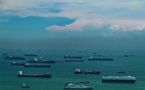
Bulgaria's only oil refinery, Lukoil Neftochim Burgas, processed Russian crude for most of its post-Soviet history. Since March 2024, that has been banned by law
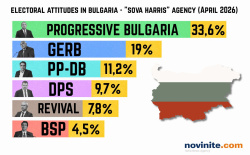
HOT: » Which party would you vote for (if you could) in the upcoming snap vote in Bulgaria on April 19?
 Send to Kindle
A recent survey by the Bulgarian Industrial Capital Association shows that many Bulgarian companies anticipate a decline in production due to the new tariffs on imports announced by U.S. President Donald Trump. Although half of the 620 surveyed firms believe the tariffs will not directly affect their operations, a significant number foresee challenges ahead.
About one-third of respondents expect a negative impact from the 20% tariffs, while 10% anticipate difficulties stemming from the 25% tariffs targeting cars, auto parts, steel, aluminium, and related products. The companies surveyed represent various sectors of the Bulgarian economy.
Roughly 150 businesses reported being affected due to their involvement in supply chains linked to the Netherlands, Germany, and Austria. These supply routes include Bulgarian-made textile goods, auto components, and equipment such as stationary lifting machines. These goods are typically exported onward from the EU to the United States.
In terms of direct exposure, around 120 Bulgarian companies export products such as cosmetics, hydraulic cylinders, and knitwear to the U.S. directly. Of all respondents, 180 employers predicted a decline in output due to the tariffs. Half of these expect a production drop of no more than 5%, while the other half fear that reductions could reach as much as 30%.

Bulgaria's only oil refinery, Lukoil Neftochim Burgas, processed Russian crude for most of its post-Soviet history. Since March 2024, that has been banned by law

Energy expert Martin Vladimirov from the Center for the Study of Democracy has warned that fuel prices in Bulgaria have not yet reached their peak, adding that the country is gradually converging with average EU levels.

Former Defense Minister Prof. Todor Tagarev has commented on Bulgaria’s military aviation situation, noting concerns about the condition of the country’s current fighter fleet and the pace at which new aircraft are being integrated.

Healthcare costs in Bulgaria are rising at a significantly faster pace than overall inflation, with price growth in the sector in 2026 roughly twice the national average compared to 2025

Around half a million Bulgarians chose to spend Easter inside the country, while roughly 120,000 traveled abroad

Bulgargaz has submitted a proposal to the Energy and Water Regulatory Commission (EWRC) suggesting a natural gas price of €35.98 per megawatt hour (MWh) for May

Acting Energy Minister Traycho Traykov said Bulgaria should not tap into its 90-day fuel reserves to ease prices, stressing that they must remain a safeguard in case of an actual supply disruption
Bulgaria has secured a six-month extension of the Lukoil waiver, following a decision by the US Treasury Department’s Office of Foreign Assets Control (OFAC)

The Bulgarian National Bank (BNB) has decided to increase the countercyclical capital buffer to 2.25%, in a move aimed at easing pressure on the rapidly growing housing credit market and strengthening the resilience of the banking system.

Energy expert Boyan Rashev has warned that Europe could be moving toward what he described as an “energy lockdown” scenario if fuel supply pressures continue to worsen
Fuel prices in Bulgaria have continued to edge upward, with diesel and gasoline both registering increases in the days following the Easter holiday

Bulgaria’s tourism sector has never been stronger and has been achieving steady growth for the past few years.

Aniventure Comic Con Returns to Bulgaria with Star Guest Christopher Judge!
Global Fuel Shock: Oil Jumps Over 40% Since Iran War Began