Easter Monday in Bulgaria: Tradition and Family Visits
Orthodox Easter Monday is the day following Easter Sunday and is observed across Bulgaria as part of the wider Easter celebration within the Orthodox Christian tradition
HOT: » Which party would you vote for (if you could) in the upcoming snap vote in Bulgaria on April 19?
 Send to Kindle
On December 20, Christians in Bulgaria honor Ignazhden, also known as the day of St. Ignatius the God-Bearer. St. Ignatius is remembered as the second bishop of the Church of Antioch, following its founder, the Apostle Peter. He is part of the generation of Apostolic Men and a disciple of St. John the Theologian.
The title "God-Bearer" is attributed to a tradition recounted by St. Symeon Metaphrastus in the 10th century, which identifies St. Ignatius as the child embraced by Jesus Christ when the apostles debated their ranks. Known for his dedication, St. Ignatius governed the Church of Antioch during Emperor Domitian's persecution (81-96 AD) and ultimately died a martyr in Rome.
In Eastern Bulgaria, Ignazhden marks the first Christmas dinner, observed with entirely lenten dishes. This day, associated with the winter solstice, is also seen as the start of the New Year. It is often referred to as New Year, New Day, New Month, Polaz, or Polazovden. A central tradition of the holiday is the "polazvane" custom, where the first visitor to the house predicts the family’s fortune in the coming year.
Many beliefs are tied to this day. If the weather on Ignazhden is clear, April may bring drought; if it rains, fertility is expected. Snow on Ignazhden and Christmas is considered favorable. Cloudy weather on this day predicts good harvests and abundant honey. Additionally, the weather during the 12 days from December 20 to 31 is said to correspond to the weather for the 12 months of the upcoming year, with December 20 specifically indicating January’s conditions.
Traditionally, nothing should be taken from the house on this day—especially items like fire, embers, or salt—so that blessings remain. Lending is also avoided to ensure abundance. Folk beliefs describe the period from Ignazhden to Epiphany as the "Dirty Days," marking the transition from the old year to the new.
The holiday carries additional Christian significance, as it is believed to mark the onset of the Virgin Mary's labor pains. For this reason, barren women are advised not to work, as it is believed to ease childbirth.
The festive table often includes walnuts, which are called for each family member. Breaking the walnuts reveals insights into each person’s fortune for the coming year.
Name days are celebrated by individuals named Ignat, Ignatka, Iskra, Plamen, Ognyan, Svetla, and their derivatives. The name Ignatius, of Latin origin, translates to "fire," "flame," or "fiery," reflecting the spiritual warmth associated with the holiday. Ignazhden also marks the start of the Christmas festivities and is often called New Day or Young Year, symbolizing renewal and new beginnings.
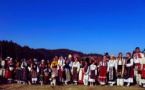
Orthodox Easter Monday is the day following Easter Sunday and is observed across Bulgaria as part of the wider Easter celebration within the Orthodox Christian tradition

Industrial output in Bulgaria posted a modest monthly increase in February 2026, but continued to decline sharply on an annual basis, according to preliminary, seasonally adjusted data from the National Statistical Institute.
The president of the Confederation of Bulgarian Trade Unions, Plamen Dimitrov, has warned that inflation in Bulgaria is likely to exceed earlier projections, even if fuel prices begin to decline

The introduction of the euro in Bulgaria has so far produced only a limited and largely one-off effect on consumer prices, according to an analysis by the European Central Bank
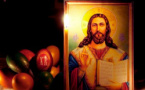
Easter is the most important religious holiday in the Orthodox Christian calendar and is widely celebrated across Bulgaria. It marks the resurrection of Jesus Christ and follows the completion of Holy Week, which includes Good Friday and Holy Saturday

The Central Election Commission (CEC) in Bulgaria has confirmed that a total of 6,575,151 citizens are eligible to vote in the upcoming elections on April 19
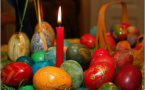
Holy Saturday, known in Bulgaria as Lazarus Saturday’s continuation of the Easter cycle, is a quiet but deeply symbolic day in the Orthodox Christian calendar
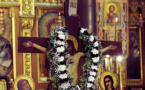
Good Friday, known in Bulgaria as Razpeti petak, is one of the most solemn and deeply observed days in the Orthodox Christian calendar
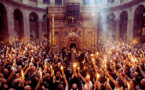
The Bulgarian Orthodox Church has decided that no official delegation will travel to Jerusalem this year to receive the Holy Fire, citing the ongoing tensions in the Middle East

Plovdiv will host the International Street Arts Festival 6Fest from April 20 to 26, 2026, turning the city into an open-air stage featuring performers from 11 countries across three continents
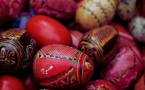
Holy Thursday marks one of the most significant days in Holy Week, as Christians reflect on the final moments before the crucifixion of Jesus Christ
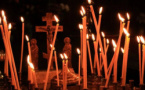
Holy Week has begun, marking the final days of the earthly life of Jesus Christ, the Bulgarian Orthodox Church announced, outlining the sequence of services that will be held across the country

Aniventure Comic Con Returns to Bulgaria with Star Guest Christopher Judge!
Global Fuel Shock: Oil Jumps Over 40% Since Iran War Began