Easter Monday in Bulgaria: Tradition and Family Visits
Orthodox Easter Monday is the day following Easter Sunday and is observed across Bulgaria as part of the wider Easter celebration within the Orthodox Christian tradition
HOT: » Which party would you vote for (if you could) in the upcoming snap vote in Bulgaria on April 19?
 Send to Kindle
 Simon from Pixabay
In 2023, Bulgaria maintained one of the lowest government debt-to-GDP ratios in the EU at 22.9%, as overall government deficits in the euro area and EU slightly increased. Government deficits rose to 3.6% of GDP in the euro area and 3.5% in the EU, while government debt levels fell across the region.
In 2023, the government deficit to GDP ratio increased slightly in both the euro area and the European Union (EU), according to Eurostat, the statistical office of the European Union. In the euro area, the ratio rose from 3.5% in 2022 to 3.6%, while in the EU it increased from 3.2% to 3.5%. However, government debt to GDP ratios saw a decline, with the euro area ratio falling from 89.5% at the end of 2022 to 87.4% at the end of 2023, and the EU ratio dropping from 82.5% to 80.8%.
This data, based on national reports from EU Member States in their second notification of 2024 for the excessive deficit procedure (EDP), covers the period from 2020 to 2023 and adheres to the ESA 2010 system of national accounts.
In 2023, most EU countries recorded deficits, except for Denmark (+3.3%), Cyprus (+2.0%), Ireland (+1.5%), and Portugal (+1.2%). The largest deficits were found in Italy (-7.2%), Hungary (-6.7%), and Romania (-6.5%), with ten Member States exceeding the 3% of GDP deficit threshold.
Government debt ratios varied widely across the EU at the end of 2023. The lowest ratios were in Estonia (20.2%), Bulgaria (22.9%), and Luxembourg (25.5%), while the highest were recorded in Greece (163.9%), Italy (134.8%), and France (109.9%). In total, 13 Member States had debt ratios exceeding 60% of GDP.
Government expenditure in the euro area for 2023 stood at 49.5% of GDP, with revenue at 45.9%, while in the EU, these figures were 49.0% and 45.5%, respectively. Both revenue and expenditure ratios decreased compared to 2022.
Eurostat has expressed concerns about the quality of Estonia's 2023 data due to issues with the timing of military expenditure reporting, which affects the deficit by approximately 0.4% of GDP. This is being discussed with Estonian authorities for future corrections.
At the end of the second quarter of 2024, the general government gross debt to GDP ratio in the euro area (EA20) stood at 88.1%, compared with 87.8% at the end of the first quarter of 2024. In the EU, the ratio also increased from 81.3% to 81.5%.
Compared with the second quarter of 2023, the government debt to GDP ratio decreased in both the euro area (from 88.8% to 88.1%) and the EU (from 81.9% to 81.5%).
At the end of the second quarter of 2024, the general government debt was made up of 84.0% debt securities in the euro area and 83.6% in the EU, 13.4% loans in the euro area and 13.9% in the EU and 2.5% currency and deposits both in the euro area and in the EU.
Due to the involvement of EU Member States' governments in lending to certain Member States, quarterly data on intergovernmental lending (IGL) are also published. The IGL as percentage of GDP at the end of the second quarter of 2024 stood at 1.5% in the euro area and at 1.3% in the EU.
The highest ratios of government debt to GDP at the end of the second quarter of 2024 were recorded in Greece (163.6%), Italy (137.0%), France (112.2%), Belgium (108.0%), Spain (105.3%), and Portugal (100.6%), and the lowest were recorded in Bulgaria (22.1%), Estonia (23.8%) and Luxembourg (26.8%).

Compared with the first quarter of 2024, nine Member States registered an increase in their debt to GDP ratio at the end of the second quarter of 2024, seventeen a decrease, and the ratio remained stable in Denmark. The largest increases in the ratio were observed in Finland (+2.0 percentage points – pp), Austria and Italy (both +1.8 pp), France (+1.6 pp), Portugal (+1.2 pp), Poland (+0.9 pp) and Sweden (+0.6 pp). The largest decreases were recorded in Cyprus (-2.1 pp), Croatia (-2.0 pp), Greece (-1.8 pp), Lithuania (-1.7 pp), Spain (-0.9 pp), Czechia (-0.8 pp), the Netherlands and Germany (-0.7 pp), and Romania (-0.6 pp).


Orthodox Easter Monday is the day following Easter Sunday and is observed across Bulgaria as part of the wider Easter celebration within the Orthodox Christian tradition

Industrial output in Bulgaria posted a modest monthly increase in February 2026, but continued to decline sharply on an annual basis, according to preliminary, seasonally adjusted data from the National Statistical Institute.
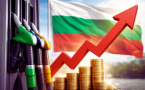
The president of the Confederation of Bulgarian Trade Unions, Plamen Dimitrov, has warned that inflation in Bulgaria is likely to exceed earlier projections, even if fuel prices begin to decline

The introduction of the euro in Bulgaria has so far produced only a limited and largely one-off effect on consumer prices, according to an analysis by the European Central Bank

Easter is the most important religious holiday in the Orthodox Christian calendar and is widely celebrated across Bulgaria. It marks the resurrection of Jesus Christ and follows the completion of Holy Week, which includes Good Friday and Holy Saturday

Holy Saturday, known in Bulgaria as Lazarus Saturday’s continuation of the Easter cycle, is a quiet but deeply symbolic day in the Orthodox Christian calendar

A group of Members of the European Parliament has raised concerns over the potential leakage of confidential EU information to Russia, urging stronger safeguards within the European Parliament

The European Public Prosecutor’s Office (EPPO) has carried out a series of coordinated investigative actions across several countries, including Bulgaria and Romania, as part of a probe into suspected large-scale fraud involving EU funds

The caretaker government has approved a decision endorsing the Partnership Agreement between the European Union and its Member States and the Mercosur bloc

US Vice President JD Vance launched a sharp attack on the European Union during a visit to Budapest, accusing Brussels of interfering in Hungary’s election just days before a closely contested vote that could reshape the country’s political landscape
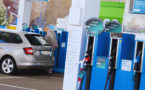
Fuel prices in Germany have recently reached new highs, with diesel briefly exceeding 2.40 euros per litre during the Easter holiday period before easing slightly afterward

A recently revised German military service framework has triggered public debate after it emerged that it places new travel-related obligations on men aged between 17 and 45

Aniventure Comic Con Returns to Bulgaria with Star Guest Christopher Judge!
Global Fuel Shock: Oil Jumps Over 40% Since Iran War Began