Bulgaria Weather: Mixed Easter Forecast With Sun, Rain, and Gradually Rising Temperatures
Holiday weather conditions are expected to remain mixed across Bulgaria, with alternating periods of sunshine and rain showers, according to the forecast
HOT: » Which party would you vote for (if you could) in the upcoming snap vote in Bulgaria on April 19?
 Send to Kindle
President Rumen Radev, after awaiting the official decision designating him as leader of Bulgaria's delegation to the upcoming NATO summit in July, has declined the role. The decision comes in light of disagreements with certain state positions adopted by the Council of Ministers, which formulates the country's foreign policy according to the constitution. While the exact framework positions are undisclosed, it is understood that one contentious issue for Radev involves Bulgaria's stance on aid to Ukraine amidst the ongoing conflict.
The President has been vocal in condemning Russian aggression since the beginning of the war in Ukraine. He has consistently advocated for a collective approach to enhancing security guarantees, bolstering defense capabilities, implementing regional NATO plans, and increasing defense expenditures. However, Radev has expressed reservations about specific commitments Bulgaria is expected to undertake regarding Ukraine within the framework positions adopted by the Council of Ministers.
In response to these concerns, President Rumen Radev has decided not to accept the Council of Ministers' proposal to lead the Bulgarian delegation and participate in the NATO summit in Washington. This decision was communicated through a press release from the presidency's office at "Dondukov" 2.
Political reactions:
Delyan Peevski, co-chairman of the Movement for Rights and Freedoms, criticized Radev, accusing him of prioritizing foreign interests over Bulgarian national interests. Peevski alleged that Radev's actions undermine Bulgaria's Euro-Atlantic commitments and accused him of playing a duplicitous game by avoiding key international meetings like NATO summits.
Ivaylo Mirchev, former "We Continue the Change-Democratic Bulgaria" deputy, supported Radev's decision, claiming it reflects Radev's alignment with Russian interests rather than NATO's. Mirchev criticized Radev for allegedly hindering Bulgaria's efforts to support Ukraine against Russian aggression and accused him of obstructing Bulgaria's military modernization by favoring Russian weaponry.
Mirchev further criticized Radev for what he described as broadcasting Kremlin-backed messages, causing discord within the EU and NATO. He labeled Radev as a pro-Putin politician masquerading under a NATO facade, suggesting Radev's actions undermine Bulgaria's alliances.
Meanwhile, former Minister of Defense Angel Naydenov expressed concern over the political crisis in Bulgaria exacerbated by Radev's refusal. Naydenov highlighted tensions between state institutions, noting President Radev's dissent over the Council of Ministers' framework positions regarding Ukraine.
Naydenov indicated skepticism regarding any imminent changes to Bulgaria's position before the NATO summit, emphasizing the persistent discord between Radev and the government on Ukrainian policy.
Earlier, "Dondukov" 1 reported that the caretaker government had approved Bulgaria's framework positions for the NATO meeting during its recent session. These positions, though undisclosed to the public, were formally presented to the President for his approval. The President retains the authority to endorse these documents before they are presented to other heads of state and government, including the final communique.
The saga over who would represent Bulgaria at the NATO summit has been ongoing for weeks. While the Council of Ministers holds the authority to decide, Foreign Minister and Caretaker PM Dimitar Glavchev attempted to shift the responsibility to parliament. However, lacking consensus, the National Assembly deferred the decision back to the cabinet. Last week, an agreement seemed to have been reached within the Council of Ministers that President Radev would lead the delegation. Initially expected to attend as well, Foreign Minister Glavchev ultimately withdrew from participating as a delegate.
Holiday weather conditions are expected to remain mixed across Bulgaria, with alternating periods of sunshine and rain showers, according to the forecast
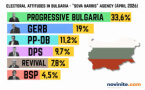
A new survey by the “Sova Harris” agency indicates that six political formations would enter the next Bulgarian National Assembly, based on data collected between April 2 and 6 among 800 respondents through standardized face-to-face interviews

Up to 90 percent of construction and renovation workers in Bulgaria are operating outside the legal framework, according to entrepreneur Lozan Lozanov, who raised concerns about the lack of regulation in construction and installation services
The Ministry of Finance has released a broad public dataset covering more than 7,000 public procurement contracts with a combined value exceeding 30 billion euros

The Easter holiday getaway has officially begun in Bulgaria, with traffic leaving Sofia surging as thousands of people set off for the long weekend
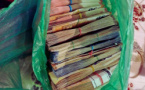
A 53-year-old man with a criminal record has been detained in Bulgaria during a targeted police operation against vote buying, carried out in the village of Brestnitsa in the Lovech region
A new survey by the “Sova Harris” agency indicates that six political formations would enter the next Bulgarian National Assembly, based on data collected between April 2 and 6 among 800 respondents through standardized face-to-face interviews
Bulgaria is bracing for an increase in disinformation activity in the run-up to the parliamentary elections on April 19, with authorities warning of coordinated attempts to influence voters and destabilize public trust
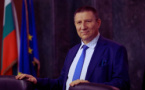
The Prosecutorial College of the Supreme Judicial Council has declined to remove Borislav Sarafov from his position as Acting Prosecutor General, despite calls from the Justice Ministry to act following a recent Constitutional Court ruling

The government has decided to withdraw all three Bulgarian nominations for the position of European Prosecutor, effectively restarting the procedure after identifying serious flaws in the initial selection process
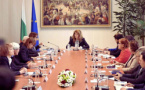
President Iliana Yotova convened a meeting of institutions responsible for the conduct of the early parliamentary elections on April 19, with a focus on assessing preparedness and ensuring that every vote is properly safeguarded
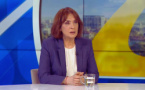
Bulgaria’s caretaker Foreign Minister Nadezhda Neynsky said the announcement of a two-week ceasefire between the United States and Iran brought a sense of relief after weeks of escalating tensions in the Middle East

Aniventure Comic Con Returns to Bulgaria with Star Guest Christopher Judge!
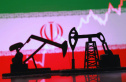
Global Fuel Shock: Oil Jumps Over 40% Since Iran War Began