Sweden Prepares for Worst: Citizens Told to Expect Crisis and Keep Cash
Sweden is stepping up its preparations for potential crises or conflicts by creating stockpiles of essential supplies, including fuel, food, and power generators.
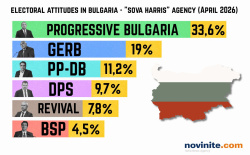
HOT: » Which party would you vote for (if you could) in the upcoming snap vote in Bulgaria on April 19?
 Send to Kindle
 pixabay.com
Thousands of people in Sweden have been implanting microchips in their hands as part of a new biohacking trend in the country that aims to make people's daily lives easier.
Biohax, one of the companies involved in implanting the chips, said it has now carried out more than 4,000 "installs" of the technology since it launched five years ago, allowing people to replace physical key cards, IDs and train tickets.
The chips can be read by any device that supports near field communication (NFC), meaning most modern Android smartphones can recognise them. They do not need recharging as they do not require a battery to function.
Beyond efficiency, the creators of the implantable RFID chips claim they help reduce plastic waste, with figures from the International Card Manufacturers Association estimating that six billion cards produced each year.
"We've accomplished to assist the Swedish national railway system to enable the Biohax install as a replacement for paper tickets and plastic travel cards."
A Swedish-language Facebook page dedicated to subdermal RFID chips has received almost 7,000 likes, with advocates claiming that the technology is on the verge of becoming mainstream.
Zoltan Istvan, a noted transhumanist who was among the first adopters of the technology, told The Independent that the number of uses of the chips continue to evolve, though there are still limitations.
"I had an RFID chip inserted into my hand three years ago and use it to get in and out of my home, which is great because I don't need to carry around house keys anymore," he said.
"Unfortunately, technological progress means my chip is already relatively behind the current technology and it will take a surgical procedure to upgrade it, albeit minor."
One potential solution to this issue, Mr Istvan said, would be to implant a tube beneath a flap of skin, from which chips can easily be inserted and removed.
Source: The Independent
Sweden is stepping up its preparations for potential crises or conflicts by creating stockpiles of essential supplies, including fuel, food, and power generators.

Sweden is reconsidering the possibility of joining the eurozone, with the country’s Moderate Party planning to set up a commission to examine the potential advantages and disadvantages if it remains in power following the parliamentary election in Septemb

Russia currently has the capacity to carry out a limited strike on NATO territory at any time, although whether it will do so depends largely on the stance of Western allies

Ukraine and Sweden have reached an agreement on the potential purchase of up to 150 advanced Saab Gripen-E fighter jets

Sweden has not ruled out the possibility of sending peacekeeping troops to Ukraine in the future

Sweden and Latvia are preparing to seek compensation for the damages caused by the fiber optic cable disruption in the Baltic Sea, as confirmed by the Prime Minister of Latvia

Good Friday, known in Bulgaria as Razpeti petak, is one of the most solemn and deeply observed days in the Orthodox Christian calendar

The Bulgarian scientific research vessel “Sts. Cyril and Methodius” (NIC 421) has returned to Varna, docking at the Marine Station and marking the official end of the country’s 34th Antarctic expedition

Holiday weather conditions are expected to remain mixed across Bulgaria, with alternating periods of sunshine and rain showers, according to the forecast

The Bulgarian Orthodox Church has decided that no official delegation will travel to Jerusalem this year to receive the Holy Fire, citing the ongoing tensions in the Middle East

Plovdiv will host the International Street Arts Festival 6Fest from April 20 to 26, 2026, turning the city into an open-air stage featuring performers from 11 countries across three continents

The Easter holiday getaway has officially begun in Bulgaria, with traffic leaving Sofia surging as thousands of people set off for the long weekend

Aniventure Comic Con Returns to Bulgaria with Star Guest Christopher Judge!

Global Fuel Shock: Oil Jumps Over 40% Since Iran War Began