Borissov Loses Patience: Political Bargaining Over Key Positions and Budget 2025
"Everyone wants positions – in regulatory bodies and ministries," he emphasized.
HOT: » Which party would you vote for (if you could) in the upcoming snap vote in Bulgaria on April 19?
 Send to Kindle
After the Bulgarian Euro-Presidency, the Western Balkan countries feel Bulgaria closer, even in the face of the fact that the big EU countries did not give these societies a very clear perspective. The Bulgarian contribution is felt and the countries of the Western Balkans have assumed the Bulgarian role rather positively. This is reflected in the perceptions of the Bulgarian Prime Minister, who has increased recognition in the Western Balkan countries over the last year, and now enjoys the highest trust among the other leaders of the executive power in the region.
This is the data from a study in the Western Balkans, conducted by companies members of the Gallup International Association of Worlds. The research is part of the Gallup International Regional Research Program. It covers over 6,000 people in Macedonia, Kosovo, Serbia, Albania, Bosnia and Herzegovina and Montenegro. In these countries, nationally representative face-to-face surveys and telephone interviews were conducted on samples of about a thousand people in each country.
In the Western Balkan countries, those who think that Bulgaria is helping Western Balkans's European integration (58% now at 54% last year) prevail against those who think that Bulgaria is not helping (42% now at 46% last year) . During the EU Presidency, Bulgaria focused on the theme of the Western Balkans.
In Albania, 81% share the view that Bulgaria is helping. In most other countries, the share of the consensus moves around 50%, and in Montenegro the share is 58% and increases by 10 points compared to the previous year, by 10 percentage points decreasing the share of the opposite option.
In Macedonia, local Albanian community views are highly positive - 76% estimates that Bulgaria is helping, and a growth of 40 points compared to the previous year. Among the others in the country, however, opinions are polarized and this is due to the fierce and equivalent political battle between the two main parties in the country. In Kosovo, estimates are also more moderate.
Estimates of a positive contribution come against the otherwise vague outlook that Brussels and major European capitals have outlined for the Western Balkans. Because of this ambiguity there is no significant change in the last year in the expectations of Western Balkan societies when they will be adopted in the EU. Optimism among Albanian communities in the Balkans is greatest.
The Bulgarian efforts for the Western Balkans have led to growth in the last year of acquaintance with Boyko Borisov. Its lack of recognition diminishes considerably by 16 points in a year. In 2018, the total positive minus the total negative rating for Borisov results in +22, which is why Borisov is in the most advantageous position towards the region's leaders.
With a relatively high positive ratings, for example, is Turkish President Recep Tayyip Erdogan, but the negative ratings there are high and the difference between positive and negative is +10. In addition, for Erdogan in the last year, negative ratings are growing.
A total of 44% of the population in the Western Balkans, or over 6 million people, consider themselves generally familiar with the topic of the EU-Western Balkans summit in May. Half of them find themselves familiar with the results. The units are sensitive, given that the results of such meetings usually stay away from people's everyday lives.

"Everyone wants positions – in regulatory bodies and ministries," he emphasized.

German Foreign Minister Annalena Baerbock has issued a compelling call for the expedited integration of candidate countries from the Western Balkans into the European Union

In a recent gathering organized by the European Liberal Forum, ALDE, and the Atlantic Club of Bulgaria, outgoing Deputy Premier and Minister of Foreign Affairs, Mariya Gabriel, underscored Sofia's commitment to the European Union membership of Western Bal

A recent EU survey by YouGov and Datapraxis conducted across six member states highlights contrasting opinions on potential expansions

Boyko Borisov chose to cast his vote with a paper ballot in Bankya today.

The European Union has committed to provide 500 million euros to improve the energy infrastructure in the Western Balkans, said the President of the Commission Ursula von der Leyen in North Macedonia
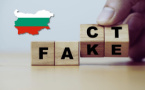
Bulgaria is bracing for an increase in disinformation activity in the run-up to the parliamentary elections on April 19, with authorities warning of coordinated attempts to influence voters and destabilize public trust
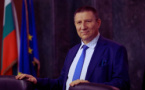
The Prosecutorial College of the Supreme Judicial Council has declined to remove Borislav Sarafov from his position as Acting Prosecutor General, despite calls from the Justice Ministry to act following a recent Constitutional Court ruling
The government has decided to withdraw all three Bulgarian nominations for the position of European Prosecutor, effectively restarting the procedure after identifying serious flaws in the initial selection process
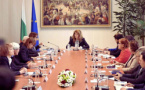
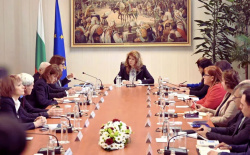
President Iliana Yotova convened a meeting of institutions responsible for the conduct of the early parliamentary elections on April 19, with a focus on assessing preparedness and ensuring that every vote is properly safeguarded
Bulgaria’s caretaker Foreign Minister Nadezhda Neynsky said the announcement of a two-week ceasefire between the United States and Iran brought a sense of relief after weeks of escalating tensions in the Middle East
Acting Prime Minister Andrey Gyurov reported that law enforcement has detained 223 people so far in connection with alleged vote-buying schemes, framing the issue as a central challenge to the legitimacy of Bulgaria’s democratic process

Aniventure Comic Con Returns to Bulgaria with Star Guest Christopher Judge!
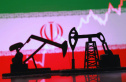
Global Fuel Shock: Oil Jumps Over 40% Since Iran War Began