Easter Monday in Bulgaria: Tradition and Family Visits
Orthodox Easter Monday is the day following Easter Sunday and is observed across Bulgaria as part of the wider Easter celebration within the Orthodox Christian tradition
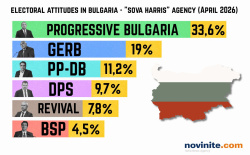
HOT: » Which party would you vote for (if you could) in the upcoming snap vote in Bulgaria on April 19?
 Send to Kindle
 Photo: BGNES
Judiciary, Parliament and the Tax system are the three most corrupt sectors in Bulgaria, shows an analysis of the Global Corruption Barometer of Transparency International for 2016, according to the Bulgarian National Radio.
The study was made among 60,000 citizens from 42 countries in Europe and Central Asia.
One in three people living in Europe and Central Asia thinks corruption is one of the biggest problems facing their country. Nearly a third of citizens across the region believe that their government officials and lawmakers are highly corrupt and a majority of people say their governments are not doing enough to stop corruption.
One in three people particularly in Bulgaria thinks the corruption in the judicial system is a serious problem.
Citizens in France and Portugal are the most likely to think that it is socially acceptable to report a case of corruption (74% and 78% respectively) with around 3/4 or more agreeing. People in countries like Hungary, Croatia, and Bulgaria are far less likely to agree - only around 15% think it is acceptable to report corruption. According to the report of Transparency International, people in these parts of the EU detecting cases of corruption is socially unacceptable behaviour.
People believe that reporting is equivalent to betrayal. Otherwise the main reasons for the lack of activity are the fear of negative consequences and mistrust in the institutions.
Around 22% of interviewed people in Bulgaria indicated that corruption is difficult to prove and 17% responded that 'nothing can be done and changed'.
About 10% of respondents in Bulgaria have no opinion on the subject.
Most EU member states in the survey have very low bribery rates of one in 20 or fewer households paying a bribe in the past 12 months.
On average, one in six households paid a bribe when they accessed public services. Although fewer households paid bribes for public services in many EU member states, rates were significantly higher further east; the highest rates were in Tajikistan (50%), Moldova (42%), Azerbaijan, the Kyrgyz Republic and Ukraine (38%), and Russia (34%). Romania had the highest rate for an EU member state at 29%, followed by Lithuania with 24%. In Bulgaria this percentage is around 20%, with citizens mostly paying bribes about health care and education.
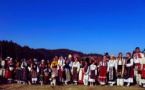
Orthodox Easter Monday is the day following Easter Sunday and is observed across Bulgaria as part of the wider Easter celebration within the Orthodox Christian tradition

Industrial output in Bulgaria posted a modest monthly increase in February 2026, but continued to decline sharply on an annual basis, according to preliminary, seasonally adjusted data from the National Statistical Institute.
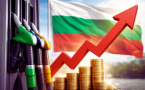
The president of the Confederation of Bulgarian Trade Unions, Plamen Dimitrov, has warned that inflation in Bulgaria is likely to exceed earlier projections, even if fuel prices begin to decline

The introduction of the euro in Bulgaria has so far produced only a limited and largely one-off effect on consumer prices, according to an analysis by the European Central Bank

Easter is the most important religious holiday in the Orthodox Christian calendar and is widely celebrated across Bulgaria. It marks the resurrection of Jesus Christ and follows the completion of Holy Week, which includes Good Friday and Holy Saturday
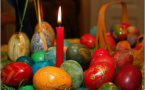
Holy Saturday, known in Bulgaria as Lazarus Saturday’s continuation of the Easter cycle, is a quiet but deeply symbolic day in the Orthodox Christian calendar

GERB leader Boyko Borissov reacted to the fall of the Zhelyazkov government during a live broadcast on his official Facebook page, following the mass protests across the country.

The government is making a second clumsy attempt to introduce the state budget.

People with disabilities in Bulgaria face the most severe difficulties in the entire European Union, alongside Greece

The current patient fee for a medical consultation has lost its purpose and no longer serves its intended functions, according to Bulgarian Medical Association (BMA) chairman Dr.

Brussels has unofficially warned Bulgaria’s Finance Minister Temenuzhka Petkova that the country’s euro adoption process could be suspended, according to BGNES, citing Nova TV.

"Everyone wants positions – in regulatory bodies and ministries," he emphasized.

Aniventure Comic Con Returns to Bulgaria with Star Guest Christopher Judge!
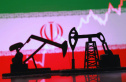
Global Fuel Shock: Oil Jumps Over 40% Since Iran War Began