Majority of Bulgarians Fear Impact of Green Deal on Electricity Bills
Amid the implementation of measures under the European Union's Green Deal, 64% of Bulgarians have identified the escalating electricity prices as their top concern
HOT: » Which party would you vote for (if you could) in the upcoming snap vote in Bulgaria on April 19?
 Send to Kindle
 Vasil Velev, Chair of the Bulgarian Industrial Capital Association (BICA), photo by BGNES
Vasl Velev, Chair of the Bulgarian Industrial Capital Association (BICA), has argued that electricity tariffs should remain unchanged in the next pricing period.
In a Thursday interview for TV7, Velev claimed that there was no obstacle, be it of legal or economic nature, for Bulgaria’s Commission for Energy and Water Regulation (KEVR) to keep electricity prices unchanged.
Asked to comment on a forthcoming substantial power price hike for industrial consumers, the BICA Chair declared that the industry going bankrupt was a much scarier scenario than the state-owned power utility going bankrupt.
Velev, as cited by investor.bg, insisted that the Bulgarian Energy Exchange (IBEX) had to be launched in order to ensure market prices and then the authorities had to find a way to make traders in electricity pay the “obligation to society” surcharge.
He noted that some 60 000-100 000 jobs would be lost in the energy sector and many companies would be forced to cut salaries and increase prices, unless the energy watchdog gave up on the idea to increase power rates for industrial consumers.
A nationwide protest took place on Wednesday against the planned power price hike through an increase in the “obligation to society” component of the tariffs for industrial consumers.
The protest was organized by the Bulgarian Industrial Capital Association (BICA), the Confederation of Employers and Industrialists in Bulgaria (CEIBG), the Bulgarian Industrial Association (BIA), and the Bulgarian Chamber of Commerce and Industry (BCCI) and was endorsed by the two trade unions, the Confederation of Independent Trade Unions in Bulgaria (CITUB) and the Podkrepa Labor Confederation, and the Bulgarian Federation of Industrial Energy Consumers (BFIEC).
Velev suggested Thursday that 2385 companies with a total headcount of over 210 000 had taken part in Wednesday’s protest, with some 25 000 workers taking to the streets in a number of big cities across the country.
He said that the business sector had come up with a number of suggestions for reform in the sector aimed at curbing the deficit, adding that lobby groups for “the energy mafia” in Parliament had distorted the proposals.
The BICA Chair recommended terminating the contracts with the two US-owned thermal power plants, AES Maritza East 1 and ContourGlobal Maritsa East 3 TPP, which he described as “daylight robbery”, and curbing fraud schemes plaguing the energy system.
He claimed that each and every Bulgarian household was robbed of an average monthly salary a year by “the energy mafia”, according to calculations of the business sector.
Velev underscored that businesses did not want to get overcharged.
The BICA Chair emphasized that the strategy of pitting the business sector against households would not be tolerated as energy sector thefts were bound to continue while the two sides were quarreling.
Velev said that the business sector demanded state-owned energy companies to become more efficient not just through administrative measures but by making these entities set foot on the market.
The Chair of the BICA argued that all electricity producers had to participate in the free market.
He declared that industrial enterprises in the EU paid 2 to 4 times lower electricity tariffs than households in a bid to prevent increases in retail prices of products and reduced incomes.
Velev said that the employers’ associations would wait to hear the final decision of KEVR on electricity prices on Friday and then announce the next steps at a joint press conference with trade unions on Sunday.

Amid the implementation of measures under the European Union's Green Deal, 64% of Bulgarians have identified the escalating electricity prices as their top concern

Energy-intensive industries in Bulgaria are facing a severe threat of curtailed operations or potential closures due to the soaring electricity prices

The name of the person who currently keeps social peace in Bulgaria is Ivan Ivanov, head of the Energy and Water Regulatory Commission.

The Energy Ministry and other government departments will prepare measures in support of businesses that have been put in a tight corner by the high electricity prices in recent months.

“We will not allow a sharp increase in the price of natural gas, nor electricity and heating,” said Chair of the Energy and Water Regulatory Commission (KEVR) Ivan Ivanov during his hearing in parliament on the proposals for new electricity and heating pr

A ten-year plan for the development of the networks of Bulgartransgaz EAD for the period 2019-2028 was discussed today at a public discussion in the Energy and Water Regulatory Commission.
Bulgaria’s fuel market has recorded a sharp upward shift since the outbreak of the war in Iran, with diesel and petrol prices rising significantly across the country
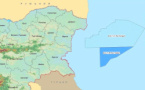
The second exploration drilling in the Krum-1 area of the Khan Asparuh block in Bulgaria’s Black Sea has also failed to identify commercially significant natural gas deposits, according to OMV Petrom

The Ombudswoman institution has voiced strong opposition to the proposed increase in heating prices in Sofia, which is expected to approach nearly 30 percent
The Energy and Water Regulatory Commission (EWRC) in Bulgaria has set the price of natural gas for April 2026 at 34.27 euros per megawatt-hour, excluding access, transmission, excise duties and VAT
Fuel prices in Bulgaria have recorded a sharp upward movement over the past month, with diesel showing the most significant increase, according to data from the Fuelo platform
Bulgargaz has defended its previously submitted proposal for a 5% rise in natural gas prices for April before the Energy and Water Regulatory Commission, with CEO Veselin Sinabov stressing that there is currently no justification for any further increases

Aniventure Comic Con Returns to Bulgaria with Star Guest Christopher Judge!
Global Fuel Shock: Oil Jumps Over 40% Since Iran War Began