Bulgaria Weather: Mixed Easter Forecast With Sun, Rain, and Gradually Rising Temperatures
Holiday weather conditions are expected to remain mixed across Bulgaria, with alternating periods of sunshine and rain showers, according to the forecast
HOT: » Which party would you vote for (if you could) in the upcoming snap vote in Bulgaria on April 19?
 Send to Kindle
 File photo
US-based nuclear power company Westinghouse estimated that the electricity produced by unit 7 of Bulgaria's Kozloduy NPP will cost between USD 75 and 84 per megawatt-hour, if it constructs its AP1000 plant there.
This was announced by Westinghouse Vice President Aziz Dag, Key Accounts Europe/Middle East/Africa at a business breakfast in Sofia, organised by the Bulgarian Business Leaders Forum on Friday.
The base price will be USD 75 per megawatt-hour, which will comprise USD 45 on capital expenses (construction and financing) and USD 30 on operational expenses (fuel, maintenance, salaries, etc.), money.bg reports.
The price will rise to USD 84 per megawatt-hour if the financing provided for the project is higher than the initially foreseen.
The stated prices do not include the decommissioning of the power plant, which will cost nearly the same as its construction – USD 5.3 B.
It is expected that the life cycle of the power plant will be 60 years.
Dag also commented that for 20 years of operation, unit 7 will generate revenue of USD 11 B and in case a second AP1000 plant is built, the sum will be double.
Bulgarian government should keep in mind that at present markets are offering the best conditions for financing.
The earliest the unit can become operational is 2025, but the next three years will be crucial as during them the most important work on the documentation and regulation of the project is foreseen to take place.
Westinghouse is to soon hold serious talks with the Bulgarian government on the financial model and the state guarantees of the project.
The final investment decision is expected to be taken within three years.
Representative of Westinghouse pointed that Bulgaria will need to seriously consider what further steps it takes after the forthcoming closure of 4 gigawatts of power-generating capacities.
If the country does not invest in the construction of new nuclear capacities, electricity will become much more expensive in the next 10-15 years than it is at present.
Westinghouse estimated that unit 7 will lead to the hiring of 3500 specialists during the construction of the plant, while over 50 000 people working in companies indirectly related to the construction will also benefit.

Holiday weather conditions are expected to remain mixed across Bulgaria, with alternating periods of sunshine and rain showers, according to the forecast

Up to 90 percent of construction and renovation workers in Bulgaria are operating outside the legal framework, according to entrepreneur Lozan Lozanov, who raised concerns about the lack of regulation in construction and installation services

The Ministry of Finance has released a broad public dataset covering more than 7,000 public procurement contracts with a combined value exceeding 30 billion euros

The Easter holiday getaway has officially begun in Bulgaria, with traffic leaving Sofia surging as thousands of people set off for the long weekend

A 53-year-old man with a criminal record has been detained in Bulgaria during a targeted police operation against vote buying, carried out in the village of Brestnitsa in the Lovech region

Bulgaria is bracing for an increase in disinformation activity in the run-up to the parliamentary elections on April 19, with authorities warning of coordinated attempts to influence voters and destabilize public trust

Bulgaria’s fuel market has recorded a sharp upward shift since the outbreak of the war in Iran, with diesel and petrol prices rising significantly across the country
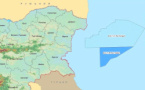
The second exploration drilling in the Krum-1 area of the Khan Asparuh block in Bulgaria’s Black Sea has also failed to identify commercially significant natural gas deposits, according to OMV Petrom

The Ombudswoman institution has voiced strong opposition to the proposed increase in heating prices in Sofia, which is expected to approach nearly 30 percent
The Energy and Water Regulatory Commission (EWRC) in Bulgaria has set the price of natural gas for April 2026 at 34.27 euros per megawatt-hour, excluding access, transmission, excise duties and VAT

Fuel prices in Bulgaria have recorded a sharp upward movement over the past month, with diesel showing the most significant increase, according to data from the Fuelo platform

Bulgargaz has defended its previously submitted proposal for a 5% rise in natural gas prices for April before the Energy and Water Regulatory Commission, with CEO Veselin Sinabov stressing that there is currently no justification for any further increases

Aniventure Comic Con Returns to Bulgaria with Star Guest Christopher Judge!

Global Fuel Shock: Oil Jumps Over 40% Since Iran War Began