Bacteria and Mold Found in School Sandwiches in Bulgaria
The Bulgarian Food Safety Agency has detected bacterial contamination and mold in several sandwiches distributed in schools during a series of inspections
HOT: » Which party would you vote for (if you could) in the upcoming snap vote in Bulgaria on April 19?
 Send to Kindle
 Photo by dariknews.bg
18 out of Bulgaria's 28 districts have substandard drinking water, according to an analysis of the country's water resources requested by the Ministry of Environment and Water.
Under EU legislation, the supply of water from contaminated sources should be banned.
Since Bulgaria's accession to the EU in 2007, bans have been issued for four drinking water sources (Merichleri, Tatarevo and Poibrene), according to data of the Health Ministry.
Water quality is worst in the southern district of Pazardzhik, where the 5% norm for deviations from the standard recommended by the World Health Organization (WHO) has been exceeded over two-fold, according to reports of mass-circulation 24 Hours daily.
Water pollution has also increased in the districts of Kyustendil and Plovdiv, which previously reported no problems.
Some rural areas have even registered manganese contamination and contamination with cancerogenic compounds of chromium, arsenic and lead.
The situation is worst in the northwestern district of Pleven, where 14 villages report heavy metal contamination.
The analysis also mentions aluminum, pesticides and benzene as contaminants in isolated cases.
The experts also warn about substantial nitrate contamination, with norms being exceeded two-to-five-fold.
This type of contamination is characteristic of agricultural districts using shallow drinking water sources.
The most serious problems are in the districts of Yambol, Shumen, Ruse and Veliko Tarnovo, which need to find alternative sources because there is no way to remove nitrates from the water.
Microbiological contamination has been registered in 11 districts.
As a result of poor disinfection, 357 smaller water-supply systems have been found to contain e.coli bacteria, which are strongly toxic and their presence is an indicator of a faecal contamination.
Tests in 65 zones have yielded enterococci bacteria.
A total of 82 underground sources of drinking water in Bulgaria are problematic, the majority of them located in the region of the Danube basin.
In this area, serious contaminations with nitrates, ammonium and phosphates have been registered near Sofia, Dobrudzha, Ruse, Silistra, and the Pleven region.
Similar results have been registered in the Black Sea regions of Varna, Nesebar and Burgas and in the basins of almost all Black Sea rivers.

The Bulgarian Food Safety Agency has detected bacterial contamination and mold in several sandwiches distributed in schools during a series of inspections

The World Health Organization's regional office for Europe calls on the continent's authorities not to close schools when taking preventive and restrictive measures against the spread of COVID-19.

The World Health Organization's (WHO) Emergency Committee said proof of vaccination against COVID-19 should not be required for international travel, as this would limit global access due to the unfair distribution of vaccines.

COVID-19 can exacerbate old diseases and unlock new ones, and the Delta variant attacks the cardiovascular system,reported the press office of the Ministry of Health (Ministry of Health) on Facebook.

"At this point the inspections of the previous management of the Ministry of Health found numerous violations and flagrant cases of one-person decision-making for the conclusion of multimillion-dollar contracts by Deputy Minister Zheni Nacheva.

A second dose of a different vaccine should not be given.

The Bulgarian Medical Association has called for an urgent overhaul of healthcare funding, insisting on a 25 percent increase in the prices of clinical pathways and all medical services, alongside a revision of the user fee for hospital stays

Health authorities report that measles infections in Bulgaria have surpassed 70 confirmed cases, with a total of 73 registered as of April 3

Health authorities have reported a total of 66 confirmed measles cases in Bulgaria, with the first infection now recorded in Sofia, according to data published on the Ministry of Health’s epidemic monitoring platform.
All emergency medical centers across Bulgaria have now been equipped with the opioid antidote Naloxone, a development confirmed by the Ministry of Health. The drug is used in cases of overdose and is considered critical for saving lives in emergencies inv
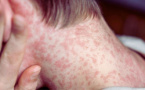
A total of 43 measles infections have been recorded across three regions in Bulgaria, according to data released by the Ministry of Health on March 30
Last year, Bulgaria recorded over 17,000 abortions, according to data compiled by the National Center for Public Health and Analysis

Aniventure Comic Con Returns to Bulgaria with Star Guest Christopher Judge!
Global Fuel Shock: Oil Jumps Over 40% Since Iran War Began