€7.3 Billion on the Table: Is Bulgarian Business Ready for Europe’s Defense Boom?
Europe is undergoing a fundamental shift in how it approaches defense, moving beyond increased spending toward the creation of an entirely new industrial ecosystem
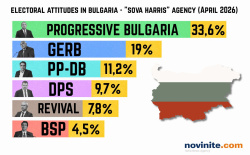
HOT: » Which party would you vote for (if you could) in the upcoming snap vote in Bulgaria on April 19?
 Send to Kindle
 Bulgaria has awarded the licenses for its multiplexes to only two companies - Latvia's Hannu Pro (four) and Slovakia's Towercom (two). File photo
Bulgaria's government has delayed once again the adoption of a plan for the analogue switch-off, which is scheduled to be wrapped up by September 1, 2013.
The document, keenly awaited in Brussels, was to be approved at the cabinet's meeting on Thursday, but Prime Minister Boyko Borisov put a spanner in the works, citing funding concerns.
On Monday, the defense, finance and social policy ministries, are about to convene and work out a financial model to be applied to the analogue switch-off.
The news boosts speculations that Bulgaria's government is just playing for time, protracts the switch-over and has no intention to declare void the controversial tenders for the operation of what will be the country's DTT multiplexes despite pressure from Brussels.
The EU executive body told Bulgaria on March 22 that it will face the EU highest court unless it informs it of the measures taken to address the breach of EU law within two months.
The government in Sofia believes that the European Commission will not insist on declaring the tenders void and there will be no requirement for their annulment.
"The European Commission is well aware that this could prompt the winners to sue Bulgaria for damages, which is hardly a better scenario than being fined by Brussels," the ministry said in a reply to an inquiry by Kapital daily.
Bulgaria has awarded the licenses for its multiplexes to only two companies - Latvia's Hannu Pro (four) and Slovakia's Towercom (two).
The Commission considers that Bulgaria did not comply with the requirements of the Competition Directive when it assigned in 2009 the five spectrum lots available for digital terrestrial broadcasting via two contest procedures, limiting without justification the number of undertakings that could enter the market concerned.
According to Brussels the selection criteria of the contest procedures were disproportionate and therefore not in line with the requirements of the Competition, Authorisation and Framework Directives.
Applicants were not allowed to have links with content providers (TV channels operators), including operators active only outside Bulgaria, or with broadcasting network operators, the EU executive body said.
The Commission has threatened to refer the matter to the Court of Justice.
Bulgaria decided at the end of December to hold a tender for yet another multiplex, its seventh, a surprising last-minute decision, which local experts slammed as a mere eye- wash for Brussels.
This is also envisaged in the draft plan for the analogue switch-over, which was to be voted by the government.
The government has boasted that the new amendments will allow companies such as Austria's ORS, which have TV channels outside Bulgaria, to participate in the new DTT contest.
Experts however say that the new procedure is a mere attempt to throw dust in the eyes of Brussels officials.
The seventh multiplex will be just a collection of frequencies and its holder - in a much more disadvantaged position than Hannu Pro and Towercom, which have already grabbed the lion's share of the market, according to them.
Delays in the analogue switch-off put Bulgaria at a disadvantage in comparison with neighbor countries, which are about the wrap up the transition period, including Romania and Serbia.
Europe is undergoing a fundamental shift in how it approaches defense, moving beyond increased spending toward the creation of an entirely new industrial ecosystem
Energy expert Boyan Rashev has warned that Europe could be moving toward what he described as an “energy lockdown” scenario if fuel supply pressures continue to worsen

The Bulgarian Ministry of Health has expressed support for the Bulgarian Medical Association’s proposal to raise the prices of all medical services by 25 percent

Fuel prices in Bulgaria have continued to edge upward, with diesel and gasoline both registering increases in the days following the Easter holiday

A leading global research center on democratic systems has issued a stark warning about political trends in several countries, concluding in its latest annual report that Bulgaria is now among those showing clear signs of democratic backsliding
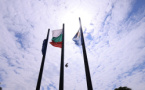
Weather conditions across Bulgaria today are expected to remain stable and predominantly sunny, accompanied by light winds coming from the southwest
Energy expert Boyan Rashev has warned that Europe could be moving toward what he described as an “energy lockdown” scenario if fuel supply pressures continue to worsen
Fuel prices in Bulgaria have continued to edge upward, with diesel and gasoline both registering increases in the days following the Easter holiday

Bulgaria’s tourism sector has never been stronger and has been achieving steady growth for the past few years.

Industrial output in Bulgaria posted a modest monthly increase in February 2026, but continued to decline sharply on an annual basis, according to preliminary, seasonally adjusted data from the National Statistical Institute.
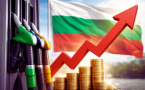
The president of the Confederation of Bulgarian Trade Unions, Plamen Dimitrov, has warned that inflation in Bulgaria is likely to exceed earlier projections, even if fuel prices begin to decline

Scroll through a busy news feed and you’ll spot a pattern - economic jitters, tech pivots, shifting consumer habits.

Aniventure Comic Con Returns to Bulgaria with Star Guest Christopher Judge!
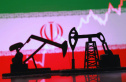
Global Fuel Shock: Oil Jumps Over 40% Since Iran War Began