Easter Monday in Bulgaria: Tradition and Family Visits
Orthodox Easter Monday is the day following Easter Sunday and is observed across Bulgaria as part of the wider Easter celebration within the Orthodox Christian tradition
HOT: » Which party would you vote for (if you could) in the upcoming snap vote in Bulgaria on April 19?
 Send to Kindle
 Greek Deputy Foreign Minister Spyros Kouvelis says the Burgas-Alexandroupolis oil pipeline stands little chance while Boyko Borisov is in power in Bulgaria. Photo by greeceforu.blogspot.com
Greece has been exercising constant pressure over Bulgaria's Borisov Cabinet to push ahead the construction of the Burgas-Alexandroupolis oil pipeline, Greece's Deputy Foreign Minister Spyros Kouvelis revealed.
Both Greece and Russia are insisting that Bulgaria gives green light to the Bulgarian-Greece-Russian oil pipeline project but the Borisov government is blocking it for political reasons, Kouvelis has told New Europe.
"I don't know because it depends on Bulgaria. We and the Russian side want very much to move it forward, but Bulgaria blocks it. We constantly say to all directions that we want it to move forward but the ball is in their court. This is a partnership between three and all three must want it and unfortunately Bulgaria has turned weird over this," the Greek diplomat said on the sidelines of an investors' conference organized by the Hellenic-Russian Chamber of Commerce in Athens, as cited by New Europe, which reminds that Russian oil pipeline monopoly Transneft has complained about Bulgaria not paying its contribution to the joint venture in charge of the BA pipe, Trans-Balkan Pipeline.
The Burgas-Alexandroupolis oil pipeline is supposed to transport Russian and Caspian oil around the jammed Bosphorus straits but Russian companies are also mulling the development of the Samsun-Ceyhan pipeline linking Turkey's Black Sea port of Samsun and the Mediterranean terminal in Ceyhan, the major alternative route.
But Kouvelis told New Europe that it is not about finding an alternative, but that Bulgarian Prime Minister Boyko Borisov has been intransigent.
"Russia wants very much for the project to move forward as we also want to but, as long as Borisov is there, that's difficult. It's simply political. That's clear," the Greek Deputy Foreign Minister said.
Russian Ambassador to Greece Vladimir Chkhikvishvili is quoted as saying that he doesn't think Moscow is losing interest in Burgas-Alexandroupolis. Asked if Russia is considering both pipelines bypassing the Bosporus, the ambassador said, "Yes, still. But we are waiting for the final decision from Sofia."
"It is quite clear that Russia would like to build the Burgas-Alexandroupolis pipeline in addition to the Samsun-Ceyhan pipeline on the Turkish side. They'd like to have both so I would expect (Russian Prime Minister Vladimir) Putin making a very direct reference to Bulgaria's delay in approving Burgas-Alexandroupolis and try to push them along," said Chris Weafer, chief strategist at Uralsib bank, referring to Putin's trip to neighboring Serbia on 23 March.
Trans-Balkan Pipeline B.V. was registered on February 6, 2008, in Amsterdam (the Netherlands) in implementation of the tripartite agreement between the Governments of Russia, Bulgaria, and Greece on the construction and operation of the Burgas-Alexandroupolis oil pipeline, signed in Athens (Greece) on March 15, 2007.
According to the Russian reports, Bulgaria owes EUR 7.3 M as a contribution to the budget of the joint project company; in December 2010, there were concerns by Russia that Bulgaria wants to kill the project by defaulting on its dues. A senior Greek government official commented at the time that Bulgaria was moving to shed the oil pipeline under pressure by American oil interests.
The Burgas-Alexandroupolis oil pipeline – one of the three major Bulgarian-Russian energy projects – appears to have run into much disrepute with the Bulgarian government in 2010.
In December, news emerged that Bulgaria failed to pay the EUR 6 M (currently estimated at EUR 7.5 M, still unpaid as of March 21, 2011) that it owes as its contribution to the joint project company with Greece and Russia, which is supposed to construct the Burgas-Alexandroupolis oil pipeline.
Ever since the center-right government of Bulgarian Prime Minister Boyko Borisov took office in the summer of 2009, it has been balking at the construction of the Burgas-Alexandroupolis oil pipeline, which had been promoted vigorously by the formed Socialist-led Stanishev Cabinet and the Socialist President of Bulgaria, Georgi Parvanov. It has also been met with staunch resistance along Bulgaria's southern Black Sea coast over environmental concerns.
In the summer of 2010, Borisov said that Sofia has no money to participate in the construction of the pipeline. Later Sofia has agreed to pay EUR 4.88 M as a contribution to the project company, Trans-Balkan Pipeline. The Bulgarian authorities, however, have made the construction of the pipeline conditional on complex environmental assessment procedures.
In November 2010, the Bulgarian Environment Ministry said the environmental impact assessment of the Burgas-Alexandroupolis oil pipeline is inadequate and needs to be reworked; the ultimate decision about whether Bulgarian will take part in the project has been put off for 2011.
Bulgarian Prime Minister Borisov, however, has written off the project on a number of occasions, declaring that there is no way the ultimate environmental assessment would be positive.
Bulgaria, Greece and Russia agreed to build the pipeline between Burgas and Alexandroupolis, taking Caspian oil to the Mediterranean skirting the congested Bosphorus, in 2007 after more than a decade of intermittent talks.
The agreement for the company which will construct the Burgas-Alexandroupolis oil transit pipeline was signed by Bulgaria during Russian President Putin's visit to Bulgaria in 2008.
The 280-km pipeline, with 166 km passing through Bulgaria, would have an initial annual capacity of 35 million tons of crude oil, which could be later expanded to 50 million tons. Its costs are estimated at up to USD 1.5 B, up from initial estimates at USD 900 M.
The Trans-Balkan Pipeline company, which is in charge of the construction and subsequent operation of the future pipeline, and is headquartered in the Netherlands, was set up in 2008.
The Russian participant in the project, Pipeline Consortium Burgas-Alexandroupolis Ltd, has a share of 51%. It was founded jointly by three companies: AK Transneft (33.34%), NK Rosneft (33.33%), and Gazrpom Neft (33.33%).
The Bulgarian Joint stock company "Project Company Oil Pipeline Burgas-Alexandroupolis – BG" AD has a share of 24.5%. It was initially founded as jointly by two state companies, Bulgargaz (50%) and Technoexportstroy (50%) but was transferred in full to the Finance Ministry in February 2010.
The Greek participants are Helpe Thraki AE with 23.5% and the Greek government with 1%. The Helpe-Thraki AE was founded jointly by "Hellenic Petroleum" (25%) and "Thraki" (75%).
On July 16, 2010, the Bulgarian government completed the restructuring of its Project Company Oil Pipeline Burgas-Alexadroupolis – BG" AD, which sealed the transfer of the company under the responsibility of the Finance Minister.
Construction of the pipeline has been on ice even after Bulgaria's government balked at the potential environmental damage that the pipeline could inflict on its resort-dotted coastline. The cabinet has stated that its final decision on the country's participation in the project will depend on its upcoming international environmental assessment.
Three Bulgarian Black Sea municipalities - Burgas, Pomorie, and Sozopol - have voted against the pipe in local referendums over environmental concerns.
Municipalities neighboring Pomorie and nearby Burgas are also harboring fears that the pipeline could damage their lucrative tourism business, while environmental NGOs have branded the existing plans to build an oil terminal out at sea a disaster waiting to happen.

Orthodox Easter Monday is the day following Easter Sunday and is observed across Bulgaria as part of the wider Easter celebration within the Orthodox Christian tradition

Industrial output in Bulgaria posted a modest monthly increase in February 2026, but continued to decline sharply on an annual basis, according to preliminary, seasonally adjusted data from the National Statistical Institute.

The president of the Confederation of Bulgarian Trade Unions, Plamen Dimitrov, has warned that inflation in Bulgaria is likely to exceed earlier projections, even if fuel prices begin to decline

The introduction of the euro in Bulgaria has so far produced only a limited and largely one-off effect on consumer prices, according to an analysis by the European Central Bank

Easter is the most important religious holiday in the Orthodox Christian calendar and is widely celebrated across Bulgaria. It marks the resurrection of Jesus Christ and follows the completion of Holy Week, which includes Good Friday and Holy Saturday

Holy Saturday, known in Bulgaria as Lazarus Saturday’s continuation of the Easter cycle, is a quiet but deeply symbolic day in the Orthodox Christian calendar

Bulgaria’s fuel market has recorded a sharp upward shift since the outbreak of the war in Iran, with diesel and petrol prices rising significantly across the country
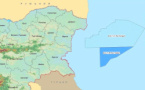
The second exploration drilling in the Krum-1 area of the Khan Asparuh block in Bulgaria’s Black Sea has also failed to identify commercially significant natural gas deposits, according to OMV Petrom

The Ombudswoman institution has voiced strong opposition to the proposed increase in heating prices in Sofia, which is expected to approach nearly 30 percent
The Energy and Water Regulatory Commission (EWRC) in Bulgaria has set the price of natural gas for April 2026 at 34.27 euros per megawatt-hour, excluding access, transmission, excise duties and VAT

Fuel prices in Bulgaria have recorded a sharp upward movement over the past month, with diesel showing the most significant increase, according to data from the Fuelo platform

Bulgargaz has defended its previously submitted proposal for a 5% rise in natural gas prices for April before the Energy and Water Regulatory Commission, with CEO Veselin Sinabov stressing that there is currently no justification for any further increases

Aniventure Comic Con Returns to Bulgaria with Star Guest Christopher Judge!
Global Fuel Shock: Oil Jumps Over 40% Since Iran War Began