Easter Monday in Bulgaria: Tradition and Family Visits
Orthodox Easter Monday is the day following Easter Sunday and is observed across Bulgaria as part of the wider Easter celebration within the Orthodox Christian tradition
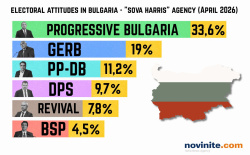
HOT: » Which party would you vote for (if you could) in the upcoming snap vote in Bulgaria on April 19?
 Send to Kindle
 Greece is increasing its border patrols over fears that the crisis in Egypt would trigger a wave of illegal immigrants, entering from Turkey. File photo
Greece has announced it is increasing its sea and land border patrols over fears that the wave of crises caused by civil unrest in Egypt and other Arab states might trigger a tide of illegal immigrants to the EU.
Christos Papoutsis, the Greek Minister for Citizen Protection, said Monday, as cited by DPA, that authorities provided an increased number of patrols along the already porous border with Turkey.
Papoutsis added that there has not been an increase in the number of illegal immigrants from North Africa yet but noted that taking in account the protests against the Mubarak regime and events elsewhere in the Arab world, this could change suddenly.
On Monday, Egypt saw its seventh day of mass protests against the rule of 82-year-old President Hosni Mubarak, after earlier in January a civil unrest in Tunisia brought down the ruling regime. Sudan, Jordan, and Yemen have also seen civic protests fueled largely by using Internet tools, and especially social networks such as Facebook, Twitter, and YouTube.
Tens of thousands of illegal immigrants from the Middle East see Greece as their destination or point of entry into the EU. Only last year, their number was 128,000, the highest in all EU member states.
Greece has accused Turkey of failing to stop the wave of illegal immigrants entering Greece and ignoring an agreement to accept the return of detained immigrants.
Unlike the Greek officials, the Bulgarian government not expressed any concerns yet with respect to the possibility of seeing a wave of illegal migrants try to penetrate through its border with Turkey as a result of the events in the Arab world.
In 2010, Bulgaria, which has a longer land border with Turkey than Greece, has not detected a substantial increase of illegal immigrants seeking to enter the EU even though the Bulgarian border police occasionally capture small groups of illegal migrants from the Middle East and Africa.
In December 2010, the Greek government announced it was considering fencing off its territory along its Turkish border to beat back the influx of illegal immigrants into the EU.
However, at the beginning of 2011, Papoutsis indicated a project for building a 12.5-km-long and 3-m-high fence along the most problematic section of the Greece-Turkey border near the Maritsa river and the Greek town of Orestiada, a much smaller border wall than fencing off its entire 209-km land border with Turkey.
In the period of just six months up till the end of November, 33 000 illegal immigrants have been detected crossing the Greek-Turkish land border. Most are from Afghanistan, Algeria, Pakistan, Somalia and Iraq.
Officials have stated that, in 2010, an average of '200 refugees each day' had crossed into Greece from Turkey.
Around 80 % of the illegal immigrants in the EU arrive via Greece. Large numbers then seek to reach Italy via ferry. There are currently an estimated 300,000 people living illegally in Greece.
Greece's facilities for the detention of illegal migrants have been the matter of criticism by international human rights NGOs.
In November 2010, police from across the EU arrived in Greece to patrol its border with Turkey against illegal immigrants as part of the continued "Joint Operation Poseidon" of Frontex, EU's border control agency.
Police officers and equipment from Bulgaria, Germany, Romania, Austria, Hungary, Slovakia and Denmark deployed along the border with Turkey in Northeastern Greece, which is a major point of entry into the EU for illegal immigrants.
The mission is expected to last till March 2011 and is focusing on policing a previously unguarded 12-km section of a river border between the towns of Nea Vyssa and Orestiada, on the Maritsa River.
This is the first time a rapid-intervention border team has been deployed to an EU member state since the Frontex teams were created in 2007.
Frontex, the EU agency based in Warsaw, coordinating the operational cooperation between member states in the field of border security under the European Patrol Network project, has agreed to place 175 police officers from across the EU after last month Greece requested from it help to cope with the growing number of refugees from African countries, Iraq and Afghanistan penetrating through its river and land border with Turkey.
EU's Joint Operation Poseidon started in 2006 as a purely sea-based operation patrolling the coastal waters between Greece and Turkey. Since the beginning of 2010, Poseidon has also had a land-based component covering the Greek and Bulgarian land borders with Turkey — now confirmed as the dominant country of transit for irregular migration into the EU.
At the beginning of January 2011, Bulgaria joined Greece's intentions to build birder fences along the borders with Turkey. However, Bulgaria's decision was triggered by the spread of the foot-and-mouth disease (FMD), which came from a wild boar that was killed in southern Bulgaria, near the border with Turkey.
Turkey has met with suspicion the intentions of the two countries to build border fences. According to the Chairman of Turkish Center for International Relations and Strategic Analysis, Sinan Ogan, the two countries have hidden agendas.
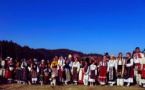
Orthodox Easter Monday is the day following Easter Sunday and is observed across Bulgaria as part of the wider Easter celebration within the Orthodox Christian tradition

Industrial output in Bulgaria posted a modest monthly increase in February 2026, but continued to decline sharply on an annual basis, according to preliminary, seasonally adjusted data from the National Statistical Institute.
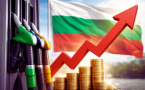
The president of the Confederation of Bulgarian Trade Unions, Plamen Dimitrov, has warned that inflation in Bulgaria is likely to exceed earlier projections, even if fuel prices begin to decline

The introduction of the euro in Bulgaria has so far produced only a limited and largely one-off effect on consumer prices, according to an analysis by the European Central Bank

Easter is the most important religious holiday in the Orthodox Christian calendar and is widely celebrated across Bulgaria. It marks the resurrection of Jesus Christ and follows the completion of Holy Week, which includes Good Friday and Holy Saturday

The Central Election Commission (CEC) in Bulgaria has confirmed that a total of 6,575,151 citizens are eligible to vote in the upcoming elections on April 19
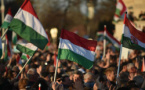
NEW POLL: HUNGARIANS UNITED ON NEED FOR A ‘DIFFERENT’ RELATIONSHIP WITH THE EU, BUT DIVERGENCES REMAIN ON UKRAINE
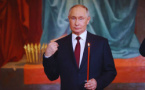
The Kremlin has announced that Russian President Vladimir Putin has ordered an “Easter ceasefire” in the war in Ukraine, declaring a temporary halt in hostilities lasting around 36 hours
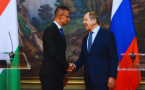
A group of Members of the European Parliament has raised concerns over the potential leakage of confidential EU information to Russia, urging stronger safeguards within the European Parliament
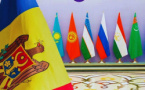
Moldovan President Maia Sandu has formally enacted legislation withdrawing the country from the Commonwealth of Independent States (CIS), marking a decisive step in Chisinau’s gradual disengagement from Russian-led structures
The European Public Prosecutor’s Office (EPPO) has carried out a series of coordinated investigative actions across several countries, including Bulgaria and Romania, as part of a probe into suspected large-scale fraud involving EU funds
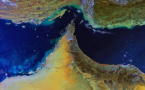
A fragile ceasefire between the United States and Iran has coincided with escalating tensions over the Strait of Hormuz, where Iran has moved to tighten control over one of the world’s most critical maritime routes

Aniventure Comic Con Returns to Bulgaria with Star Guest Christopher Judge!
Global Fuel Shock: Oil Jumps Over 40% Since Iran War Began