Strike on Russia's Black Sea Fleet: Ukrainian UAVs Target Frigate Admiral Grigorovich
Ukrainian unmanned aerial vehicles targeted Russian military assets in the Black Sea port city of Novorossiysk during a night-time operation between April 5 and 6
HOT: » Which party would you vote for (if you could) in the upcoming snap vote in Bulgaria on April 19?
 Send to Kindle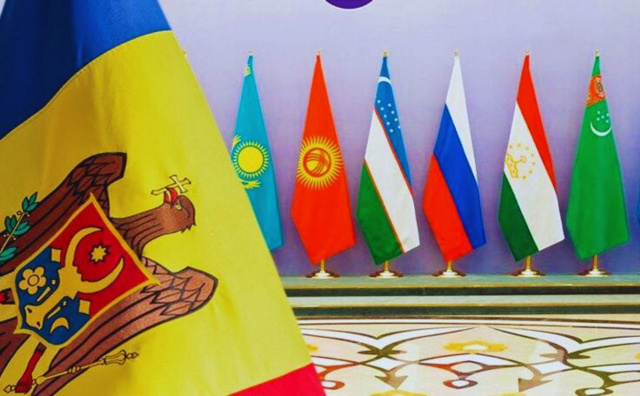
Moldovan President Maia Sandu has formally enacted legislation withdrawing the country from the Commonwealth of Independent States (CIS), marking a decisive step in Chisinau’s gradual disengagement from Russian-led structures. According to Moldovan media, the decrees were signed and published on April 8, entering into force immediately, with authorities set to notify the organization as part of the formal withdrawal procedure.
The decision follows a parliamentary vote on April 2, when 60 deputies backed the move in its final reading. The process targets key legal pillars of Moldova’s membership, including the 1991 founding agreement, its protocol, and the 1993 CIS statute. Once the required notification and notice period are completed, the bloc will be reduced to eight member states, among them Russia, Belarus, Kazakhstan and others. Turkmenistan will remain an associate participant.
Officials in Chisinau argue that the CIS no longer reflects its founding principles. They point to violations of territorial integrity and sovereignty, citing Russia’s war in Ukraine, past military actions against Georgia, and the continued presence of Russian troops on Moldovan territory. As Foreign Minister Mihai Popșoi put it, the country is already “in the process of denouncing” the agreements that underpin its affiliation, adding that this will end Moldova’s legal status as a member, even though participation has already been suspended in practice.
The withdrawal is part of a broader geopolitical shift. Since Sandu came to power in 2020, Moldova has steadily distanced itself from post-Soviet frameworks and deepened ties with the European Union, which granted it candidate status in 2022 and opened accession talks in 2024. Chisinau has avoided CIS summits and systematically dismantled agreements linked to the bloc. Of the 283 CIS-related accords once in place, 71 had been terminated by early 2026, with dozens more under review.
Economic data underscores this reorientation. By 2025, CIS countries accounted for just 5.9 percent of Moldova’s exports, compared to 67.5 percent directed toward the EU, now its main trading partner. Additional steps have included withdrawing from the 1992 Bishkek visa agreement, a move that primarily affects travel arrangements with Tajikistan and Kyrgyzstan, while bilateral visa-free regimes remain in force with other states.
The CIS itself was established in 1991 in the aftermath of the Soviet Union’s collapse, initially bringing together 11 former republics to manage the transition and maintain cooperation. Over time, however, its cohesion has weakened. Georgia left the organization after the 2008 war with Russia, while Ukraine, though never formally ratifying membership, gradually withdrew following the 2014 annexation of Crimea and the conflict in Donbas.
Analysts view Moldova’s exit as part of a wider reconfiguration across the post-Soviet space rather than an isolated move. Parallel integration efforts, such as the Eurasian Economic Union, have developed alongside the CIS, while some countries are exploring closer ties with the EU. Armenia, for example, has begun its own EU accession process despite remaining within Eurasian structures, highlighting what one observer described as the erosion of a single “center of gravity” in the region.
While the CIS is expected to continue functioning, Moldova’s departure delivers another political blow to the bloc, reinforcing the shift of several former Soviet states toward alternative alliances and strategic directions.
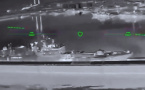
Ukrainian unmanned aerial vehicles targeted Russian military assets in the Black Sea port city of Novorossiysk during a night-time operation between April 5 and 6
The Russian Embassy in Sofia has circulated a warning issued by the Foreign Ministry in Moscow, cautioning its citizens about what it describes as a heightened risk of detention abroad at the request of US authorities
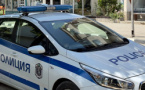
A police operation in Burgas has led to the discovery of a significant quantity of ammunition and a weapon equipped with optics in a residential property in the Ostritsata-2 area, near the Banevo district.
The United States has allowed a Russian oil tanker to proceed to Cuba, despite the broader pressure campaign against the island’s energy supplies, according to reports citing American officials familiar with the situation
Romania’s Ministry of National Defense has confirmed that a military drone crossed into Romanian airspace and later crashed, after being diverted during Ukrainian air defense activity
The European Commission has postponed the planned proposal to permanently ban Russian oil imports, amid rising energy prices driven by the ongoing conflict in the Middle East
A group of Members of the European Parliament has raised concerns over the potential leakage of confidential EU information to Russia, urging stronger safeguards within the European Parliament
The European Public Prosecutor’s Office (EPPO) has carried out a series of coordinated investigative actions across several countries, including Bulgaria and Romania, as part of a probe into suspected large-scale fraud involving EU funds
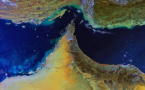
A fragile ceasefire between the United States and Iran has coincided with escalating tensions over the Strait of Hormuz, where Iran has moved to tighten control over one of the world’s most critical maritime routes
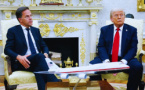
US President Donald Trump has sharply criticized NATO allies over what he described as their unwillingness to support Washington during the war with Iran, following a two-hour meeting with Secretary-General Mark Rutte at the White House
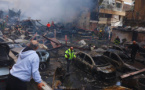
Lebanon has declared a national day of mourning after one of the deadliest days in recent months, with at least 254 people killed and more than 1,165 injured in Israeli strikes carried out shortly after the announcement of a US-Iran ceasefire
The caretaker government has approved a decision endorsing the Partnership Agreement between the European Union and its Member States and the Mercosur bloc

Aniventure Comic Con Returns to Bulgaria with Star Guest Christopher Judge!
Global Fuel Shock: Oil Jumps Over 40% Since Iran War Began