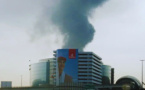
The Largest Thermal Power Plant in Kyiv Region has been Destroyed by the Russians
Amid escalating tensions, the Trypilska thermal power plant in the Kyiv region fell victim to devastating Russian strikes, leaving it in ruins
HOT: » Which party would you vote for (if you could) in the upcoming snap vote in Bulgaria on April 19?
 Send to Kindle
 The Brikel thermal power plant. Photo by starazagora.net
The Bulgarian authorities closed down two more units of the troubled thermal power plant Brikel owned by controversial energy tycoon Hristo Kovachki.
Wednesday's measures is in accordance with a government plant to shut the plant because of its lack of sulfur purification facilities as required by EU law.
After the several hundred workers of the plant located near the town of Galabovo in the Maritsa East thermal power complex staged protest rallies in October, once the fate of the facility became clear, the government made an agreement with the trade unions to allow a part of the Brikel TPP to function for six more months in order to provide heating for the local communities during the winter and to preserve the respective number of jobs for a while longer.
Thus, two of the six units of Brikel will be allowed to function until April 30, 2011.
The government closure of Brikel is an administrative measure undertaken in accordance with the complex permit that the plant got in 2006, in which its management committed to fulfilling Directive 2001/80 of the EC. It allows the plant to function for 20 000 hours without sulfur filters.
The inspection of the state has shown that the Brikel management failed to invest in the respective environment-friendly facilities, and that by June 2010, it had functioned without any for 21 000 hours.
On October 20, the state terminated all coal supplies to the Brikel thermal power plant.
After talks between Kovachki, the ministries of environment and economy, and trade unions, the Cabinet has agreed to extend the operation of the plant by 6 months in order to provide central heating for the town of Galabovo over the winter.
Kovachki had agreed to assume all fines that might be imposed on Bulgaria by the European Commission if the Brikel plant continues to work without the necessary environmental facilities.
As a result of the talks, the government agreed to called up a meeting of the 137 companies in the country with carbon dioxide quotas, in order to work out a compromise for allocating additional quotas to Brikel. The representatives of the companies, most of them private, however, refused to back a compromise plan saying that Kovachki's firm should have done the required investments when it was urged to do so.
Brikel EAD was set up on 30 June 2000. The Company has been created by integration from "Briquette production plant" EAD and "Maritsa - East 1" Thermal Power Station EAD.
Brikel is owned by Bulgarian energy tycoon Hristo Kovachki, who has been investigated for tax evasion. In 2008, Kovachki, in his capacity as an informal leader, set up a political party called LIDER, with the former CEO of Brikel, Kancho Filipov, becoming its chair. In 2009, LIDER came close to making it to the Bulgarian Parliament amidst allegations that the management of the plants owned by Kovachki pressured the workers to vote for the party.

Amid escalating tensions, the Trypilska thermal power plant in the Kyiv region fell victim to devastating Russian strikes, leaving it in ruins

The Thermal Power Plant "Bobov Dol" announced a temporary cessation of its operations, primarily attributed to the prevailing low electricity prices on the power exchange, as stated by the Executive Director, Eng. Lyubomir Spasov on January 4

A woman in her 50s died in an accident at the "Brikеl" thermal power plant

The District Prosecutor's Office in the town of Dupnitsa on January 17 launched an investigation into Bobov Dol Thermal Power Plant (TPP) for crimes against public health and the environment.

Today it will become clear which are candidates submitted bids for the construction of a gas pipeline between the Bulgarian-Turkish and the Bulgarian-Serbian border.

Protesting workers at the Babino pit, Bobov Dol mine, have been denied payment of salaries unless they sign an agreement with their employer, private NOVA TV station has announced.
Bulgaria’s fuel market has recorded a sharp upward shift since the outbreak of the war in Iran, with diesel and petrol prices rising significantly across the country
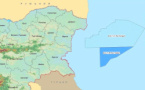
The second exploration drilling in the Krum-1 area of the Khan Asparuh block in Bulgaria’s Black Sea has also failed to identify commercially significant natural gas deposits, according to OMV Petrom
The Ombudswoman institution has voiced strong opposition to the proposed increase in heating prices in Sofia, which is expected to approach nearly 30 percent
The Energy and Water Regulatory Commission (EWRC) in Bulgaria has set the price of natural gas for April 2026 at 34.27 euros per megawatt-hour, excluding access, transmission, excise duties and VAT
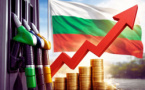
Fuel prices in Bulgaria have recorded a sharp upward movement over the past month, with diesel showing the most significant increase, according to data from the Fuelo platform
Bulgargaz has defended its previously submitted proposal for a 5% rise in natural gas prices for April before the Energy and Water Regulatory Commission, with CEO Veselin Sinabov stressing that there is currently no justification for any further increases

Aniventure Comic Con Returns to Bulgaria with Star Guest Christopher Judge!
Global Fuel Shock: Oil Jumps Over 40% Since Iran War Began