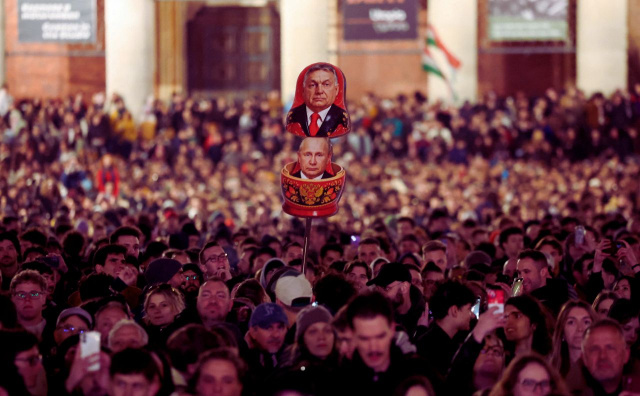
Political analysts suggest that the outcome of Hungary’s recent elections could resonate in Bulgaria ahead of its own vote, potentially shaping voter behavior and political positioning. Speaking on Nova TV, media expert Assoc. Prof. Georgi Lozanov outlined three distinct geopolitical “niches” within Bulgaria’s political landscape.
“One is the pro-European, pro-democratic space… the opposite niche is ‘Putin’s’, and in between there is an ‘Orban-type’ niche, where the interests of Putin and Trump intersect,” Lozanov explained. He identified President Rumen Radev and his political project as the most prominent example of this middle ground.
According to Lozanov, the key question is whether the Hungarian election result, which removed Viktor Orban from power, will influence this centrist space in Bulgaria. “Will it shift policymaking in this niche, or will it instead encourage the emergence of a ‘new Orban’ here, with Bulgaria taking over Hungary’s previous role?” he asked.
Political scientist Assoc. Prof. Stoycho Stoychev noted that, despite the limited time before the vote, unexpected developments remain possible. “Even in the last three days, a scandal could emerge aimed at pushing smaller parties hovering around the threshold into parliament,” he said.
Stoychev also pointed to the potential mobilization effect of Hungary’s elections, particularly among younger voters. However, he cautioned that replicating a similar wave depends on practical factors. “Whether there will be a wave like the protests in December depends on infrastructure, technology and finances,” he added.
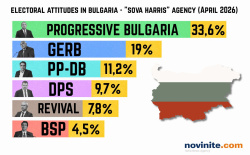
Lozanov argued that the developments in Hungary may strengthen pro-European sentiment in Bulgaria, highlighting PP-DB as the only formation with a consistently firm stance in that direction. In his view, GERB’s position is less clear, as he noted their association with what he described as Trump’s "Board of Peace".
Stoychev, for his part, interpreted the Hungarian vote as a signal of generational change. “If such a wave is replicated here, it would likely benefit PP-DB,” he said, while acknowledging the presence of other pro-European parties that have been tied to governance over the past decade.
At the same time, he emphasized a key difference between the two countries. Bulgaria retains a “reserve of Russian sentiment” that has not been as visible in Hungary. While this group has been largely inactive electorally, Stoychev suggested it could become a factor by channeling support toward a political project linked to Rumen Radev.