Easter Monday in Bulgaria: Tradition and Family Visits
Orthodox Easter Monday is the day following Easter Sunday and is observed across Bulgaria as part of the wider Easter celebration within the Orthodox Christian tradition
HOT: » Which party would you vote for (if you could) in the upcoming snap vote in Bulgaria on April 19?
 Send to Kindle
 @Pexels
TikTok has removed 34 accounts linked to what it described as coordinated inauthentic activity connected to Bulgaria’s upcoming parliamentary elections. The platform stated that the operation was aimed at artificially boosting political narratives in favor of the DPS party and was detected with the help of information provided by the Balkan Free Media Initiative (BFMI) through its “TikTokcracy Tracker.”
According to TikTok’s global election integrity team, the takedown followed an internal investigation into a network operating from Bulgaria and targeting Bulgarian users. The removed accounts reportedly had a combined following of 66,763 users. In its statement, the company said: “To protect the integrity of our platform, we have dedicated teams of experts focused on countering misleading behavior and attempts to mislead our community.” It also confirmed that the network was coordinated across multiple platforms.
The broader context of the case highlights concerns about electoral integrity ahead of the April 19 vote, where responsibility for preventing manipulation is divided between digital platforms, national institutions, and regulatory bodies. Observers note that it remains unclear who ultimately ensures action is taken when suspicious activity is identified.
BFMI argues that its findings prompted the platform’s intervention, but also stresses that similar cases have not been addressed with the same speed or consistency across all services. The organization raises the issue of whether existing European and national mechanisms are sufficient to respond to coordinated online influence during election periods.
The Bulgarian caretaker government has activated the Rapid Response System under the Digital Services Act (DSA), following similar steps taken in other countries in the region, including Moldova, Romania, and Hungary. However, analysts note that the system was not designed as a permanent electoral enforcement tool. Its repeated activation in consecutive election cycles is seen by some as evidence of structural weaknesses rather than isolated incidents.
Institutional response within Bulgaria is also under scrutiny. The Central Election Commission has not launched an investigation into the use of social media pages for campaign purposes, despite public reports and concerns about possible illegal financing. Critics argue that the gap between available evidence and institutional reaction has become a defining issue of the current election environment.
At the same time, enforcement capacity remains fragmented. Bulgaria lacks a dedicated digital services coordinator with rapid response capability, as well as a fully developed national monitoring body. Cooperation between institutions and platforms is described as limited, contributing to delays in addressing potential violations.
The situation is expected to intensify as election day approaches, with concerns that online influence campaigns typically escalate in the final days of voting. BFMI warns that removing accounts from TikTok does not necessarily end their activity, as similar networks may continue operating on other platforms, including Facebook, where no comparable enforcement action has been reported.
While TikTok has demonstrated willingness to cooperate with civil society and provide access to research tools, Meta has not taken comparable measures regarding the flagged networks, according to BFMI assessments. This uneven response is seen as a key factor complicating coordinated enforcement efforts across platforms.
BFMI also notes that earlier monitoring indicated unusually high engagement figures for political content on TikTok, including millions of views linked to public figures such as President Rumen Radev, which it argues may not be fully explained by organic reach alone.
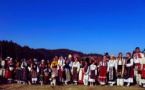
Orthodox Easter Monday is the day following Easter Sunday and is observed across Bulgaria as part of the wider Easter celebration within the Orthodox Christian tradition

Industrial output in Bulgaria posted a modest monthly increase in February 2026, but continued to decline sharply on an annual basis, according to preliminary, seasonally adjusted data from the National Statistical Institute.
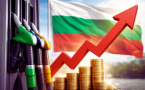
The president of the Confederation of Bulgarian Trade Unions, Plamen Dimitrov, has warned that inflation in Bulgaria is likely to exceed earlier projections, even if fuel prices begin to decline

The introduction of the euro in Bulgaria has so far produced only a limited and largely one-off effect on consumer prices, according to an analysis by the European Central Bank

Easter is the most important religious holiday in the Orthodox Christian calendar and is widely celebrated across Bulgaria. It marks the resurrection of Jesus Christ and follows the completion of Holy Week, which includes Good Friday and Holy Saturday
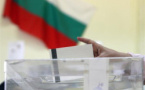
The Central Election Commission (CEC) in Bulgaria has confirmed that a total of 6,575,151 citizens are eligible to vote in the upcoming elections on April 19
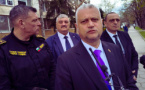
A mayor in northwestern Bulgaria is under scrutiny after allegedly distributing social benefits alongside a political party’s election materials
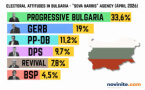
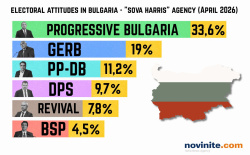
A new survey by the “Sova Harris” agency indicates that six political formations would enter the next Bulgarian National Assembly, based on data collected between April 2 and 6 among 800 respondents through standardized face-to-face interviews

Bulgaria is bracing for an increase in disinformation activity in the run-up to the parliamentary elections on April 19, with authorities warning of coordinated attempts to influence voters and destabilize public trust

The Prosecutorial College of the Supreme Judicial Council has declined to remove Borislav Sarafov from his position as Acting Prosecutor General, despite calls from the Justice Ministry to act following a recent Constitutional Court ruling

The government has decided to withdraw all three Bulgarian nominations for the position of European Prosecutor, effectively restarting the procedure after identifying serious flaws in the initial selection process

President Iliana Yotova convened a meeting of institutions responsible for the conduct of the early parliamentary elections on April 19, with a focus on assessing preparedness and ensuring that every vote is properly safeguarded

Aniventure Comic Con Returns to Bulgaria with Star Guest Christopher Judge!

Global Fuel Shock: Oil Jumps Over 40% Since Iran War Began