Hungarians Agree On Need For A “Different” EU Relationship, But Split On Ukraine Stance
NEW POLL: HUNGARIANS UNITED ON NEED FOR A ‘DIFFERENT’ RELATIONSHIP WITH THE EU, BUT DIVERGENCES REMAIN ON UKRAINE
HOT: » Which party would you vote for (if you could) in the upcoming snap vote in Bulgaria on April 19?
 Send to Kindle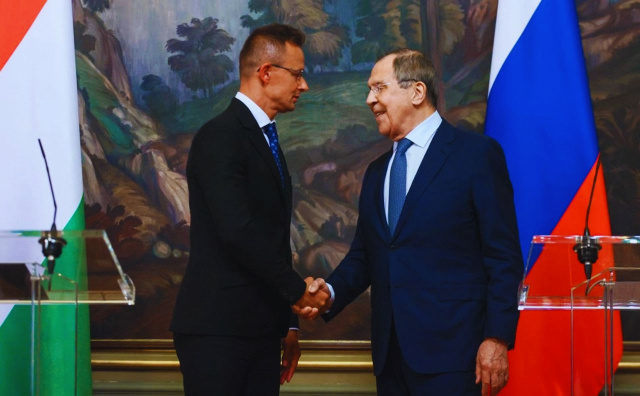
A group of Members of the European Parliament has raised concerns over the potential leakage of confidential EU information to Russia, urging stronger safeguards within the European Parliament. In a letter published by Lithuanian MEP Petras Auštrevičius, lawmakers appealed directly to Parliament President Roberta Metsola to introduce stricter measures to prevent sensitive material from being accessed or transmitted outside EU institutions.
The signatories expressed “deep concern” over allegations that Hungary’s government may have deliberately shared classified information from EU Council discussions with the Kremlin. They also warned that similar vulnerabilities could exist within the European Parliament itself. According to the letter, “Pro-Russian MEPs with links to Putin’s regime are still able to attend in camera committee meetings and hire staff without undergoing proper security or open-source screening,” raising the risk that sensitive material, including details on military and financial assistance to Ukraine, could be passed on to Russia.
Lawmakers stressed that repeated calls to address these risks have so far resulted in little concrete action. They urged immediate implementation of recommendations from the INGE special committee on foreign interference, particularly reforms related to transparency, integrity, accountability, and anti-corruption rules. The group also called for restrictions on access to confidential meetings and internal work for MEPs considered openly pro-Russian, along with their parliamentary staff.
The concerns have also been echoed at the European Commission level. Commission President Ursula von der Leyen is expected to raise the issue at the highest political level following reports suggesting that a member state may be acting in coordination with Russia. A Commission spokesperson said the allegations point to “the alarming possibility of a member state’s government coordinating with Russia, thus actively working against the security and the interests of the EU and its citizens,” calling the situation “extremely concerning” and demanding urgent clarification from the government involved.
The controversy comes amid heightened scrutiny of Hungary’s relations with Moscow under Prime Minister Viktor Orbán. Reporting has highlighted instances in which Hungarian officials allegedly maintained direct contact with Russian counterparts during sensitive EU deliberations, including discussions on sanctions and Ukraine policy. In one cited case, Foreign Minister Péter Szijjártó was reported to have communicated with Russian Foreign Minister Sergey Lavrov during an EU summit, prompting concerns that internal EU debates were being relayed externally.
The European Commission initially responded by requesting clarification and stressing the importance of sincere cooperation among member states. However, officials have since adopted a firmer stance following additional reporting that suggested ongoing communication between Hungarian and Russian officials on sanctions-related matters. According to accounts referenced in the debate, such exchanges have contributed to growing mistrust within EU institutions and have already influenced how confidential information is shared among member states.
French Foreign Minister Jean-Noël Barrot described the revelations as undermining trust within the bloc, stating that they had “cast doubt on the integrity of our deliberations.” He also characterized Hungary’s contacts with Russian officials on sanctions policy as “a betrayal of the solidarity that is required among members of the European Union,” emphasizing the need for unity in the face of external pressure.
Hungarian authorities, including Szijjártó, have rejected the allegations, framing them as politically motivated ahead of domestic elections. Meanwhile, Orbán’s government has continued to maintain a pro-engagement stance with Moscow, including agreements to expand economic, energy, and cultural cooperation.
The broader dispute has intensified calls within the EU to reassess internal security procedures, with several MEPs arguing that institutional weaknesses are being exploited. As one group of lawmakers warned, the situation risks undermining “the work, trust and institutional integrity of the European Parliament,” highlighting growing concerns over foreign influence and information security inside EU structures.

NEW POLL: HUNGARIANS UNITED ON NEED FOR A ‘DIFFERENT’ RELATIONSHIP WITH THE EU, BUT DIVERGENCES REMAIN ON UKRAINE
The Kremlin has announced that Russian President Vladimir Putin has ordered an “Easter ceasefire” in the war in Ukraine, declaring a temporary halt in hostilities lasting around 36 hours
The European Public Prosecutor’s Office (EPPO) has carried out a series of coordinated investigative actions across several countries, including Bulgaria and Romania, as part of a probe into suspected large-scale fraud involving EU funds

The caretaker government has approved a decision endorsing the Partnership Agreement between the European Union and its Member States and the Mercosur bloc

US Vice President JD Vance launched a sharp attack on the European Union during a visit to Budapest, accusing Brussels of interfering in Hungary’s election just days before a closely contested vote that could reshape the country’s political landscape
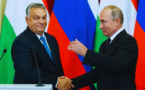
A leaked transcript of a phone call between Hungarian Prime Minister Viktor Orban and Russian President Vladimir Putin shows Orban offering extensive support to Moscow and describing himself as ready to help “in any way” in relation to the war in Ukraine
The European Public Prosecutor’s Office (EPPO) has carried out a series of coordinated investigative actions across several countries, including Bulgaria and Romania, as part of a probe into suspected large-scale fraud involving EU funds
The caretaker government has approved a decision endorsing the Partnership Agreement between the European Union and its Member States and the Mercosur bloc
US Vice President JD Vance launched a sharp attack on the European Union during a visit to Budapest, accusing Brussels of interfering in Hungary’s election just days before a closely contested vote that could reshape the country’s political landscape

Fuel prices in Germany have recently reached new highs, with diesel briefly exceeding 2.40 euros per litre during the Easter holiday period before easing slightly afterward
A recently revised German military service framework has triggered public debate after it emerged that it places new travel-related obligations on men aged between 17 and 45

Spain has officially launched its system of digital identity, which came into effect on April 2 and grants the electronic version of the national identity card the same legal validity as the physical document

Aniventure Comic Con Returns to Bulgaria with Star Guest Christopher Judge!
Global Fuel Shock: Oil Jumps Over 40% Since Iran War Began