Holy Thursday marks one of the most significant days in Holy Week, as Christians reflect on the final moments before the crucifixion of Jesus Christ. The period is traditionally associated with growing solemnity, as it precedes the suffering and death of Christ on the cross.
On this day, the Church commemorates the Last Supper, during which Christ established the sacrament of the Eucharist by giving communion to his apostles. Following the meal, he withdrew to the Garden of Gethsemane to pray, shortly before being betrayed by Judas. In churches, twelve Gospel passages recounting Christ’s suffering are read, while clergy symbolically carry the cross from the altar, representing its path to Golgotha.
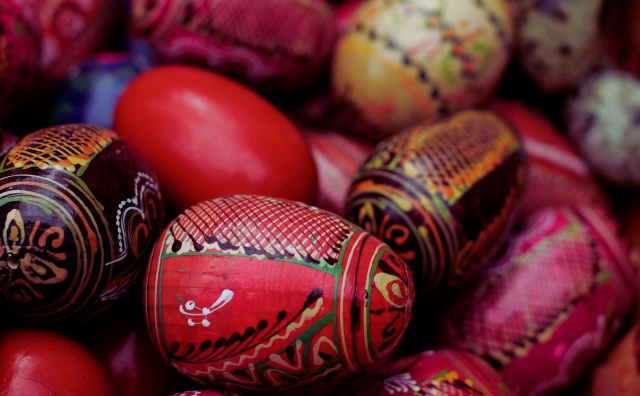
Holy Thursday is also closely tied to long-standing traditions, most notably the dyeing of Easter eggs and the preparation of festive bread (kozunak) for the upcoming celebration. These customs are widely observed across the country as part of the spiritual and cultural preparation for Easter.
In Sofia, the Holy Metropolitanate is once again organizing a public event under the title “Holiday of the Orthodox Spirit and Traditions.” It begins at 10:00 a.m. on St. Nedelya Square with egg painting and sports activities. A festive procession is scheduled to follow at 11:30 a.m., led by clergy and children carrying icons and baskets filled with decorated eggs, making its way to the historic church “St. Petka.”
Theologian Assoc. Prof. Kostadin Nushev described the day as a time of deep reflection on both the spiritual and physical suffering of Christ. He highlighted the importance of the Last Supper, noting that it established the Eucharist, which continues to be observed in every liturgy. He also pointed out that the ritual of Great Unction is performed, offering believers who have observed the 40-day fast a blessing as they enter the final days of Holy Week.
“The week is not only mournful,” Nushev said, “it carries faith, hope and expectation of the Resurrection,” adding that Christ, though without sin, “voluntarily accepted suffering in order to redeem humanity.”