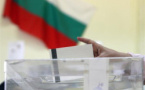
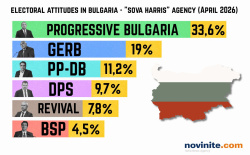
The election campaign, in Bulgaria, for the early parliamentary vote scheduled for April 19 officially began at midnight on March 20 and will continue until April 17, followed by a day of reflection on April 18. At the same time, members of parliament have entered a pre-election recess. This will be the eighth parliamentary election in the country since 2021, highlighting the prolonged political instability.
A total of 24 political formations are taking part in the race, including 14 parties and 10 coalitions, all of which have registered candidate lists nationwide. There is also one independent candidate in Smolyan. Altogether, 4,786 candidates are competing for the 240 seats in the National Assembly, with 1,439 women and 3,347 men among them, and over 1,000 candidates running in two constituencies. More than 6.6 million citizens are eligible to vote.
The campaign will be conducted under rules guaranteeing freedom of expression for participants, allowing both public appearances and media outreach, but requiring the use of the Bulgarian language. At the same time, restrictions remain in place, including bans on anonymous campaign materials, political agitation within state institutions, involvement of religious figures, and vote buying.
Deadlines related to voting procedures are approaching. Applications for voting abroad can be submitted until March 24, while those wishing to vote at a current address must apply by April 4. By March 28, the Central Election Commission will announce the number and locations of polling stations, based on proposals from diplomatic missions. Voters can check their assigned polling station online.
Changes to the Electoral Code are expected to have a significant impact on voting abroad, particularly in countries outside the European Union. The number of polling stations in such countries has been capped at 20 outside diplomatic missions, a measure likely to affect large Bulgarian communities in places like the United States, the United Kingdom and Turkey. This limitation may lead to longer travel distances and queues for voters. In addition, due to the situation in the Middle East and the low number of applications, some polling stations in the region may not be opened at all.