The election campaign for Bulgaria’s early parliamentary elections on April 19 officially begins at midnight on March 20. Political parties and coalitions will have until midnight on April 17 to campaign and seek voter support. A total of 24 formations have been registered for the vote, including 14 parties and 10 coalitions, while the number of eligible voters stands at 6,641,768.
Further reading: Bulgaria’s April 19 Elections: What Numbers Did the CEC Assign to Parties and Coalitions?
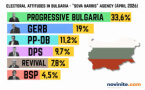
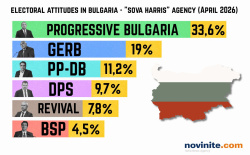
According to the latest surveys by Alpha Research and Gallup, five political forces are currently projected to enter the next National Assembly: Progressive Bulgaria, GERB, WCC-DB, DPS-New Beginning, and Revival. The data also suggest that the BSP may fail to secure parliamentary representation. Among the key figures, Rumen Radev is expected to head two lists for Progressive Bulgaria in Burgas and Sofia’s 25th multi-member district, while GERB leader Boyko Borissov will again lead lists in Sofia and Plovdiv.
Further reading: NATO Pilot, Putin Sympathizer, or Something Else? Who Is Rumen Radev and Why Did He Just Blow Up Bulgarian Politics
Within the "We Continue the Change-Democratic Bulgaria" (WCC-DB) coalition, co-chairmen Bozhidar Bozanov and Atanas Atanasov will not lead candidate lists. Asen Vassilev will head the tickets in Plovdiv and Haskovo, Ivaylo Mirchev will lead in Sofia’s 24th electoral district, while Nikolay Denkov will be first in the 23rd district and in Blagoevgrad. Other leading candidates include Boyko Rashkov in the 25th district and Atanas Slavov in district 26. DPS leader Delyan Peevski will head the list in Kardzhali, while Yordan Tsonev will lead in Varna and Veliko Tarnovo. Kostadin Kostadinov will again top Revival's lists in Varna and Sofia’s 25th district. BSP, now led by Krum Zarkov, is entering the race with weaker expectations, with Zarkov leading lists in Burgas and Sofia’s 24th district.
Further reading: Will Radev and the Liberals Join Forces? What the Caretaker PM Choice Really Means for Bulgaria
Preparations for the vote are underway, with 12,837 voting machines available nationwide, although previous elections have never used more than 10,000 simultaneously. These devices are stored under Interior Ministry security, with controlled access approved by the State Agency for National Security and the Central Election Commission. For the upcoming vote, the Bulgarian National Bank’s printing house will produce 19,000 paper rolls for machine voting. A single machine will be installed in each of the 9,354 polling stations that have more than 299 registered voters. The contract for processing election results is valued at approximately 2.55 million euros including VAT, while the overall election budget approved by the Council of Ministers stands at around 65 million euros.
Key administrative deadlines are also set. Regional Election Commissions must appoint precinct commission members by March 24. By March 27, the Central Election Commission will verify applications for opening polling stations abroad, and by March 28 it will determine their locations and number. Rules for election-day sociological surveys will be finalized by March 29, while overseas precinct commissions must be appointed by April 6.
The upcoming vote continues a prolonged period of political instability that began in 2021. Since then, Bulgaria has held seven parliamentary elections, often resulting in fragmented parliaments and failed attempts to form lasting governments. The April 2021 election, won by GERB, did not produce a cabinet, nor did the July 2021 vote won by “There is Such a People.” A government was eventually formed after the November 2021 elections by “We Continue the Change,” led by Kiril Petkov, but it collapsed in June 2022.
Further reading: The Caretaker Republic: How Bulgaria Learned to Govern Without Governing
Subsequent elections in October 2022 and April 2023 again failed to deliver a stable majority, although a compromise “rotation” government between GERB and WCC-DB operated from June 2023 to March 2024 before falling apart. The elections in June and October 2024 continued the same trend, with GERB remaining the leading force but unable to govern alone. A coalition cabinet led by Rosen Zhelyazkov briefly took office in early 2025 but collapsed by December. Since then, the country has been governed by a caretaker administration headed by Andrey Gurov, which will remain in power until the outcome of the April 19 elections becomes clear.
Further reading: Promised Stability, Delivered Chaos: The 399-Day "Zhelyazkov" Cabinet That Governed in Someone Else's Shadow