Bulgaria Expects Fuel Price Drop as Oil Falls 20%, Says Finance Minister
Caretaker Finance Minister Georgi Klisurski said he expects fuel prices at gas stations to ease in the coming period, pointing to a sharp decline in international oil markets
HOT: » Which party would you vote for (if you could) in the upcoming snap vote in Bulgaria on April 19?
 Send to Kindle
While attention has focused on oil and LNG tankers blocked in the Strait of Hormuz, the war in Iran is creating a quieter but equally alarming threat: disruptions to global fertilizer shipments and food imports. The Gulf states, including the UAE, Qatar, Kuwait, Oman, Bahrain, and Saudi Arabia, rely heavily on these supplies to sustain populations and agriculture, and nearly a fifth of global traded fertilizer passes through the region.
Data from maritime intelligence firm Signal Group show Gulf nations handle 20% of traded volumes for key fertilizers such as ammonia, phosphates, and sulfur. Urea, the most widely used nitrogen fertilizer, sees nearly half of its global trade originating in the Gulf, with Qatar alone supplying around 10% of the world’s needs. Recent Iranian strikes at Ras Laffan, the largest LNG and fertilizer hub globally, have already sidelined hundreds of thousands of tons of essential fertilizer nutrients, raising fears of crop yield disruptions.
According to UNCTAD, roughly 1.33 million tons of fertilizer transit Hormuz each month. A closure of just 30 days could trigger significant shortages and affect nitrogen-dependent crops like corn, wheat, and rice. Joseph Glauber of the International Food Policy Research Institute warned that higher prices may force farmers, particularly in poorer nations, to reduce fertilizer use or switch to less nitrogen-intensive crops, undermining global output.
The conflict adds to the third major shock to global food security in six years, following the COVID-19 pandemic and Russia’s disruption of Ukrainian grain exports in 2022. Analysts note that other major fertilizer producers, including Russia, China, the US, and Morocco, have limited spare capacity and cannot rapidly compensate for Gulf shortages. Production increases are further constrained by high natural gas costs, which limit economically viable nitrogen fertilizer output.
Energy costs compound the threat. Brent crude remains elevated near $89 per barrel after spiking to USD 119.50 earlier this week, pushing diesel prices sharply higher in the US, Europe, and Asia. IMF Chief Kristalina Georgieva warned that a sustained 10% increase in energy prices for a year could add 0.4 percentage points to global inflation and cut economic growth by up to 0.2%. Joseph Glauber emphasized that energy costs account for roughly half of food production expenses, from machinery and transport to processing and refrigeration, magnifying the impact on consumers worldwide.
Import-dependent countries face the greatest vulnerability. India relies on the Gulf for up to two-thirds of its nitrogen fertilizer imports, leaving its monsoon planting season at risk. Brazil, a major agricultural exporter, sources roughly 40% of its urea from the Gulf, and any prolonged disruption could depress soy and maize yields amid already tight global supply. Sub-Saharan Africa, where fertilizer usage is already below optimal levels, faces the steepest long-term risk, with smallholders potentially forced to reduce application further, worsening hunger.
Iran itself is contending with soaring inflation, exceeding 40%, and rising food prices, a situation likely to worsen as energy costs and logistical disruptions mount. Gulf states, importing 80–90% of their food, also face exposure; a sustained closure of Hormuz could deplete strategic reserves within months, forcing rationing or expensive rerouting through the Red Sea and Gulf of Oman.
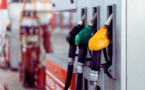
Caretaker Finance Minister Georgi Klisurski said he expects fuel prices at gas stations to ease in the coming period, pointing to a sharp decline in international oil markets
Several Gulf states have reported missile and drone strikes on their territories just hours after the United States and Iran announced a two-week ceasefire agreement, raising fresh questions about whether the truce is holding on the ground

Bulgaria’s caretaker Foreign Minister Nadezhda Neynsky said the announcement of a two-week ceasefire between the United States and Iran brought a sense of relief after weeks of escalating tensions in the Middle East

Global markets reacted sharply after US President Donald Trump stepped back from imminent military action against Iran, instead tying a suspension of strikes to Tehran’s agreement to a temporary ceasefire and the reopening of the Strait of Hormuz

On the 40th day of the war, a tentative pause in hostilities has been announced, as US President Donald Trump said Washington would suspend its attacks after Iran agreed to a two-week ceasefire

The United States has carried out new strikes on Iranian military targets on Kharg Island, a strategic hub for the country’s oil exports, according to American officials
Caretaker Finance Minister Georgi Klisurski said he expects fuel prices at gas stations to ease in the coming period, pointing to a sharp decline in international oil markets

Boris Azarenko is an entrepreneur whose professional background lies in banking and finance and who later founded major property development businesses.

Bulgaria’s new government borrowing for 2026 has surpassed the 1 billion euro mark following the latest successful auction of state securities, according to data cited from the Bulgarian National Bank

Housing prices in Bulgaria have surged by 157% between 2015 and the end of 2025

Bulgaria recorded only a modest and one-off increase in inflation following the adoption of the euro on January 1, with the effect estimated at between 0.3 and 0.4 percentage points

Specialists in the real estate and tourism sectors are forecasting a notable rise in the prices of vacation properties in Bulgaria, with estimates pointing to an increase of between 25% and 30%

Aniventure Comic Con Returns to Bulgaria with Star Guest Christopher Judge!
Global Fuel Shock: Oil Jumps Over 40% Since Iran War Began