Easter Monday in Bulgaria: Tradition and Family Visits
Orthodox Easter Monday is the day following Easter Sunday and is observed across Bulgaria as part of the wider Easter celebration within the Orthodox Christian tradition
HOT: » Which party would you vote for (if you could) in the upcoming snap vote in Bulgaria on April 19?
 Send to Kindle
On Sunday, March 29th, 2026, at 03:00 a.m., Bulgaria will switch to summer time. Clocks will be moved forward by one hour, meaning we will lose an hour of sleep. This adjustment follows a decision by the European Parliament and the Council of the European Union made on March 19th, 2001. Astronomical time will resume on October 25th, 2026.
The concept of summer time has an interesting history. Benjamin Franklin, the first US ambassador to France, jokingly suggested it in 1784 to make fun of the “lazy” French. In a satirical letter to the Paris Gazette, he proposed moving clocks forward in summer to take advantage of daylight, also recommending taxes on window blinds, rationed candles, and wake-up calls by artillery fire.
Over a century later, in 1895, New Zealand astronomer George Hudson proposed summer time to gain extra daylight for studying insects. In 1907, English builder and horology enthusiast William Willett independently suggested the idea after noticing closed windows and curtains during early summer mornings. By July 1, 1908, residents of Port Arthur, Ontario, Canada, were officially allowed to move clocks forward one hour for longer summer evenings, and other Canadian cities quickly adopted the change.
Germany implemented daylight saving time on April 30, 1916, driven by wartime motives: longer daylight hours conserved fuel and improved efficiency for military production. Britain followed a month later, despite opposition from farmers who preferred brighter summer mornings. In 1925, Britain made daylight saving time permanent, aligning waking hours more closely with seasonal daylight.
The future of clock changes in the European Union remains uncertain. In 2018, the EU began discussions on potentially ending the biannual clock changes due to negative health effects. However, the COVID-19 pandemic delayed these talks. To fully abandon the practice, all EU countries must reach a synchronized decision. Meanwhile, other nations, including Turkey, Russia, and Peru, have already stopped adjusting clocks.
The main concern with clock changes is their impact on the biological rhythm. Adjusting to the new time can take one to two weeks, causing fatigue, headaches, reduced concentration, and general discomfort. For 2026, daylight saving time will remain in effect until October 24th, after which clocks will be turned back by one hour on the night of October 25th, returning to standard astronomical time.
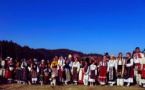
Orthodox Easter Monday is the day following Easter Sunday and is observed across Bulgaria as part of the wider Easter celebration within the Orthodox Christian tradition

Industrial output in Bulgaria posted a modest monthly increase in February 2026, but continued to decline sharply on an annual basis, according to preliminary, seasonally adjusted data from the National Statistical Institute.

The president of the Confederation of Bulgarian Trade Unions, Plamen Dimitrov, has warned that inflation in Bulgaria is likely to exceed earlier projections, even if fuel prices begin to decline

The introduction of the euro in Bulgaria has so far produced only a limited and largely one-off effect on consumer prices, according to an analysis by the European Central Bank
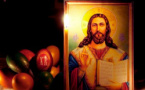
Easter is the most important religious holiday in the Orthodox Christian calendar and is widely celebrated across Bulgaria. It marks the resurrection of Jesus Christ and follows the completion of Holy Week, which includes Good Friday and Holy Saturday

Holy Saturday, known in Bulgaria as Lazarus Saturday’s continuation of the Easter cycle, is a quiet but deeply symbolic day in the Orthodox Christian calendar

Health authorities in Bulgaria report a total of 101 confirmed measles cases across the country, according to data from the Ministry of Health
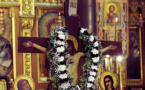
Good Friday, known in Bulgaria as Razpeti petak, is one of the most solemn and deeply observed days in the Orthodox Christian calendar

The Bulgarian scientific research vessel “Sts. Cyril and Methodius” (NIC 421) has returned to Varna, docking at the Marine Station and marking the official end of the country’s 34th Antarctic expedition

Holiday weather conditions are expected to remain mixed across Bulgaria, with alternating periods of sunshine and rain showers, according to the forecast
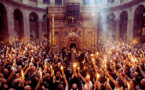
The Bulgarian Orthodox Church has decided that no official delegation will travel to Jerusalem this year to receive the Holy Fire, citing the ongoing tensions in the Middle East

Plovdiv will host the International Street Arts Festival 6Fest from April 20 to 26, 2026, turning the city into an open-air stage featuring performers from 11 countries across three continents

Aniventure Comic Con Returns to Bulgaria with Star Guest Christopher Judge!

Global Fuel Shock: Oil Jumps Over 40% Since Iran War Began