Ukrainian short track speed skater Oleh Handei said on February 11 that he has been barred from wearing his personalized helmet at the Milan Winter Olympics because it carries a line of Ukrainian poetry. According to him, this makes him the third Ukrainian athlete whose helmet has been prohibited on the grounds of alleged “politicization.”
Handei explained that the International Skating Union informed him only days before the start of the Games that his helmet had failed inspection. Officials classified the inscription as a “political slogan.” The helmet bears a quote by renowned Ukrainian poet Lina Kostenko: “Where there is heroism, there is no final defeat.” Handei said he tried to explain that the words are motivational and personal, not political or related to warfare, but his arguments were dismissed.
He stressed that the poetry has no political message and contains no reference to war, adding that it represents values he respects and follows. According to Handei, officials made it clear that continuing to challenge the decision would not change the outcome.
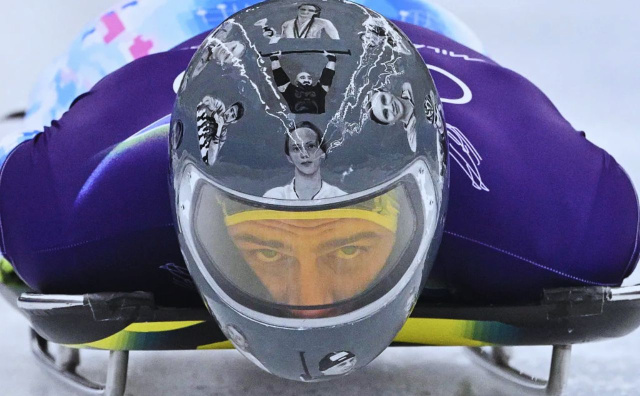
The International Olympic Committee has already imposed similar bans on two other Ukrainian athletes at the 2026 Games. Freestyle skier Kateryna Kotsar was told she could not wear a helmet with the phrase “Be Brave like Ukrainians,” while skeleton racer Vladyslav Heraskevych was prohibited from using a helmet commemorating Ukrainian athletes killed during Russia’s full-scale invasion.
Heraskevych publicly condemned the IOC’s stance, accusing it of double standards. He pointed to the case of Israeli skeleton athlete Jared Firestone, who was allowed to appear at the Olympic opening ceremony wearing a kippah bearing the names of the 11 Israeli athletes and coaches killed at the 1972 Munich Olympics. Heraskevych questioned why honoring Ukrainian athletes killed in war is treated differently, noting that IOC rules apply equally to ceremonies, medal events, and competition venues.
Support for the Ukrainian athletes also came from Ukraine’s armed forces chief, Oleksandr Syrskyi, who shared an image of Heraskevych’s helmet on social media alongside the message: “Remembrance is not a violation.”
The issue unfolds against the backdrop of Russia’s war on Ukraine, which has claimed the lives of hundreds of Ukrainian athletes and coaches and destroyed numerous sports facilities through missile and drone strikes. While Russia and Belarus remain banned from competing as national teams, individual athletes from both countries are still allowed to participate under a so-called neutral status. Many of these competitors, however, have documented links to the Kremlin or have publicly supported the war.
Handei said Ukrainian athletes continue to face pressure and provocations from Russian “neutral” participants, including intimidation and attempts at manipulation. He voiced solidarity with Heraskevych’s stance and public criticism of the IOC, expressing hope that his fellow athlete would not back down.
“As long as we continue to resist, we have a chance to win,” Handei said.