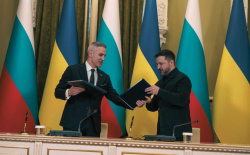
€7.3 Billion on the Table: Is Bulgarian Business Ready for Europe’s Defense Boom?
Europe is undergoing a fundamental shift in how it approaches defense, moving beyond increased spending toward the creation of an entirely new industrial ecosystem
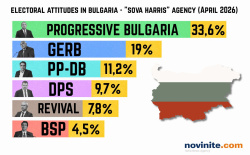
HOT: » Which party would you vote for (if you could) in the upcoming snap vote in Bulgaria on April 19?
 Send to Kindle
As Bulgaria enters its first full year in the eurozone, the real estate market in Sofia begins 2026 with a shift from rapid, speculative growth to more stable, needs-driven demand. In 2025, average prices for standard apartments in the capital ranged from 1,500 to 1,900 euros per square meter, with premium locations and new developments often exceeding 2,000 euros/sq m. This represented an annual increase of around 15% or more, well above the EU average. Analysts note that while prices are high, buyer behavior is becoming more discerning, focusing on quality, energy efficiency, and building management rather than simply chasing the lowest price per square meter.
Neighborhoods driving demand
The most sought-after areas in Sofia continue to be southern districts with strong infrastructure and connectivity, including Krastova Vada, Manastirski Livadi, and Mladost. Central and prestigious neighborhoods like Lozenets and Iztok retain top price levels, though their rate of growth is more moderate. Demand increasingly favors well-built, energy-efficient projects, while lower-quality developments are beginning to see slower sales.
Supply trends indicate larger, complex projects
In the third quarter of 2025, over 13,500 building permits were issued, marking one of the highest levels since 2007. Data from the National Statistical Institute show not only an increase in the number of permits but also a growth in total built-up residential area, reflecting a trend toward larger and more sophisticated projects. Developers are responding to a shortage of quality supply, prioritizing bigger, denser projects that are well-financed and carefully managed.
Demand patterns post-euro adoption
The euro’s introduction has brought predictability and transparency to financing, attracting both domestic and foreign buyers. Housing loans are expanding at a more moderate pace than in previous years, indicating a cooling of speculative activity and healthier market dynamics. Suburban and well-connected neighborhoods continue to see interest, particularly for modern, energy-efficient complexes. Conversely, older panel housing in peripheral areas shows slower movement.
Financing and interest rates
Contrary to expectations, the adoption of the euro has not caused a dramatic reduction in interest rates. Banks now offer a wider range of mortgage products, including fixed and hybrid rates, supporting buyers in early-stage construction and green projects. While financing remains affordable, the emphasis is shifting from speculative acquisitions to long-term investment decisions.
Outlook for 2026: moderate growth and market segmentation
Analysts predict a more measured price increase in Sofia for 2026, roughly 5–10% depending on location and property type. Demand is expected to remain stable but increasingly segmented, with a clear distinction between high-quality projects and compromise developments. The southern and well-connected districts, along with select peripheral areas featuring modern construction, will continue to attract the bulk of buyers. Prestigious neighborhoods will maintain high values, but growth rates will be tempered by buyers’ focus on project quality and functionality.
Conclusion: stability and quality define the market
After the strong growth of recent years, the Bulgarian real estate market is entering a phase of consolidation. The euro brings stability and clarity, but fundamental market principles - particularly the prioritization of quality over quantity - remain decisive. Buyers are now more selective, financing is more structured, and developers are adjusting to a market that values sustainable, well-executed projects over rapid, speculative gains.
Source: Sorenda Real Estate press release

Europe is undergoing a fundamental shift in how it approaches defense, moving beyond increased spending toward the creation of an entirely new industrial ecosystem

Energy expert Boyan Rashev has warned that Europe could be moving toward what he described as an “energy lockdown” scenario if fuel supply pressures continue to worsen

The Bulgarian Ministry of Health has expressed support for the Bulgarian Medical Association’s proposal to raise the prices of all medical services by 25 percent

Fuel prices in Bulgaria have continued to edge upward, with diesel and gasoline both registering increases in the days following the Easter holiday

A leading global research center on democratic systems has issued a stark warning about political trends in several countries, concluding in its latest annual report that Bulgaria is now among those showing clear signs of democratic backsliding
Weather conditions across Bulgaria today are expected to remain stable and predominantly sunny, accompanied by light winds coming from the southwest

Housing prices in Bulgaria have surged by 157% between 2015 and the end of 2025
The Bulgarian real estate market is showing signs of cooling in early 2026, with experts reporting a slowdown in transactions and a shift toward more balanced conditions between buyers and sellers

In 2026 the Bulgarian residential market is shaped less by size and more by adaptability.
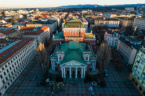
Bulgaria’s entry into the Eurozone marks a defining moment for the country’s real estate sector.

The housing market in Bulgaria is undergoing notable shifts, with buyers increasingly prioritizing location and accessibility over sheer size.

Property values in Sofia have surged by approximately €500 per square metre over the past year, according to data from one of Bulgaria’s largest real estate agencies. Across the country’s main cities, housing costs climbed by 20% in the final quarter of 2

Aniventure Comic Con Returns to Bulgaria with Star Guest Christopher Judge!
Global Fuel Shock: Oil Jumps Over 40% Since Iran War Began