The Power of Knowledge Lies in Its Use
Dr. Boyko Takov: Analytical and empirical results from ongoing projects constitute a solid information base
Business | April 9, 2026, Thursday // 18:21
HOT: » Which party would you vote for (if you could) in the upcoming snap vote in Bulgaria on April 19?
 Send to Kindle
 @novini
In a controversial move just months ahead of the parliamentary elections, Bulgaria’s parliamentary majority is pushing through sweeping changes to the voting system that would eliminate machine voting and replace electronic vote counting with manual scanning of paper ballots. The proposals, discussed during Thursday’s legal committee meeting, are contained in a roughly 200-page report outlining amendments to at least 222 provisions of the Electoral Code. The working group behind the document, whose members have not been publicly identified, is said to include deputies from the majority as well as committee experts. The proposals were released only an hour before the committee convened.
Outgoing Deputy Prime Minister and Minister of Innovation and Growth Tomislav Donchev responded to concerns from the We Continue the Change-Democratic Bulgaria parliamentary group during Friday’s Question Time, arguing that election technology should not replace political debate and the contest of ideas. His comments came in response to a question directed at outgoing Prime Minister Rosen Zhelyazkov, who was absent due to official obligations.
Donchev emphasized that the Council of Ministers’ role is to provide logistical support for elections, while the Central Election Commission retains the primary responsibility. Both institutions are legally bound to adhere to existing regulations. When asked about funding for new voting devices, Donchev noted that the state currently has no dedicated budget, with only spending ceilings carried over from the previous year and no allocations for investment costs. He also criticized the longstanding practice of making last-minute changes to the electoral process in prior elections.
The proposed shift to paper ballots and away from electronic voting has raised concerns about transparency and potential vulnerabilities, as critics argue it could facilitate irregularities and reduce public confidence in the integrity of the vote.
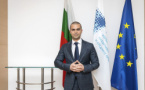
Dr. Boyko Takov: Analytical and empirical results from ongoing projects constitute a solid information base
The European Public Prosecutor’s Office (EPPO) has carried out a series of coordinated investigative actions across several countries, including Bulgaria and Romania, as part of a probe into suspected large-scale fraud involving EU funds

Holiday weather conditions are expected to remain mixed across Bulgaria, with alternating periods of sunshine and rain showers, according to the forecast
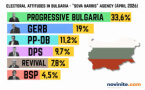
A new survey by the “Sova Harris” agency indicates that six political formations would enter the next Bulgarian National Assembly, based on data collected between April 2 and 6 among 800 respondents through standardized face-to-face interviews

Up to 90 percent of construction and renovation workers in Bulgaria are operating outside the legal framework, according to entrepreneur Lozan Lozanov, who raised concerns about the lack of regulation in construction and installation services
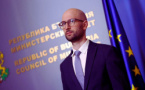
The Ministry of Finance has released a broad public dataset covering more than 7,000 public procurement contracts with a combined value exceeding 30 billion euros
A new survey by the “Sova Harris” agency indicates that six political formations would enter the next Bulgarian National Assembly, based on data collected between April 2 and 6 among 800 respondents through standardized face-to-face interviews

Bulgaria is bracing for an increase in disinformation activity in the run-up to the parliamentary elections on April 19, with authorities warning of coordinated attempts to influence voters and destabilize public trust

The Prosecutorial College of the Supreme Judicial Council has declined to remove Borislav Sarafov from his position as Acting Prosecutor General, despite calls from the Justice Ministry to act following a recent Constitutional Court ruling

The government has decided to withdraw all three Bulgarian nominations for the position of European Prosecutor, effectively restarting the procedure after identifying serious flaws in the initial selection process
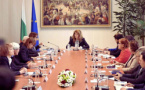
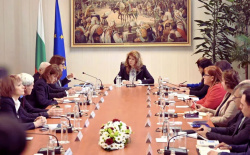
President Iliana Yotova convened a meeting of institutions responsible for the conduct of the early parliamentary elections on April 19, with a focus on assessing preparedness and ensuring that every vote is properly safeguarded
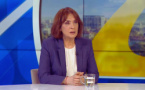
Bulgaria’s caretaker Foreign Minister Nadezhda Neynsky said the announcement of a two-week ceasefire between the United States and Iran brought a sense of relief after weeks of escalating tensions in the Middle East

Aniventure Comic Con Returns to Bulgaria with Star Guest Christopher Judge!

Global Fuel Shock: Oil Jumps Over 40% Since Iran War Began