ECB Keeps Rates Steady to End 2025, Signals Caution for 2026
- Tweet
 Send to Kindle

The European Central Bank (ECB) concluded its final monetary policy meeting of 2025 without changing key interest rates, in line with market expectations. Investors will focus on ECB President Christine Lagarde’s statement for insights into the potential direction of policy in 2026.
Over the past 12 months leading to June, the ECB lowered rates by a total of 2 percentage points and has since kept them steady. The key interest rate is expected to remain at 2 percent for the fourth consecutive time, a stance supported by current macroeconomic data. Eurozone inflation stayed close to the central bank’s target, at 2.1 percent in November, unchanged from October and slightly down from 2.2 percent a year ago, according to Eurostat. Economic growth in the third quarter exceeded expectations, with a 0.3 percent rise.
Lagarde described the current monetary policy stance as “in a good place,” noting that the eurozone’s unexpected resilience to global uncertainty and trade tensions might justify upward revisions to growth forecasts. Nevertheless, she emphasized that uncertainty remains elevated, particularly due to volatile international trade policies, and highlighted that inflation risks remain “two-sided,” necessitating a cautious approach.
Although the ECB’s rate cycle seems to have ended for 2025, markets are pricing in a roughly 30 percent chance of a rate increase by the end of 2026. ECB Executive Board member Isabel Schnabel noted that future hikes could occur, but not immediately. Analysts point out that forthcoming decisions will hinge on factors such as foreign exchange trends, particularly the euro’s 13 percent gain this year, German fiscal stimulus, energy prices, and shifts in global trade. Shaan Raithatha, senior economist at Vanguard, noted that Germany’s fiscal measures and increased EU defense spending will largely be offset by higher US import tariffs.
A Reuters survey of 96 economists found unanimous expectations that the deposit rate will remain unchanged, with about 80 percent anticipating no change until mid-2026 and nearly 75 percent expecting stability through the end of next year.
Attention is also turning to the ECB’s updated macroeconomic forecasts. Schnabel signaled that growth and inflation risks have shifted upward compared with September, though some analysts remain skeptical. The 2026 inflation projection is expected to rise slightly from the prior 1.7 percent estimate, while the 2027 forecast may be revised downward. Despite adjustments, inflation is projected to remain below target in both years. The new quarterly forecasts will also include a preliminary estimate for 2028.

Free Trade Area of 700 Million? Bulgaria's Interim Government Approves Landmark EU-Mercosur Agreement
The caretaker government has approved a decision endorsing the Partnership Agreement between the European Union and its Member States and the Mercosur bloc

“They Hate This Guy”: Vance Goes All-In for Orban in Dramatic Pre-Election Push
US Vice President JD Vance launched a sharp attack on the European Union during a visit to Budapest, accusing Brussels of interfering in Hungary’s election just days before a closely contested vote that could reshape the country’s political landscape
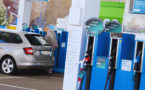
Fuel Prices Hit New Highs in Germany as Diesel Surpasses €2.40 Per Liter
Fuel prices in Germany have recently reached new highs, with diesel briefly exceeding 2.40 euros per litre during the Easter holiday period before easing slightly afterward

“You Need Permission to Travel”: Germany’s Military Law Change Sparks Fierce Debate
A recently revised German military service framework has triggered public debate after it emerged that it places new travel-related obligations on men aged between 17 and 45

Spain Launches Digital Identity System with Legal Power Equal to Physical ID
Spain has officially launched its system of digital identity, which came into effect on April 2 and grants the electronic version of the national identity card the same legal validity as the physical document

Bulgaria Records Lowest Unemployment in Eurozone Despite Slight Rise in February
Unemployment in the euro area edged up slightly in February, reaching 6.2% compared to the record low of 6.1% recorded in January, according to figures released by Eurostat