Putin Declares Easter Ceasefire in Ukraine War
The Kremlin has announced that Russian President Vladimir Putin has ordered an “Easter ceasefire” in the war in Ukraine, declaring a temporary halt in hostilities lasting around 36 hours
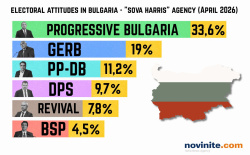
HOT: » Which party would you vote for (if you could) in the upcoming snap vote in Bulgaria on April 19?
 Send to Kindle
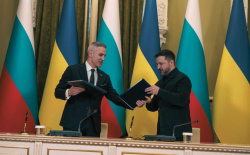
European leaders have expressed readiness to lead a “multinational force” in Ukraine as part of a U.S.-backed plan aimed at achieving a peace agreement with Russia. In a joint statement, the heads of the UK, France, Germany, and eight other European nations outlined that troops from a coalition of willing countries, supported by the U.S., could assist in rebuilding Ukraine’s armed forces, securing its airspace, and protecting maritime routes, including operations within Ukrainian territory.
The proposal is part of a broader security package put forward by Washington, intended to pave the way for a potential peace deal between Moscow and Kyiv. However, significant disagreements remain, particularly over the status of Ukrainian territories currently occupied by Russia.
U.S. President Donald Trump described his recent talks with Ukrainian President Volodymyr Zelensky, European leaders, and NATO representatives as “very long and very good,” noting ongoing discussions with Russian President Vladimir Putin. Trump suggested that, as part of any security guarantees, Ukraine might need to concede parts of the Donbas region, although Zelensky has consistently rejected such territorial compromises.
Zelensky said that discussions with U.S. envoys were challenging but produced tangible progress, especially on security guarantees, while differences remain regarding the future of occupied territories. Under the U.S. proposal, Ukraine would maintain a standing army of 800,000 troops, with America providing a ceasefire monitoring and verification mechanism to detect any renewed Russian aggression. European nations would commit, under national procedures, to restoring peace and security in the event of a future armed attack. The plan would also support Ukraine’s bid to join the European Union and provide “Article 5-like” guarantees comparable to NATO’s protection for member states.
The U.S. presented the package in Berlin during discussions with Zelensky and European officials. According to U.S. sources, both Kyiv and European leaders responded positively, viewing it as the strongest set of security protocols ever offered. Details of how these guarantees would be implemented remain undisclosed, and Washington clarified that no U.S. troops would be deployed on the ground in Ukraine under this plan.
German Chancellor Friedrich Merz said the discussions brought the two sides closer to a genuine peace process than ever since Russia’s full-scale invasion in 2022. Zelensky echoed this, describing the talks as productive, while Rustem Umerov, secretary of Ukraine’s National Security and Defense Council, confirmed that real progress had been achieved.
The talks also touched on the future of the Zaporizhzhia nuclear power plant, currently under Russian control, with U.S. negotiators proposing a 50/50 split of the electricity produced. U.S. officials claimed that approximately 90% of disputes between Russia and Ukraine had been resolved. Zelensky highlighted the ongoing use of Russian attacks as leverage in negotiations, stressing that critical infrastructure, including energy, schools, and universities, has been repeatedly targeted.
Trump has been pressing for an end to the conflict by Christmas, while Zelensky has shown willingness to freeze the frontlines instead of ceding the entire Donbas region, in exchange for legally binding security guarantees from the West. Putin views Ukraine’s NATO ambitions as a central security threat and has criticized any perceived concessions, with Moscow awaiting a briefing on the Berlin talks.
European leaders have stressed the lasting impact of these negotiations on continental security. Chancellor Merz warned that Putin seeks to redraw Europe’s borders and restore Soviet-era territories, asserting that failure to support Ukraine could embolden further Russian aggression. Meanwhile, the UK’s MI6 chief, Blaise Metreweli, called Russia an “aggressive, expansionist” threat, claiming that Moscow is deliberately prolonging negotiations while shifting the war’s burden onto its own population.
The European Union is also working to finalize a plan for funding Ukraine’s reconstruction using frozen Russian assets, though a deal remains uncertain. Leaders, including Zelensky, are scheduled to meet in The Hague to launch an International Claims Commission to secure compensation for damages caused by Russian military actions and alleged war crimes.
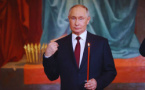
The Kremlin has announced that Russian President Vladimir Putin has ordered an “Easter ceasefire” in the war in Ukraine, declaring a temporary halt in hostilities lasting around 36 hours
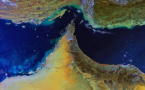
A fragile ceasefire between the United States and Iran has coincided with escalating tensions over the Strait of Hormuz, where Iran has moved to tighten control over one of the world’s most critical maritime routes
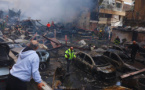
Lebanon has declared a national day of mourning after one of the deadliest days in recent months, with at least 254 people killed and more than 1,165 injured in Israeli strikes carried out shortly after the announcement of a US-Iran ceasefire
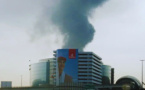
Several Gulf states have reported missile and drone strikes on their territories just hours after the United States and Iran announced a two-week ceasefire agreement, raising fresh questions about whether the truce is holding on the ground

Global markets reacted sharply after US President Donald Trump stepped back from imminent military action against Iran, instead tying a suspension of strikes to Tehran’s agreement to a temporary ceasefire and the reopening of the Strait of Hormuz
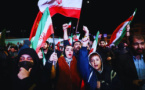
On the 40th day of the war, a tentative pause in hostilities has been announced, as US President Donald Trump said Washington would suspend its attacks after Iran agreed to a two-week ceasefire
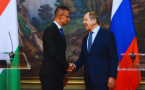
A group of Members of the European Parliament has raised concerns over the potential leakage of confidential EU information to Russia, urging stronger safeguards within the European Parliament
The European Public Prosecutor’s Office (EPPO) has carried out a series of coordinated investigative actions across several countries, including Bulgaria and Romania, as part of a probe into suspected large-scale fraud involving EU funds
The caretaker government has approved a decision endorsing the Partnership Agreement between the European Union and its Member States and the Mercosur bloc
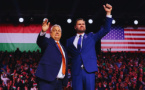
US Vice President JD Vance launched a sharp attack on the European Union during a visit to Budapest, accusing Brussels of interfering in Hungary’s election just days before a closely contested vote that could reshape the country’s political landscape
Fuel prices in Germany have recently reached new highs, with diesel briefly exceeding 2.40 euros per litre during the Easter holiday period before easing slightly afterward
A recently revised German military service framework has triggered public debate after it emerged that it places new travel-related obligations on men aged between 17 and 45

Aniventure Comic Con Returns to Bulgaria with Star Guest Christopher Judge!
Global Fuel Shock: Oil Jumps Over 40% Since Iran War Began