US President Donald Trump's broad new tariff measures targeting over 90 countries have officially taken effect. This sweeping move aims to reshape global trade dynamics, which Trump argues have long disadvantaged the United States.
In a post on his platform Truth Social, Trump celebrated the influx of billions of dollars into the US economy resulting from these tariffs. Among the most notable new levies is a 50% tariff on Indian imports, set to begin on August 27 unless India halts its purchase of Russian oil. The move has drawn strong criticism from New Delhi, which deems it unfair and vowed to defend its interests.
Trump also announced plans to impose a 100% tariff on imported foreign-made computer chips. However, exemptions will apply to companies manufacturing chips in the US or committed to building domestic production facilities. This step accompanies Apple’s announcement of a 0 billion investment in US production, seen as a direct response to White House pressure to relocate manufacturing back to American soil.
In the weeks leading up to the tariffs' enforcement, the Trump administration updated and expanded the list of targeted imports, offering countries until August 7 to negotiate agreements to reduce or eliminate these tariffs. Many nations scrambled to secure deals to avoid the full brunt of the new import taxes.
South East Asian economies reliant on exports, including Laos and Myanmar, are among those hit hardest, facing tariffs as high as 40%. Analysts suggest that the US may be targeting countries with strong trade links to China as part of a broader geopolitical strategy.
Despite the market jitters anticipated from these tariffs, stock indices in Japan, Hong Kong, South Korea, and mainland China posted slight gains, while Indian and Australian markets fell. Economist Bert Hofman of the National University of Singapore remarked that the new tariffs bring a level of predictability after months of trade uncertainty.
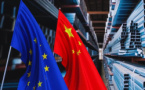
Several major economies, including the UK, Japan, and South Korea, have already secured agreements limiting the tariffs to less severe rates. The European Union reached a framework deal accepting a 15% tariff on its exports to the US, while Switzerland, facing one of the highest proposed rates at 39%, has called an extraordinary government meeting to address the issue.
Taiwan, a strategic US ally in Asia, has been hit with a 20% tariff, though President Lai Ching-te described this as a temporary measure while ongoing talks continue.
In North America, the US increased tariffs on Canada from 25% to 35%, citing inadequate cooperation on drug trafficking controls. However, most Canadian goods will avoid these tariffs due to the United States-Mexico-Canada Agreement (USMCA). Tariffs on Mexico have been postponed for another 90 days as negotiations proceed.
Regarding the semiconductor sector, the proposed 100% tariff on foreign-made chips sparked intense debate. South Korea confirmed that major chip manufacturers Samsung Electronics and SK Hynix would be exempt due to existing trade agreements and investments in US manufacturing. Taiwan’s TSMC, a key chipmaker with US plants, also appears to be shielded from the tariff.
Industry experts warn that while large, cash-rich companies investing heavily in US facilities stand to benefit, smaller players and countries heavily involved in chip testing and packaging, like Malaysia and the Philippines, risk losing access to the US market or becoming less competitive.
Taiwanese officials emphasized that their companies are expanding US production to mitigate tariff impacts, reflecting a broader trend of semiconductor firms adjusting supply chains in response to trade policies.
Congress’s recent .7 billion subsidy program for semiconductor manufacturing has accelerated US investment, aiming to regain lost ground after the country’s global chip production share fell from 40% in 1990 to roughly 12% today.
The EU has negotiated a single tariff rate of 15% for most exports, including cars and pharmaceuticals, with Japan securing assurances of no worse tariff treatment than other countries for chip exports.
Following the tariff announcements, Asian semiconductor stocks responded positively, with shares of TSMC, Samsung, and GlobalWafers rising, signaling investor confidence in the adjusted trade environment.