Easter Monday in Bulgaria: Tradition and Family Visits
Orthodox Easter Monday is the day following Easter Sunday and is observed across Bulgaria as part of the wider Easter celebration within the Orthodox Christian tradition
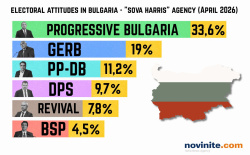
HOT: » Which party would you vote for (if you could) in the upcoming snap vote in Bulgaria on April 19?
 Send to Kindle
 @politico.eu
As Bulgaria prepares for eurozone accession, voices from Croatia - the last EU country to adopt the euro - are offering a mix of reassurance and caution. In an analysis by Politico, Croatian economists and officials urge Bulgarians not to panic over fears of inflation and economic instability, pointing to their own experience since switching to the single currency in 2023.
Despite public protests in Bulgaria and concerns about rising living costs, Croatia’s transition offers a generally positive model. Inflation in Croatia did increase slightly after euro adoption, but experts stress that this was influenced more by broader economic trends than by the currency change itself.
Croatia’s Post-Euro Performance
Croatia saw notable economic gains after adopting the euro. In 2023, it recorded one of the highest growth rates in the EU - 3.8 percent - driven in part by a booming tourism sector. Unemployment fell to its lowest level since 1996. Meanwhile, Croatia made strong use of EU funds, with rating agency Fitch projecting full absorption of €4.5 billion under the Recovery and Resilience Facility by mid-2024. Most strikingly, average wages have risen more than 30 percent since the transition from kuna to euro.
Inflation Worries Not Unique to the Euro
Both Bulgaria and Croatia experienced inflation spikes in recent years, fueled largely by global shocks rather than monetary policy. Croatia’s inflation peaked at just over 13 percent, while Bulgaria reached nearly 19 percent. Petar Sorić, economist at the University of Zagreb, noted that Croatia adopted the euro during one of the worst inflationary periods since the 1990s, making it difficult for consumers to distinguish between euro-related price increases and those caused by external factors.
Still, concerns about euro-driven inflation aren’t unfounded. Economist Fran Galetić pointed to Slovenia, where prices rose 9 percent in the 18 months after it joined the euro in 2007. In Croatia, despite official messaging to the contrary, similar perceptions took hold. To ease public anxiety, Croatian authorities required shops to show prices in both kuna and euro for four months before and a full year after the currency changeover.
Yet, Galetić observed that many retailers raised prices before the dual-display period began, allowing them to claim stability later - a tactic that left consumers feeling misled. Prices rose more sharply around the euro changeover than in the rest of the eurozone, and resentment persists. In early 2024, Croatians organized supermarket boycotts to protest price hikes, pushing the government to expand its price controls on essential goods.
Lessons for Bulgaria
Bulgaria plans to implement a similar dual-pricing policy beginning in July. Croatian economists argue that Sofia is entering the eurozone under calmer inflationary conditions, which should make it easier to monitor price movements and punish unjustified increases. This more stable backdrop could help Bulgaria avoid the perception gaps and opportunistic pricing that marred Croatia’s experience.
Other inflation drivers are more complex. Croatia’s tourism-dependent economy has seen travel prices surge by 50 percent since the pandemic, compared to 15–20 percent in Spain and Greece. However, experts agree these hikes are only loosely linked to euro adoption.
Euro Benefits Outweigh the Costs
Despite challenges, the Croatian National Bank maintains that joining the eurozone has been overwhelmingly positive. According to Ana Šabić, the bank’s head of European relations, the country now saves around €160 million annually by eliminating currency conversion and transaction fees. Croatia’s credit risk premium - once a significant concern - has nearly vanished, aligning its government bond yields with those of Germany.
Šabić labeled the transition a “complete success,” noting that Croatia has reaped all the expected benefits despite joining during turbulent times. Still, she offered a gentle warning: the success of euro adoption hinges on strong planning and clear institutional responsibilities - areas where Bulgaria will need to stay focused, especially given its own history of political instability.
With Bulgaria scheduled to adopt the euro in 2025, Croatia’s mixed but largely favorable experience serves as both a guide and a cautionary tale. The message from Zagreb is simple: don’t panic - but do your homework.
Source: Politico

Orthodox Easter Monday is the day following Easter Sunday and is observed across Bulgaria as part of the wider Easter celebration within the Orthodox Christian tradition

Industrial output in Bulgaria posted a modest monthly increase in February 2026, but continued to decline sharply on an annual basis, according to preliminary, seasonally adjusted data from the National Statistical Institute.
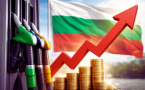
The president of the Confederation of Bulgarian Trade Unions, Plamen Dimitrov, has warned that inflation in Bulgaria is likely to exceed earlier projections, even if fuel prices begin to decline

The introduction of the euro in Bulgaria has so far produced only a limited and largely one-off effect on consumer prices, according to an analysis by the European Central Bank

Easter is the most important religious holiday in the Orthodox Christian calendar and is widely celebrated across Bulgaria. It marks the resurrection of Jesus Christ and follows the completion of Holy Week, which includes Good Friday and Holy Saturday
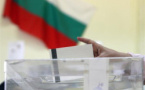
The Central Election Commission (CEC) in Bulgaria has confirmed that a total of 6,575,151 citizens are eligible to vote in the upcoming elections on April 19

NEW POLL: HUNGARIANS UNITED ON NEED FOR A ‘DIFFERENT’ RELATIONSHIP WITH THE EU, BUT DIVERGENCES REMAIN ON UKRAINE
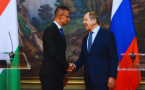
A group of Members of the European Parliament has raised concerns over the potential leakage of confidential EU information to Russia, urging stronger safeguards within the European Parliament
The European Public Prosecutor’s Office (EPPO) has carried out a series of coordinated investigative actions across several countries, including Bulgaria and Romania, as part of a probe into suspected large-scale fraud involving EU funds

The caretaker government has approved a decision endorsing the Partnership Agreement between the European Union and its Member States and the Mercosur bloc

US Vice President JD Vance launched a sharp attack on the European Union during a visit to Budapest, accusing Brussels of interfering in Hungary’s election just days before a closely contested vote that could reshape the country’s political landscape
Fuel prices in Germany have recently reached new highs, with diesel briefly exceeding 2.40 euros per litre during the Easter holiday period before easing slightly afterward

Aniventure Comic Con Returns to Bulgaria with Star Guest Christopher Judge!
Global Fuel Shock: Oil Jumps Over 40% Since Iran War Began