The Power of Knowledge Lies in Its Use
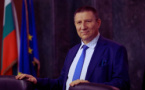
Dr. Boyko Takov: Analytical and empirical results from ongoing projects constitute a solid information base
Business | April 9, 2026, Thursday // 18:21
HOT: » Which party would you vote for (if you could) in the upcoming snap vote in Bulgaria on April 19?
 Send to Kindle
 Photo: Stella Ivanova
A recent UNICEF report places Bulgaria among the countries with the highest proportion of functionally illiterate children. This troubling ranking comes amid a wider regional decline in academic skills linked to school closures during the COVID-19 pandemic, a challenge shared by many nations.
The study reviewed data from 43 OECD member states and the European Union, revealing a stark picture: before the pandemic, children were already struggling with inadequate support, even in wealthier countries. Bo Viktor Nylund, director of UNICEF Innocenti, stressed the urgent need for countries to prioritize children’s education, health, and wellbeing to safeguard their future and society’s economic stability amid growing uncertainty.
The report highlights that approximately 8 million 15-year-olds—around half of this age group—were found to be functionally illiterate and innumerate, unable to comprehend simple texts. This represents a 4% increase since 2018, with Bulgaria, Colombia, Costa Rica, Cyprus, and Mexico leading the list where over two-thirds of children at this age face such difficulties.
On a more positive note, countries like the Netherlands and Denmark maintain their positions as the best places for children, based on mental wellbeing, physical health, and skill development, with France, Portugal, and Ireland following closely. In contrast, New Zealand, Colombia, Mexico, Turkey, and Chile score lowest in these dimensions.
The study also notes encouraging improvements, such as significant drops in infant mortality rates, fewer youth suicides, and higher school completion rates. Yet, serious concerns remain over children’s mental health, as life satisfaction among youth continues to decline—with Japan being the sole exception showing improvement.
Physical health trends are equally worrying, as the number of overweight children steadily rises. Nylund emphasized that these pandemic-era figures set a sobering benchmark, particularly affecting children from disadvantaged backgrounds.
To address these complex and interconnected challenges, UNICEF calls for a comprehensive, lifelong approach that supports children’s needs at every stage, ensuring no child is left behind.
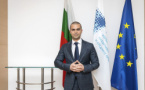
Dr. Boyko Takov: Analytical and empirical results from ongoing projects constitute a solid information base
The European Public Prosecutor’s Office (EPPO) has carried out a series of coordinated investigative actions across several countries, including Bulgaria and Romania, as part of a probe into suspected large-scale fraud involving EU funds

Holiday weather conditions are expected to remain mixed across Bulgaria, with alternating periods of sunshine and rain showers, according to the forecast
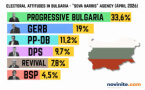
A new survey by the “Sova Harris” agency indicates that six political formations would enter the next Bulgarian National Assembly, based on data collected between April 2 and 6 among 800 respondents through standardized face-to-face interviews

Up to 90 percent of construction and renovation workers in Bulgaria are operating outside the legal framework, according to entrepreneur Lozan Lozanov, who raised concerns about the lack of regulation in construction and installation services
The Ministry of Finance has released a broad public dataset covering more than 7,000 public procurement contracts with a combined value exceeding 30 billion euros
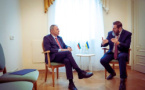
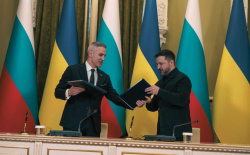
Acting Education Minister Sergey Ignatov said that his recent visit to Kyiv came at a critical moment, stressing that it could not be delayed. According to him, the signing of a protocol with his Ukrainian counterpart was decisive for the future of the Bu
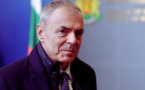
Acting Education Minister Prof. Sergey Ignatov stated during a briefing at the Council of Ministers that a significant part of Bulgaria’s intellectual and revolutionary elite historically studied at the Bolgrad High School in the Odesa Oblast
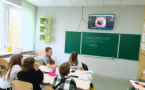
Bulgaria is preparing steps to introduce the Ukrainian language into its school system as part of foreign language education, alongside broader plans to expand educational cooperation with Ukraine

The Bulgarian government has proposed changes that would increase student tuition and application fees starting from the 2026/2027 academic year, according to a draft decision released for public consultation

Interest among Bulgarian high school graduates in pursuing higher education abroad continues to grow, reflecting both the ongoing digital transformation of the economy and expectations for major changes in the future labor market

Sofia Municipality has proposed changes to the rules governing admission to nurseries and kindergartens in the Bulgarian capital

Aniventure Comic Con Returns to Bulgaria with Star Guest Christopher Judge!
Global Fuel Shock: Oil Jumps Over 40% Since Iran War Began