€7.3 Billion on the Table: Is Bulgarian Business Ready for Europe’s Defense Boom?
Europe is undergoing a fundamental shift in how it approaches defense, moving beyond increased spending toward the creation of an entirely new industrial ecosystem
HOT: » Which party would you vote for (if you could) in the upcoming snap vote in Bulgaria on April 19?
 Send to Kindle
The Bulgarian Parliament has approved the purchase of Javelin anti-tank missiles from the United States for 153 million leva, with the contract ratified in two consecutive votes in a single day. The decision was supported by political parties GERB, BSP, TISP, WCC-DB, and both factions of DPS, along with the "Greatness" party. Opposing the purchase were "Revival," MECH, and one MP from Dogan's DPS. The payment for the missiles will be made in installments, and the acquisition is part of a broader package that includes Stryker combat vehicles, as previously announced by the government in February.
During the parliamentary debate, the pro-Russian party "Revival" strongly criticized the deal, claiming that Javelin missiles are outdated and that Bulgaria should prioritize domestic military production. Party leader Kostadin Kostadinov argued that these weapons were not worth the investment and compared them to the "American coffins," referring to the Stryker vehicles. He also accused the government of neglecting Bulgarian defense manufacturers in favor of foreign arms deals. In response, WCC-DB countered that the Javelin missiles have proven effective on the battlefield in Ukraine and dismissed claims about their obsolescence.
Asen Vassilev from WCC-DB challenged "Revival's" assertion that Bulgarian companies produce comparable weaponry, stating that when he was finance minister, defense experts confirmed that no such domestic alternatives exist. He pressed Kostadinov to name a Bulgarian company capable of producing similar or superior systems. Kostadinov named several firms and accused past governments of systematically dismantling the country's defense industry. He claimed that a consortium led by a Bulgarian entrepreneur, a global leader in the military sector, had attempted to establish production in Burgas but was ignored in favor of an American deal. Vassilev rejected these claims, emphasizing that Bulgaria’s military-industrial complex has thrived, with its turnover tripling since 2001.
Amid the heated debate, Ivaylo Mirchev from DB refuted claims that Javelins are outdated, pointing to their continued success in Ukraine and their recent procurement by Turkey. He also noted that Bulgaria’s defense sector has never been more active, with ammunition and weapons exports at an all-time high. GERB MP Hristo Gadzhev joined the discussion, suggesting that delaying military modernization would only weaken the Bulgarian army. Meanwhile, "Greatness" leader Ivelin Mihaylov argued that financial investment alone would not be sufficient, highlighting concerns over manpower shortages in the military.
The debate also escalated into a broader controversy over an investment in a gunpowder plant near Shumen, which WCC-DB accused DPS-New Beginning of blocking. Former Economy Minister Bogdan Bogdanov alleged that Delyan Peevski had pressured him and then Prime Minister Nikolai Denkov to exclude a 200-million-lev project from the government’s agenda in 2023. He claimed that security services withdrew their initial approval just minutes before a government meeting, effectively stalling the investment. WCC-DB announced plans to demand explanations from the intelligence agencies regarding the decision.
In response, DPS-New Beginning defended the decision, asserting that the investment was linked to a trader supplying arms to Russia. The gunpowder plant, backed by Hristo Gebrev, son of arms manufacturer Emilian Gebrev, was set to operate in the former chemical plant in Smyadovo. With only two such factories in Europe, Bloomberg has warned of potential shortages, adding to the controversy.
Tensions flared further as DPS-New Beginning MP Stanislav Anastasov accused WCC-DB of aligning with vested business interests, particularly those of Gebrev. He argued that three parliamentary groups—WCC-DB, "Greatness," and "Revival"—were collectively defending an arms dealer. Mirchev denied any connection to Gebrev and accused Peevski of orchestrating the investment's obstruction through the intelligence services. The exchange culminated in accusations of political manipulation, prompting GERB’s Hristo Gadzhev to call for a return to the original topic of discussion—the Javelin missile purchase.

Europe is undergoing a fundamental shift in how it approaches defense, moving beyond increased spending toward the creation of an entirely new industrial ecosystem

The Bulgarian scientific research vessel “Sts. Cyril and Methodius” (NIC 421) has returned to Varna, docking at the Marine Station and marking the official end of the country’s 34th Antarctic expedition

The Bulgarian Orthodox Church has decided that no official delegation will travel to Jerusalem this year to receive the Holy Fire, citing the ongoing tensions in the Middle East

The government has decided to withdraw all three Bulgarian nominations for the position of European Prosecutor, effectively restarting the procedure after identifying serious flaws in the initial selection process
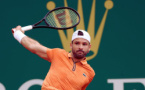
Grigor Dimitrov recorded another early exit, losing in the opening round of the Monte Carlo Masters and continuing a difficult start to the season
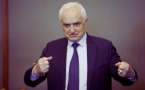
Acting defense Minister Atanas Zapryanov said that the concept of Bulgaria relying on its own defense outside a collective system would place an unsustainable burden on the country’s economy and public finances
Europe is undergoing a fundamental shift in how it approaches defense, moving beyond increased spending toward the creation of an entirely new industrial ecosystem
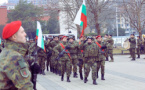
The personnel deficit in the Bulgarian Armed Forces stood at 20.5% in 2025, marking a slight improvement of 1.8 percentage points compared to the previous year, according to the Report on the State of Defence and the Armed Forces, approved by the caretake
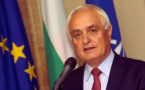
Acting Defense Minister Atanas Zapryanov has stated that Bulgaria is not taking on any military obligations under the ten-year security cooperation agreement with Ukraine
Acting defense Minister Atanas Zapryanov said that the concept of Bulgaria relying on its own defense outside a collective system would place an unsustainable burden on the country’s economy and public finances

Journalist Hristo Rimpopov told Bulgarian National Radio that there is no basis to assume Bulgaria could become a target of Iranian attacks, following confirmation by the Foreign Ministry that Tehran had sent a diplomatic note concerning the presence of U
Acting Foreign Minister Nadezhda Neynski has stated categorically that Bulgaria will not take part in any military coalition aimed at reopening the Strait of Hormuz, citing the country’s limited capabilities

Aniventure Comic Con Returns to Bulgaria with Star Guest Christopher Judge!

Global Fuel Shock: Oil Jumps Over 40% Since Iran War Began