The Power of Knowledge Lies in Its Use
Dr. Boyko Takov: Analytical and empirical results from ongoing projects constitute a solid information base
Business | April 9, 2026, Thursday // 18:21
HOT: » Which party would you vote for (if you could) in the upcoming snap vote in Bulgaria on April 19?
 Send to Kindle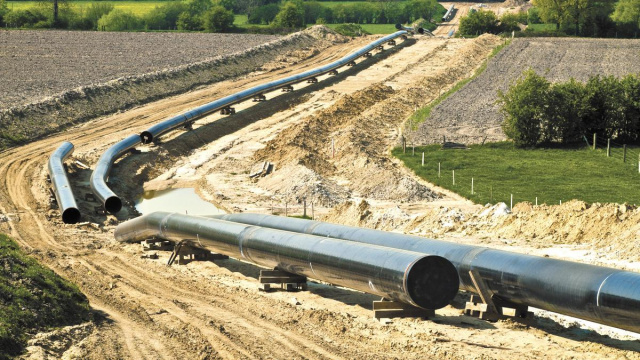
During a forum in Alexandroupolis, US Assistant Secretary of State for Energy, Jeffrey Payatt, highlighted the significance of a gas pipeline project through Bulgaria as the next pivotal step for energy development in the region. This initiative involves linking the gas connector with Bulgaria (IGB) to the dormant Trans-Balkan gas pipeline, which historically transported Russian gas to the area.
The purpose of this endeavor is to facilitate the transportation of liquefied natural gas (LNG) to various destinations, including Moldova, Ukraine, gas storage facilities in Ukraine, and onward to Central Europe and the Western Balkans, all at more stable prices, Payatt explained.
According to Payatt, as reported by ERT TV, this project holds the potential to assist Greece and the European Union in completely phasing out their reliance on Russian liquefied gas by 2027. While Russian liquefied gas is currently not under sanctions, there is a recommendation for each country to work towards ceasing imports.
The initiative signifies a strategic move towards enhancing energy security in the region and reducing dependence on a single source for gas supplies. With geopolitical tensions affecting energy markets, diversification of energy sources and supply routes is increasingly seen as imperative for ensuring stability and resilience.
Dr. Boyko Takov: Analytical and empirical results from ongoing projects constitute a solid information base
The European Public Prosecutor’s Office (EPPO) has carried out a series of coordinated investigative actions across several countries, including Bulgaria and Romania, as part of a probe into suspected large-scale fraud involving EU funds
Holiday weather conditions are expected to remain mixed across Bulgaria, with alternating periods of sunshine and rain showers, according to the forecast
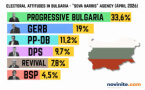
A new survey by the “Sova Harris” agency indicates that six political formations would enter the next Bulgarian National Assembly, based on data collected between April 2 and 6 among 800 respondents through standardized face-to-face interviews

Up to 90 percent of construction and renovation workers in Bulgaria are operating outside the legal framework, according to entrepreneur Lozan Lozanov, who raised concerns about the lack of regulation in construction and installation services

The Ministry of Finance has released a broad public dataset covering more than 7,000 public procurement contracts with a combined value exceeding 30 billion euros
Bulgaria’s fuel market has recorded a sharp upward shift since the outbreak of the war in Iran, with diesel and petrol prices rising significantly across the country
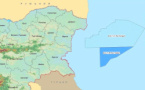
The second exploration drilling in the Krum-1 area of the Khan Asparuh block in Bulgaria’s Black Sea has also failed to identify commercially significant natural gas deposits, according to OMV Petrom

The Ombudswoman institution has voiced strong opposition to the proposed increase in heating prices in Sofia, which is expected to approach nearly 30 percent
The Energy and Water Regulatory Commission (EWRC) in Bulgaria has set the price of natural gas for April 2026 at 34.27 euros per megawatt-hour, excluding access, transmission, excise duties and VAT
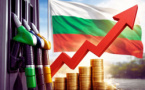
Fuel prices in Bulgaria have recorded a sharp upward movement over the past month, with diesel showing the most significant increase, according to data from the Fuelo platform
Bulgargaz has defended its previously submitted proposal for a 5% rise in natural gas prices for April before the Energy and Water Regulatory Commission, with CEO Veselin Sinabov stressing that there is currently no justification for any further increases

Aniventure Comic Con Returns to Bulgaria with Star Guest Christopher Judge!
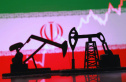
Global Fuel Shock: Oil Jumps Over 40% Since Iran War Began