Bulgaria to Conduct Test of BG-Alert Early Warning System
Bulgaria’s disaster early warning system, BG-Alert, will undergo a nationwide test on April 1
Society | March 19, 2025, Wednesday // 14:43
HOT: » Which party would you vote for (if you could) in the upcoming snap vote in Bulgaria on April 19?
 Send to Kindle
These are questions many people gone through coronavirus wondering about - how do we know that are we protected from Covid-19? Vaccinated are also wondering whether they are already immune to the virus.
Antibody tests may have many answers and can help with all of these questions, although they don't provide absolute clarity about levels of immunity.
There are two main kinds: tests that measure whether antibodies are present at all, and others that assess how well those antibodies perform against the virus.
First are mainly reliable and can establish whether you have had the coronavirus or not.
The second, known as neutralising tests, blood serum is brought into contact with parts of the coronavirus in the lab to see how antibodies work to to keep the virus out.
While the test doesn't offer absolute certainty, it's safe to say that a positive neutralization test almost always means you're protected.
That means even simple antibody tests provide a certain degree of protection, although how much they can tell you is limited. For the moment the level of immunity is not possible to determine with precision by the amount of antibodies.
But what about the prices? While this varies from country to country, in much of Europe, antibody tests, can cost around 18 euros (the equivalent of 22 dollars), while neutralization tests are between 50 to 90 euros (60 to 110 dollars).
There are also tests for home use, where you take some blood from your fingertip and send it in for lab analysis or drip it directly onto a test cassette - similar to a rapid antigen test that tests for acute corona infection.
What actually antibody test is looking for?
The body's fast reaction forces against the virus are the IgA and IgM antibodies. They're quickly formed but the levels of them in your blood after an infection also fall more quickly than the third group of antibodies.
These are the IgG antibodies, formed by "memory cells", some of which can remain in the body for a long time and remember that the Sars-CoV-2 virus is an enemy.
The body does not produce IgG antibodies until a few days after infection. So if you're testing for this type of antibody, as is the norm, experts say wait two weeks after the infection at least.
Meanwhile, if the test is looking to establish whether there are IgM antibodies, for example, it may come out negative even just a few weeks after infection. But this still doesn't mean you don't have any protection in you.
If one have relatively robust T-cell immunity, it ensures that he/she get less sick or not ill at all, despite having fewer or no antibodies.
In theory, everyone who wants to can have their blood tested for T cells, depending on their location, as various lab physicians offer T-cell tests.
So when does it even make sense to have an antibody test?
Scientists advise that it makes sense particularly for people with an immune deficiency or who take immunosuppressant drugs, after the second vaccination to see how high the antibody level is.
Apart from them anyone who wants an assessment of immune protection against the coronavirus should opt for a neutralization test.

Bulgaria’s disaster early warning system, BG-Alert, will undergo a nationwide test on April 1

An advisor to Bulgaria's Minister of the Interior, Nikolay Nikolov, announced that the BG-Alert notification system test was successful

The national test of the BG-Alert system, previously postponed, is scheduled to take place today

The national test of the BG-Alert Emergency and Disaster Early Warning System, initially postponed, is scheduled for Thursday, October 17.

The Ministry of the Interior has announced that the planned testing of the National Early Warning and Disclosure System, including the BG-Alert system, has been postponed

On October 1 at 11 a.m., a scheduled activation of both the National Early Warning and Notification System and the BG-Alert System will take place to assess their technical functionality
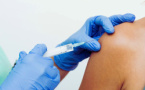
Bulgaria is not currently facing a measles outbreak, but declining vaccination coverage is raising concerns about a potential epidemic, Acting Health Minister Assoc. Prof. Mihail Okoliyski said in an interview with BNT

Bulgarian authorities have blocked the entry of more than 370 tons of food products from non-EU countries over the course of roughly one month, following inspections at the Union’s external borders

The Bulgarian Ministry of Health has expressed support for the Bulgarian Medical Association’s proposal to raise the prices of all medical services by 25 percent

Health authorities in Bulgaria report a total of 101 confirmed measles cases across the country, according to data from the Ministry of Health

The Bulgarian Medical Association has called for an urgent overhaul of healthcare funding, insisting on a 25 percent increase in the prices of clinical pathways and all medical services, alongside a revision of the user fee for hospital stays

Health authorities report that measles infections in Bulgaria have surpassed 70 confirmed cases, with a total of 73 registered as of April 3

Aniventure Comic Con Returns to Bulgaria with Star Guest Christopher Judge!
Global Fuel Shock: Oil Jumps Over 40% Since Iran War Began