€7.3 Billion on the Table: Is Bulgarian Business Ready for Europe’s Defense Boom?
Europe is undergoing a fundamental shift in how it approaches defense, moving beyond increased spending toward the creation of an entirely new industrial ecosystem
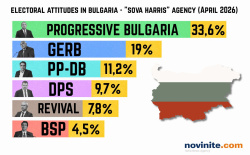
HOT: » Which party would you vote for (if you could) in the upcoming snap vote in Bulgaria on April 19?
 Send to Kindle
May 8, the World War II Victory Day in Europe, is a reminder to all of mankind of a remarkable chapter in the world’s history, when peace-seeking nations united against evil.
One of the decisive factors leading to the victory of the world’s peace-seeking nations in the Second World War was the effective cooperation of the countries of the anti-Hitler coalition.
Today, after the passage of 76 years, it is vital once again to recall this unique episode, when the Allied countries, despite sharply divergent governing structures and ideologies, managed to reach agreement on a shared global imperative―to present a unified front against the powers that promulgated fascism and militarism.
In the “worst of times” between 1939 and 1945, some 55 million people died violent deaths―the majority of them not as soldiers-in-arms but as defenseless civilians, including the millions of victims of the Holocaust. Yet, in one way, this period was also the “best of times,” when many countries of the world rallied against the ultimate rogue states of Germany and Japan to achieve the total defeat of German Nazism and Japanese militarism.
History of Victory Day
The second world war was the deadliest conflict in human history, which saw 50 to 85 million fatalities, most of whom were civilians in the USSR and China. The Soviet Union alone lost up to 27 million people in the war, nearly 13% of the population at the time.
Victory day is about remembering those who gave their lives to achieve the victory.
Most countries in Western Europe and around the world mark the victory in Europe on May 8th.
On May 9th Russia and a handful of former Soviet Union republics celebrate Victory Day, which marks the day after Nazi Germany surrendered and Soviet forces took control of Berlin, bringing the second world war (also referred to as 'The Great Patriotic War' in Russia) in Europe to an end.
Europe is undergoing a fundamental shift in how it approaches defense, moving beyond increased spending toward the creation of an entirely new industrial ecosystem

The United States is expanding shipments of liquefied natural gas to Southeast Europe and Ukraine via Greece, according to remarks by the US Ambassador to Athens, Kimberly Guilfoyle

Job vacancy levels across Europe showed limited movement at the end of 2025, with Bulgaria remaining among the countries with the lowest rates, according to Eurostat data.

US President Donald Trump has voiced frustration over what he sees as insufficient backing from allies in securing the Strait of Hormuz, a critical global oil shipping route now under threat amid the conflict with Iran
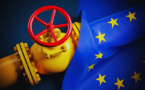
Natural gas prices across Europe fell sharply on Tuesday, dropping 16% to around €47 per megawatt-hour after spiking to a three-year high above €69/MWh the previous day.
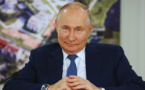
Natural gas prices in Europe climbed sharply, rising 8% in early trading today following warnings from Russian President Vladimir Putin that Moscow could halt deliveries to the continent.

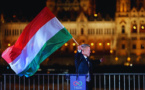
Political analysts suggest that the outcome of Hungary’s recent elections could resonate in Bulgaria ahead of its own vote, potentially shaping voter behavior and political positioning

Speaking at a public meeting in Pazardzhik, “We Continue the Change” leader Asen Vassilev warned that a new external shock linked to Iran could trigger another major economic crisis, with direct effects on energy prices, food costs and vulnerable househol

Speaking in Asenovgrad, the leader of “Progressive Bulgaria” Rumen Radev said that a high voter turnout could fundamentally reshape the political landscape, arguing that mass participation would lead to the removal of Boyko Borissov and Delyan Peevski fro
Europe is undergoing a fundamental shift in how it approaches defense, moving beyond increased spending toward the creation of an entirely new industrial ecosystem

A leading global research center on democratic systems has issued a stark warning about political trends in several countries, concluding in its latest annual report that Bulgaria is now among those showing clear signs of democratic backsliding
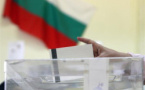
The Central Election Commission (CEC) in Bulgaria has confirmed that a total of 6,575,151 citizens are eligible to vote in the upcoming elections on April 19

Aniventure Comic Con Returns to Bulgaria with Star Guest Christopher Judge!
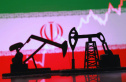
Global Fuel Shock: Oil Jumps Over 40% Since Iran War Began