Fourth Iranian Missile Enters Turkish Airspace, Shot Down by NATO Defenses
A fourth ballistic missile linked to Iran has been intercepted after entering Turkish airspace
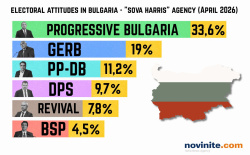
HOT: » Which party would you vote for (if you could) in the upcoming snap vote in Bulgaria on April 19?
 Send to Kindle
 video caption
Joe Biden has become the first US president to issue a statement formally describing the 1915 massacre of Armenians as a genocide.
The killings took place in the waning days of the Ottoman Empire, the forerunner of modern-day Turkey.
But the issue is highly sensitive, with Turkey acknowledging atrocities but rejecting the term "genocide".
Foreign Minister Mevlut Cavusoglu said on Saturday that Turkey "entirely rejects" the US decision.
"We will not take lessons from anyone on our history," he tweeted.
Later the Turkish foreign ministry said it had summoned the US ambassador to convey Ankara's "strong reaction".
Previous US administrations have not used the term genocide in formal statements amid concerns over damaging relations with Turkey, a Nato ally.
In 1915 Ottoman Turks had accused Christian Armenians of treachery after suffering a heavy defeat at the hands of Russian forces and began mass deportation to the Syrian desert and elsewhere. Hundreds of thousands of Armenians were massacred or died from starvation or disease.
Atrocities were widely recorded at the time by witnesses including journalists, missionaries and diplomats.
Mr Biden's statement, released as Armenia commemorates the start of the mass killings, said:
"We remember the lives of all those who died in the Ottoman-era Armenian genocide and recommit ourselves to preventing such an atrocity from ever again occurring.
"And we remember so that we remain ever-vigilant against the corrosive influence of hate in all its forms."
Mr Biden said the intention was "not to cast blame but to ensure that what happened is never repeated".
A Biden official told reporters that the decision to use the term formally as the administration turned its focus to human rights.
The administration of Mr Biden's immediate predecessor Donald Trump said it did not consider the killings a genocide. Mr Trump instead called it "one of the worst mass atrocities of the 20th Century".
Armenian Prime Minister Nikol Pashinyan said Mr Biden's words had "honoured the memory" of those who had died, adding in a tweet: "The US has once again demonstrated its unwavering commitment to protecting human rights and universal values."
But the Turkish foreign ministry responded angrily, saying in a statement they "reject and denounce in the strongest terms the statement", saying it had been "made under the pressure of radical Armenian circles and anti-Turkey groups".
It warned the move would "open a deep wound that undermines our mutual trust and friendship".
A further deterioration of relations between the two countries may be the most significant outcome of Mr Biden's statement, which is largely symbolic and comes with no additional sanctions.
A fourth ballistic missile linked to Iran has been intercepted after entering Turkish airspace
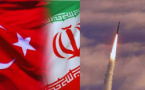
NATO air defense systems deployed in the eastern Mediterranean intercepted and destroyed a second ballistic missile launched from Iran after it entered Turkish airspace, the Turkish Ministry of Defense announced on Monday.
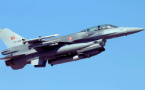
A Turkish F-16 fighter jet crashed while responding to an unidentified radar signal near the Bulgarian border, the Turkish Ministry of Defense confirmed.
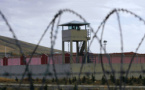
Turkish authorities have taken into custody six European activists who had entered the country to investigate conditions in Turkish prisons, according to Agence France-Presse and statements from the activists’ lawyer.

During the first year of Donald Trump’s presidency, the United States has conducted nearly the same number of airstrikes as it did throughout the entire four-year term of his predecessor, Joe Biden

US President Donald Trump used a pre-holiday address from the White House on Wednesday to present his first year back in office as a success

Political analysts suggest that the outcome of Hungary’s recent elections could resonate in Bulgaria ahead of its own vote, potentially shaping voter behavior and political positioning

Speaking at a public meeting in Pazardzhik, “We Continue the Change” leader Asen Vassilev warned that a new external shock linked to Iran could trigger another major economic crisis, with direct effects on energy prices, food costs and vulnerable househol

Speaking in Asenovgrad, the leader of “Progressive Bulgaria” Rumen Radev said that a high voter turnout could fundamentally reshape the political landscape, arguing that mass participation would lead to the removal of Boyko Borissov and Delyan Peevski fro

Europe is undergoing a fundamental shift in how it approaches defense, moving beyond increased spending toward the creation of an entirely new industrial ecosystem

A leading global research center on democratic systems has issued a stark warning about political trends in several countries, concluding in its latest annual report that Bulgaria is now among those showing clear signs of democratic backsliding

The Central Election Commission (CEC) in Bulgaria has confirmed that a total of 6,575,151 citizens are eligible to vote in the upcoming elections on April 19

Aniventure Comic Con Returns to Bulgaria with Star Guest Christopher Judge!
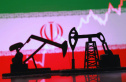
Global Fuel Shock: Oil Jumps Over 40% Since Iran War Began