Putin Declares Easter Ceasefire in Ukraine War
The Kremlin has announced that Russian President Vladimir Putin has ordered an “Easter ceasefire” in the war in Ukraine, declaring a temporary halt in hostilities lasting around 36 hours
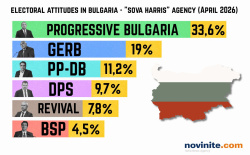
HOT: » Which party would you vote for (if you could) in the upcoming snap vote in Bulgaria on April 19?
 Send to Kindle
Russia’s Sputnik V vaccine was 91.6% effective in preventing people from developing COVID-19, according to peer-reviewed results from its late-stage clinical trial published in The Lancent international medical journal on Tuesday.
Scientists said the Phase III trial results meant the world had another effective weapon to fight the deadly pandemic and justified to some extent Moscow’s decision to roll out the vaccine before final data had been released.
The results, collated by the Gamaleya Institute in Moscow that developed and tested the vaccine, were in line with efficacy data reported at earlier stages of the trial, which has been running in Moscow since September.
“The development of the Sputnik V vaccine has been criticised for unseemly haste, corner cutting, and an absence of transparency,” Professor Ian Jones of the University of Reading and Professor Polly Roy, of the London School of Hygiene & Tropical Medicine, said in a comment shared by The Lancet.
“But the outcome reported here is clear and the scientific principle of vaccination is demonstrated,” said the scientists, who were not involved in the study. “Another vaccine can now join the fight to reduce the incidence of COVID-19.”
The results were based on data from 19,866 volunteers, of whom a quarter received a placebo, the researchers, led by the Gamaleya Institute’s Denis Logunov, said in The Lancet.
Since the trial in Moscow began, there were 16 recorded cases of symptomatic COVID-19 among people who received the vaccine, and 62 among the placebo group, the scientists said.
This showed that a two-dose regimen of the vaccine - two shots based on two different adenovirus vectors, administered 21 days apart - was 91.6% effective against symptomatic COVID-19.
Russia approved the vaccine in August, before the large-scale trial had begun, saying it was the first country to do so for a COVID-19 shot. It named it Sputnik V, in homage to the world’s first satellite, launched by the Soviet Union.
Small numbers of frontline health workers began receiving it soon after and a large-scale roll out started in December, though access was limited to those in specific professions, such as teachers, medical workers and journalists.
In January, the vaccine was offered to all Russians.
Sputnik V has been approved by 15 countries, including Argentina, Hungary, and the United Arab Emirates and this will increase to 25 by the end of next week, the RDIF’s Dmitriev said.
The sovereign wealth fund also said vaccinations using Sputnik V will begin in a dozen countries, including Hungary, Bolivia, the United Arab Emirates, Venezuela and Iran.
However, large shipments of the shot have only been sent so far to Argentina, which has received enough doses to vaccinate about 500,000 people, and Bolivia, which received 20,000 shots.
Production for export will primarily be conducted by RDIF’s manufacturing partners abroad, the fund has said.
On Tuesday, Dmitriev said that production had begun in India and South Korea, and would launch in China this month. Trial doses have also been produced by a manufacturer in Brazil.
Russia is also conducting a small-scale clinical trial of a one-dose version of the vaccine, which developers expect to have an efficacy rate of 73% to 85%.
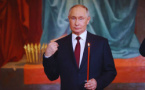
The Kremlin has announced that Russian President Vladimir Putin has ordered an “Easter ceasefire” in the war in Ukraine, declaring a temporary halt in hostilities lasting around 36 hours
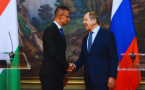
A group of Members of the European Parliament has raised concerns over the potential leakage of confidential EU information to Russia, urging stronger safeguards within the European Parliament
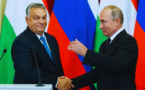
A leaked transcript of a phone call between Hungarian Prime Minister Viktor Orban and Russian President Vladimir Putin shows Orban offering extensive support to Moscow and describing himself as ready to help “in any way” in relation to the war in Ukraine
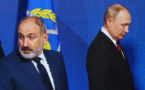
Vladimir Putin stated that Armenia cannot realistically pursue membership in the European Union while remaining part of the Moscow-led Eurasian Economic Union, arguing that the two frameworks are fundamentally incompatible
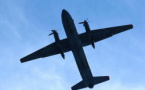
A Russian An-26 military transport aircraft has crashed in Crimea, killing all 29 people on board, according to information released by the country’s defense ministry and cited by Russian state media

Four years after the liberation of Bucha, the town remains a central reference point for understanding the nature of the war in Ukraine and the limits of current diplomatic efforts.

The Bulgarian Medical Association has called for an urgent overhaul of healthcare funding, insisting on a 25 percent increase in the prices of clinical pathways and all medical services, alongside a revision of the user fee for hospital stays
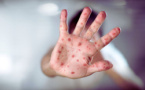
Health authorities report that measles infections in Bulgaria have surpassed 70 confirmed cases, with a total of 73 registered as of April 3
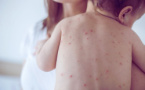
Health authorities have reported a total of 66 confirmed measles cases in Bulgaria, with the first infection now recorded in Sofia, according to data published on the Ministry of Health’s epidemic monitoring platform.
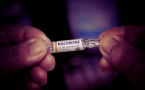
All emergency medical centers across Bulgaria have now been equipped with the opioid antidote Naloxone, a development confirmed by the Ministry of Health. The drug is used in cases of overdose and is considered critical for saving lives in emergencies inv
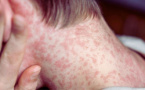
A total of 43 measles infections have been recorded across three regions in Bulgaria, according to data released by the Ministry of Health on March 30

Last year, Bulgaria recorded over 17,000 abortions, according to data compiled by the National Center for Public Health and Analysis

Aniventure Comic Con Returns to Bulgaria with Star Guest Christopher Judge!
Global Fuel Shock: Oil Jumps Over 40% Since Iran War Began