Is Russian Oil Flowing to Bulgaria in 2026?
Bulgaria's only oil refinery, Lukoil Neftochim Burgas, processed Russian crude for most of its post-Soviet history. Since March 2024, that has been banned by law
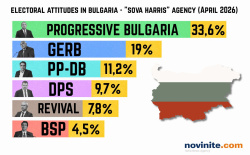
HOT: » Which party would you vote for (if you could) in the upcoming snap vote in Bulgaria on April 19?
 Send to Kindle
Bulgaria’s Employment Agency has called a public tender for the building of a software system that will make it easier and faster to issue work permits to non-EU citizens.
The rationale is to remove barriers to hiring much needed professionals, particularly in the IT sector.
The introduction of a new automated system aims to link the Bulgarian government agency to a broader range of existing data bases and save time in processing the applications for work permits also known as ‘blue cards’.
However, the current practice of submitting the application forms on hard copy at the regional labour offices across Bulgaria will remain, capital.bg reported on Monday.
Workers from outside the European Union can apply to work in Bulgaria under the EU Blue Card scheme, which allows workers with a job offer to take employment in a member state.
The cost of the software project is BGN 100,000 (approx. EUR 50,000) free of VAT. The winner will faces an end-December deadline to implement the project.
The new software system should expand the operational capabilities of the one currently in use at the Employment Agency, according to the online edition of the Sofia-based business newspaper. The new system is expected to considerably speed up the process of processing the application forms by ensuring compatibility witn the existing databases of other government bodies such as the Foreign Ministry and the Interior Ministry.
About 600 applications for work permits submitted by foreign nationals are being processed annually in Bulgaria, according to data from the Employment Agency, capital.bg said.

Bulgaria's only oil refinery, Lukoil Neftochim Burgas, processed Russian crude for most of its post-Soviet history. Since March 2024, that has been banned by law

Energy expert Martin Vladimirov from the Center for the Study of Democracy has warned that fuel prices in Bulgaria have not yet reached their peak, adding that the country is gradually converging with average EU levels.

Former Defense Minister Prof. Todor Tagarev has commented on Bulgaria’s military aviation situation, noting concerns about the condition of the country’s current fighter fleet and the pace at which new aircraft are being integrated.

Healthcare costs in Bulgaria are rising at a significantly faster pace than overall inflation, with price growth in the sector in 2026 roughly twice the national average compared to 2025

Around half a million Bulgarians chose to spend Easter inside the country, while roughly 120,000 traveled abroad

Bulgargaz has submitted a proposal to the Energy and Water Regulatory Commission (EWRC) suggesting a natural gas price of €35.98 per megawatt hour (MWh) for May
Around half a million Bulgarians chose to spend Easter inside the country, while roughly 120,000 traveled abroad
Bulgargaz has submitted a proposal to the Energy and Water Regulatory Commission (EWRC) suggesting a natural gas price of €35.98 per megawatt hour (MWh) for May

Acting Energy Minister Traycho Traykov said Bulgaria should not tap into its 90-day fuel reserves to ease prices, stressing that they must remain a safeguard in case of an actual supply disruption
Bulgaria has secured a six-month extension of the Lukoil waiver, following a decision by the US Treasury Department’s Office of Foreign Assets Control (OFAC)

The Bulgarian National Bank (BNB) has decided to increase the countercyclical capital buffer to 2.25%, in a move aimed at easing pressure on the rapidly growing housing credit market and strengthening the resilience of the banking system.

Energy expert Boyan Rashev has warned that Europe could be moving toward what he described as an “energy lockdown” scenario if fuel supply pressures continue to worsen

Aniventure Comic Con Returns to Bulgaria with Star Guest Christopher Judge!
Global Fuel Shock: Oil Jumps Over 40% Since Iran War Began