Russian Oil Executive Dies After Falling from Moscow Suburb Window
Andrei Badalov, vice president of Russia’s state-owned oil pipeline company Transneft
HOT: » Which party would you vote for (if you could) in the upcoming snap vote in Bulgaria on April 19?
 Send to Kindle
 Photo by BGNES
US oil giant Chevron is interested in the Burgas-Alexandroupolis oil pipeline and will try to convince the Bulgarian government that it should be built, according to Nikolay Tokarev, President of Russian pipeline company Transneft.
Tokarev, as cited by the TASS news agency and the BGNES news agency, noted that Chevron’s interest in the project was related to the plans for the expansion of the capacity of the Caspian Pipeline Consortium (CPC) in which the US-based energy giant had a 15% stake.
The company did not respond to a question on the matter of Russian business daily Vedomosti.
The CPC’s capacity is to increase to 67 million tonnes of oil after the expansion, up from the rate of 40 million tonnes of oil in 2014.
The pipeline carries oil from Kazakhstan to Russia's Black Sea port of Novorossiisk, where the oil is loaded onto tankers.
“The capacity of the Bosphorus is not limitless. The additional volumes that will come up after the expansion of the consortium will be difficult to transport,” Tokarev said.
Tokarev pointed out that Bulgaria had recently launched an initiative to terminate the project company, adding that Bulgaria had no legal grounds to pursue a unilateral withdrawal from the project.
He claimed that Chevron had promised to hold consultations with the Bulgarian partners.
Tokarev suggested that the project was interesting and that it had a future, not least because it would solve the problems with the Bosphorus.
Asked to comment on the potential participation of Burgas-Alexandroupolis in the CPC, a representative of the consortium made clear that the question was being discussed but no decisions had yet been made.
The Burgas-Alexandroupolis oil pipeline project was suspended in 2011 as the Bulgarian authorities questioned the environmental safety of the scheme.
In 2007 Russia, Bulgaria, and Greece signed an agreement on the construction of the oil pipeline.
The Trans-Balkan Pipeline B.V. (ТВР) project company was established to manage the implementation of the scheme, with Russia’s Transneft, Rosneft and Gazpromneft controlling a 51% stake and Bulgaria and Greece holding stakes of 24.5% in it.
The cost of the oil pipeline was estimated at EUR 1 B.

Andrei Badalov, vice president of Russia’s state-owned oil pipeline company Transneft

Following Russia's invasion of Ukraine, Russian oil giant Rosneft has announced plans to divest its assets in Germany,

The Russian state company "Transneft" announced that Ukraine has stopped the transfer of Russian oil through the "Druzhba" oil pipeline to Hungary, the Czech Republic and Slovakia since August 4

Russian's Economy Minister Alexey Ulyukayev has been arrested on suspicions of extortion and threats to a representative of state-owned company Rosneft, Russian media report.

The Bulgarian government has issued new bonds boosting the capital of the project company managing the Burgas-Alexandroupoli oil pipeline, a ditched project between Bulgaria, Greece, and Russia.

The USA extended the list of sanctioned Russian and Ukrainian individuals and institutions in an attempt to maintain pressure on Russia for Moscow's alleged support of separatists in Ukraine.

Bulgaria’s fuel market has recorded a sharp upward shift since the outbreak of the war in Iran, with diesel and petrol prices rising significantly across the country
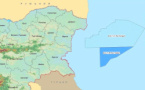
The second exploration drilling in the Krum-1 area of the Khan Asparuh block in Bulgaria’s Black Sea has also failed to identify commercially significant natural gas deposits, according to OMV Petrom

The Ombudswoman institution has voiced strong opposition to the proposed increase in heating prices in Sofia, which is expected to approach nearly 30 percent
The Energy and Water Regulatory Commission (EWRC) in Bulgaria has set the price of natural gas for April 2026 at 34.27 euros per megawatt-hour, excluding access, transmission, excise duties and VAT

Fuel prices in Bulgaria have recorded a sharp upward movement over the past month, with diesel showing the most significant increase, according to data from the Fuelo platform

Bulgargaz has defended its previously submitted proposal for a 5% rise in natural gas prices for April before the Energy and Water Regulatory Commission, with CEO Veselin Sinabov stressing that there is currently no justification for any further increases

Aniventure Comic Con Returns to Bulgaria with Star Guest Christopher Judge!
Global Fuel Shock: Oil Jumps Over 40% Since Iran War Began