Putin Declares Easter Ceasefire in Ukraine War
The Kremlin has announced that Russian President Vladimir Putin has ordered an “Easter ceasefire” in the war in Ukraine, declaring a temporary halt in hostilities lasting around 36 hours
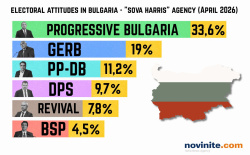
HOT: » Which party would you vote for (if you could) in the upcoming snap vote in Bulgaria on April 19?
 Send to Kindle
 Ukraine's Finance Minister Natalia Yaresko (R) and central bank head Valeria Gontareva (L) during a press conference in Kiev, Ukraine, 25 February 2015. Photo EPA/BGNES
Ukraine's central bank on Wednesday banned all foreign exchange purchases by companies through banks for the rest of the week in a bid to stem a sharp fall in the national currency, the hryvnia.
The central bank also intervened in the market to prop up the currency, buying USD 80 M at an official rate of 28 per dollar - close to the exchange rate at the start of the week and 12.8% higher than the close after a plunge on Tuesday, Reuters reported.
According to Kiev citizens, the hryvnia’s black market exchange rate is around 40 per US dollar, compared with around eight per dollar in January last year.
The fall in the hryvnia has gained speed in recent days as the government delayed voting on economic and financial measures needed to unlock a bailout from the International Monetary Fund (IMF) and fighting between government forces and pro-Russian rebels in eastern Ukraine raged despite a ceasefire that should have taken effect as of 15 February.
The truce seemed to be holding on Wednesday with Ukraine’s military reporting no combat fatalities during the past 24 hours.
The currency trading ban drew fire from Prime Minister Arseny Yatseniuk who said the government hadn’t been consulted on the move, which he described as bad for the economy.
After a meeting with President Petro Poroshenko, central bank head Valeria Gontareva and Finance Minister Natalia Yaresko both said the recent plunge in the hryvnia was unfounded and irrational and the currency would recover once the government in Kiev starts receiving bailout financing from the IMF.
"There are no fundamental reasons for such a severe fall in the hryvnia rate. The central bank sees none, the government sees none, and the IMF sees none," Gontareva said at a news conference.
Ukraine’s parliament is expected to consider the proposed measures needed to secure emergency funding from the IMF on 3 March. According to Finance Minister Yaresko, the IMF’s board of directors will meet on 11 March to decide whether to approve a new USD 17.5 B lending programme for Ukraine.
The hryvnia has lost about 50% of its value against the US dollar since the start of 2015 after halving last year compared to 2013.
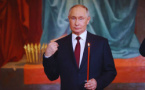
The Kremlin has announced that Russian President Vladimir Putin has ordered an “Easter ceasefire” in the war in Ukraine, declaring a temporary halt in hostilities lasting around 36 hours
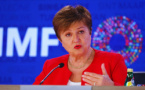
The head of the International Monetary Fund (IMF), Kristalina Georgieva, has warned that the ongoing war in the Middle East is expected to push inflation higher while simultaneously slowing global economic growth
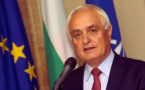
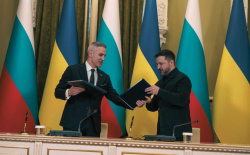
Acting Defense Minister Atanas Zapryanov has stated that Bulgaria is not taking on any military obligations under the ten-year security cooperation agreement with Ukraine
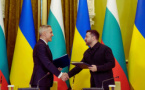
A political dispute in Bulgaria has recently centered on the bilateral security cooperation agreement with Ukraine, after criticism emerged over its signing without prior approval from the National Assembly
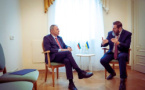
Acting Education Minister Sergey Ignatov said that his recent visit to Kyiv came at a critical moment, stressing that it could not be delayed. According to him, the signing of a protocol with his Ukrainian counterpart was decisive for the future of the Bu

Direct passenger rail services between Bulgaria and Ukraine, operating via Romania, are set to begin in June after the three countries reached an agreement on the key parameters of the route during a working meeting in Ruse.
The Kremlin has announced that Russian President Vladimir Putin has ordered an “Easter ceasefire” in the war in Ukraine, declaring a temporary halt in hostilities lasting around 36 hours
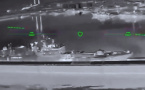
Ukrainian unmanned aerial vehicles targeted Russian military assets in the Black Sea port city of Novorossiysk during a night-time operation between April 5 and 6
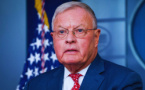
Keith Kellogg, who previously served as US President Donald Trump’s Special Envoy for Ukraine, has raised the possibility of reshaping existing security structures, including moving beyond NATO
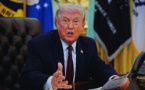
US President Donald Trump has stated that the United States should not have become involved in the war in Ukraine, arguing that the conflict is geographically distant and does not directly concern American interests

Four years after the liberation of Bucha, the town remains a central reference point for understanding the nature of the war in Ukraine and the limits of current diplomatic efforts.
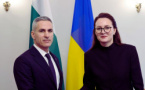
Acting Prime Minister Andrey Gyurov, during an official visit to Kyiv, reaffirmed Bulgaria’s continued support for Ukraine, stressing backing for its sovereignty, independence, and territorial integrity, according to the government press service.

Aniventure Comic Con Returns to Bulgaria with Star Guest Christopher Judge!
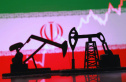
Global Fuel Shock: Oil Jumps Over 40% Since Iran War Began