Bulgarian Farmland Prices Keep Rising, Up 7% Y/Y in 2015
Prices of arable land in Bulgaria continued to rise last year, maintaining their upward trend for a sixth year running,official statistics show.
Business | April 22, 2016, Friday // 12:15
HOT: » Which party would you vote for (if you could) in the upcoming snap vote in Bulgaria on April 19?
 Send to Kindle
 Photo by BGNES
Publicly-traded companies with a total capitalization of over BGN 1.5 B will be affected by the sanctions adopted by Parliament for the ownership of agricultural land by non-EU companies and citizens, according to Ivan Takev, CEO of the Bulgarian Stock Exchange-Sofia (BSE-Sofia).
Under legal amendments adopted last week, which are to take effect on May 1, natural and legal persons based outside the EU, as well as offshore companies, are banned from directly or indirectly purchasing land.
The legal changes envisage penalties of BGN 100 per decare for a first-time offence and BGN 300 per decare for a repeat offence, according to reports of Capital Daily.
Takev suggested Tuesday that the legal amendments would affect around 15 big companies controlling over 500 000 decares of land and a market value of over 20% of the capitalization of the BSE-Sofia, including agriculture land funds and firms in the sectors of agriculture, cosmetics, chemical industry, pharmacy, real estate, etc.
He pointed out that the companies faced fines of BGN 100 per decare if their list of shareholders included natural and legal persons based outside the EU or offshore companies.
He noted that the measure would deal a blow to the activity of the BSE-Sofia and would discourage many potential investors from the new procedure for the privatization of the BSE-Sofia.
Meanwhile, business organizations and representatives of publicly-traded companies insisted that the amendments catered to the interests of lobbying groups, stressing that they were probably aimed at hitting concrete companies.
They said that the blow would affect both the capital market and the agricultural land market.
The ban on land ownership by natural and legal persons based outside the EU or in an offshore zone entered into force last year through amendments to the Agricultural Land Ownership and Usage Act, while the fines of BGN 100 per decare and BGN 300 per decare were adopted by Parliament one week ago.
Manyu Moravenov, Chair of the Special Investment Purpose Companies Association (SIPCA), told Capital Daily that the members of the Association would face unfair fines as they had not broken the law.
He warned that the legislative changes would trigger a number of lawsuits, including at international courts, with many of the fines likely to be overturned.
Moravenov said that many publicly-listed companies could be driven into bankruptcy within a few months as a result of the newly adopted fines.
The publicly-traded agriculture land funds will be hardest hit by the measure, as well as major owners of arable land such as agricultural companies and manufacturers of cosmetics, and, indirectly, pension funds.
Employers’ associations and business associations have sent a letter to the President, the Parliament Speaker, the Prime Minister, and all interested institutions, calling for the exclusion of publicly-traded companies from the scope of the law or for the application of the restrictions to majority owners only.

Prices of arable land in Bulgaria continued to rise last year, maintaining their upward trend for a sixth year running,official statistics show.

Bulgaria’s Financial Supervision Commission (FSC) has refused to approve the IPO prospectus of Smart Organic AD, a producer and distributor of organic products.

The Bulgarian Stock Exchange-Sofia (BSE-Sofia) has reported a 68% decrease in turnover to BGN 250,6 M on the year in the first half of 2015.

Sopharma Trading AD, a leading Bulgarian distributor of pharmaceuticals, is expanding into Serbia, according to a media statement of the company to the Bulgarian Stock Exchange-Sofia (BSE-Sofia).

Emil Karanikolov, head of the Privatization and Post-Privatization Control Agency, has said that the State Agency for National Security (DANS) will be consulted on the privatization of the Central Depository AD.

At the end of 2014, publicly traded companies in Bulgaria registered a net profit of BGN 147.286 M, according to the annual financial results of the companies whose shares are traded on the Bulgarian Stock Exchange (BSE-Sofia).
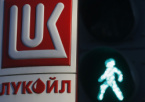
Bulgaria has secured a six-month extension of the Lukoil waiver, following a decision by the US Treasury Department’s Office of Foreign Assets Control (OFAC)
The Bulgarian National Bank (BNB) has decided to increase the countercyclical capital buffer to 2.25%, in a move aimed at easing pressure on the rapidly growing housing credit market and strengthening the resilience of the banking system.
Energy expert Boyan Rashev has warned that Europe could be moving toward what he described as an “energy lockdown” scenario if fuel supply pressures continue to worsen
Fuel prices in Bulgaria have continued to edge upward, with diesel and gasoline both registering increases in the days following the Easter holiday

Bulgaria’s tourism sector has never been stronger and has been achieving steady growth for the past few years.

Industrial output in Bulgaria posted a modest monthly increase in February 2026, but continued to decline sharply on an annual basis, according to preliminary, seasonally adjusted data from the National Statistical Institute.

Aniventure Comic Con Returns to Bulgaria with Star Guest Christopher Judge!
Global Fuel Shock: Oil Jumps Over 40% Since Iran War Began