Is Russian Oil Flowing to Bulgaria in 2026?
Bulgaria's only oil refinery, Lukoil Neftochim Burgas, processed Russian crude for most of its post-Soviet history. Since March 2024, that has been banned by law
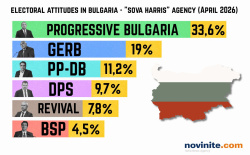
HOT: » Which party would you vote for (if you could) in the upcoming snap vote in Bulgaria on April 19?
 Send to Kindle
 Bulgarians will be subject to a fine, ranging from BGN 300 to BGN 8000 if they don’t stick by the new rules on discarded electric appliances. Photo by BGNES
Bulgarian citizens will be obliged to deposit their discarded electric appliances for free at fixed scrap metal yards, under a controversial bill on waste management.
The parliamentary environment commission approved the bill late on Thursday despite vehement protests by local companies, dealing with scrap metals, who say it aims to monopolize the sector by forcing many SMEs to fall by the wayside.
Bulgaria's environment ministry tabled the controversial bill to parliament eight months ago, claiming it is ramping up efforts to tackle metal theft.
The bill obliges municipalities to build their own scrap yards up to two years after it comes into force. It is namely there that all Bulgarian citizens will be required to deposit their scrap for free, otherwise they will be subject to a fine, ranging from BGN 300 to BGN 8000.
"Bulgarian citizens, like all Europeans, have the right to dispose of their belongings as they see fit. The decision whether to sell them or give them away for free is their own, this is the only democratic principle," Vladimir Dimitrov, head of the Bulgarian Association of Recycling, commented recently in an interview for Novinite.com.
The new draft of the law requires that all scrap metal yards are located on plots, which come under the so-called general development plans.
The problem is that only one third of Bulgaria's municipalities have such plans. The Danube town of Russe and the Black Sea city of Varna, for example, have attracted huge investments from companies in the sector, but lack general development plans.
The new requirement is expected to force 2000 out of all 2400 scrap metal yards in Bulgaria to cease their activities.
If the law comes into force in this version, traders in ferrous and nonferrous metals will be stripped of their licenses and forced to apply for permits, which should be issued by the environment ministry. The majority of companies from the sector however demand that the licensing regime stays since it is a successful practice few European countries boast.
The drafted legislation also bans scrap yards from making cash payments. According to the bill opponents the proposed cash-less system seeks to benefit particular banks.

Bulgaria's only oil refinery, Lukoil Neftochim Burgas, processed Russian crude for most of its post-Soviet history. Since March 2024, that has been banned by law

Energy expert Martin Vladimirov from the Center for the Study of Democracy has warned that fuel prices in Bulgaria have not yet reached their peak, adding that the country is gradually converging with average EU levels.

Former Defense Minister Prof. Todor Tagarev has commented on Bulgaria’s military aviation situation, noting concerns about the condition of the country’s current fighter fleet and the pace at which new aircraft are being integrated.

Healthcare costs in Bulgaria are rising at a significantly faster pace than overall inflation, with price growth in the sector in 2026 roughly twice the national average compared to 2025

Around half a million Bulgarians chose to spend Easter inside the country, while roughly 120,000 traveled abroad

Bulgargaz has submitted a proposal to the Energy and Water Regulatory Commission (EWRC) suggesting a natural gas price of €35.98 per megawatt hour (MWh) for May

Industrial output in Bulgaria posted a modest monthly increase in February 2026, but continued to decline sharply on an annual basis, according to preliminary, seasonally adjusted data from the National Statistical Institute.

Up to 90 percent of construction and renovation workers in Bulgaria are operating outside the legal framework, according to entrepreneur Lozan Lozanov, who raised concerns about the lack of regulation in construction and installation services

Bulgarian Agriculture Minister Ivan Hristanov has said that milk prices in Bulgaria are falling for consumers while production costs for farmers continue to rise, creating increasing pressure on the sector.

Bulgaria saw a sharp rise in labor costs at the close of 2025, with total employer expenses per hour worked increasing by 13.9% in the fourth quarter compared to the same period in 2024, according to preliminary figures from the National Statistical Insti

Each December, several factories across the Midlands manage their busiest weeks with clipboards in hand.

Germany’s online gambling market has become one of the most closely observed case studies in digital regulation.

Aniventure Comic Con Returns to Bulgaria with Star Guest Christopher Judge!
Global Fuel Shock: Oil Jumps Over 40% Since Iran War Began