Fuel Prices Hit New Highs in Germany as Diesel Surpasses €2.40 Per Liter
Fuel prices in Germany have recently reached new highs, with diesel briefly exceeding 2.40 euros per litre during the Easter holiday period before easing slightly afterward
HOT: » Which party would you vote for (if you could) in the upcoming snap vote in Bulgaria on April 19?
 Send to Kindle
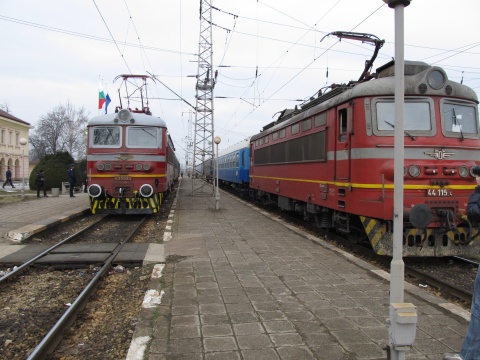 The Bulgarian State Railways sold 515 old freight cars for BGN 3.5 M. Photo by BGNES
Bulgaria's highly troubled state railway company BDZ has made a meager BGN 3.5 M by selling a total of 515 freight railway cars, the head of the company board Vladimir Vladimirov revealed.
According to Vladimirov, the BDZ Holding management completed the deal for the sale of the cars Monday. However, he has not provided further details when announcing it in an interview for econ.bg published Wednesday.
The head of the State Railways' board, however, stressed that the management has developed a package of measures to save the technically bankrupt company whose mounting debts have reached BGN 771 M and keep growing.
The reform package is to be presented to Finance Minister Simeon Djankov, who recently froze the Bulgarian government's talks with the World Bank for a badly needed loan of BGN 600 M for the railway sector in Bulgaria, including BGN 460 M for BDZ and BGN 160 M for National Company "State Infrastructure". Djankov's major argument was that he would not pour a single BGN until he sees actual reform in the state company.
According to Vladimirov, however, with the new reform and optimization package in place, the Bulgarian Finance Ministry will table the loan request to the World Bank by January 2012.
The sale of old railway cars has been mentioned as an untapped source of revenue by the BDZ management; however, recent inspections revealed that some 1 200 such cars that we previously accounted for on paper have actually gone missing in the past 10 years.
The crisis at the Bulgarian State Railway company BDZ has been worsening as in early October Transport Minister Ivaylo Moskovski declared it to be "technically insolvent."
"BDZ is in a technical bankruptcy, and we are now faced with a huge challenge to take actions that can help heal the company," the Transport Minister declared after Thursday's meeting with syndicate leaders chaired by Prime Minister Boyko Borisov and Finance Minister Simeon Djankov.
Bulgaria's major trade unions continue to threaten an all-out railway strike as little compromise on their demands has been reached with the government.
In addition to the looming general strike, the situation at the Bulgarian railways is worsening on all fronts after two days ago, Transport Ministry sources revealed that BDZ was about to collapse since German bank KfW demanded back 50 diesel and electric Siemens trains bought by the Bulgarian government after 2003 because the BDZ management had violated the purchase contract and had not paid its installments since 2010.
In early October, Finance Minister Simeon Djankov revealed the massive debts of the BDZ company total BGN 771 M. Of those, BGN 531 M are debts to financial institutions. This revelation came in the wake of an announcement in September 2011 that for the time being the World Bank has refused to grant the Bulgarian railways an urgently needed loan of BGN 460 M, which was negotiated in December 2010.
Another major issue of dispute on the agenda is the proposed privatization of BDZ Freight Services, which is traditionally more profitable than the passenger services of the state company.
Moskovski vowed to keep up the dialogue and consultations with the syndicates as the privatization procedure for BDZ Freight Services is going on.
The syndicates tend to disagree by stressing they are not convinced that the sale of the freight services department is the only way to raise the badly needed cash for the Bulgarian State Railways.
Raising several hundred million BGN is necessary if BDZ wants to receive a massive, BGN 460 M loan from the World Bank for restructuring and repayment of old debts.
Bulgaria's railway syndicates announced in September they planned a strike in early October 2011 over a number of issues, including the news that a badly needed World Bank loan for state railway company BDZ has fallen through.
The major grievances of the railway unionists and laborers include the failed negotiations with the government for the signing of a new collective labor contract, the refusal of the World Bank to grant a massive loan for BDZ, and what is said to be measures on part of the government to implement massive layoffs from the railways in the near future.
Unionists say the entire railway system in Bulgaria is "in panic" as some 2000 people are to be laid off from BDZ Passenger Services and BDZ Freight Services.
Since December 2010, when a preliminary loan agreement in the form of a memorandum with the World Bank was signed, the Bulgarian government had been hoping to get a loan of BGN 460 M for BDZ, together with a loan of BGN 160 M for the National Company "Railway Infrastructure", from the World Bank for badly needed reforms.
However, the reform attempts have been countered by the trade unions as they threatened to lead to massive layoffs of the state-employed railway workers (estimated by the unions at as many as 7 000 people).
Thus, in March 2011, the Bulgarian government was forced by an imminent railway strike to back out of some of its reform plans. The following months saw the replacement of the Transport Minister and the BDZ CEO.
Unlike BDZ, however, Bulgaria's National Company "Railway Infrastructure" is expected to get its BGN 140 M loan from the World Bank because it is not going to cover old debts with the money but will invest them in new railway network equipment.
Fuel prices in Germany have recently reached new highs, with diesel briefly exceeding 2.40 euros per litre during the Easter holiday period before easing slightly afterward
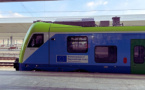
The first newly produced Škoda electric train has been officially presented at Sofia Central Railway Station, marking the beginning of a major modernization program for Bulgaria’s railways
The Bulgarian government will approve a 5% increase in subsidies for several public service organizations, including BDZ-Passenger Transport (Bulgarian State Railways), NRIC (National Company Railway Infrastructure), the Bulgarian Posts, and municipal urb

Germany has warned that the war involving Iran could trigger a new migration wave toward Europe, as the conflict continues to create instability across the region
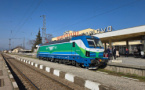
At Karlovo station, Martin Angelov, executive director of "Holding BDZ" EAD, officially unveiled the latest addition to Bulgaria’s railway fleet - the “Smartron” electric locomotive named after the national hero Vasil Levski. The locomotive is set to begi

German Foreign Minister Johann Wadephul has acknowledged that Germany has effectively depleted its own reserves of air defence missiles and can no longer supply Ukraine directly from its stockpiles
Bulgaria has secured a six-month extension of the Lukoil waiver, following a decision by the US Treasury Department’s Office of Foreign Assets Control (OFAC)
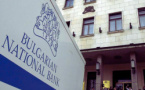
The Bulgarian National Bank (BNB) has decided to increase the countercyclical capital buffer to 2.25%, in a move aimed at easing pressure on the rapidly growing housing credit market and strengthening the resilience of the banking system.

Energy expert Boyan Rashev has warned that Europe could be moving toward what he described as an “energy lockdown” scenario if fuel supply pressures continue to worsen
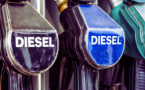
Fuel prices in Bulgaria have continued to edge upward, with diesel and gasoline both registering increases in the days following the Easter holiday

Bulgaria’s tourism sector has never been stronger and has been achieving steady growth for the past few years.

Industrial output in Bulgaria posted a modest monthly increase in February 2026, but continued to decline sharply on an annual basis, according to preliminary, seasonally adjusted data from the National Statistical Institute.

Aniventure Comic Con Returns to Bulgaria with Star Guest Christopher Judge!

Global Fuel Shock: Oil Jumps Over 40% Since Iran War Began