€7.3 Billion on the Table: Is Bulgarian Business Ready for Europe’s Defense Boom?
Europe is undergoing a fundamental shift in how it approaches defense, moving beyond increased spending toward the creation of an entirely new industrial ecosystem
HOT: » Which party would you vote for (if you could) in the upcoming snap vote in Bulgaria on April 19?
 Send to Kindle
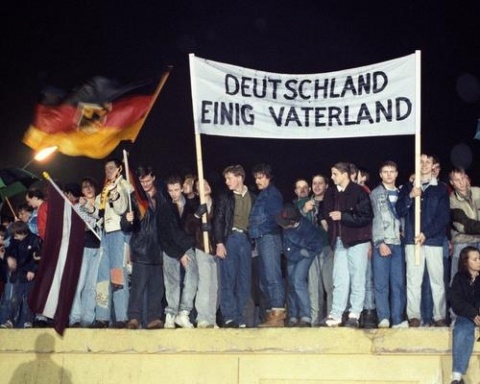 A file picture dated 22 December 1989 shows a big group of Berlin citizens holding a German flag and a poster reading 'Deutschland Einig Vaterland' ('Germany United Fatherland') as they stand on Berlin Wall, in Berlin, Germany. Photo by EPA/BGNES
Germany is marking on Saturday the 50th anniversary of the building of the Berlin Wall, which stood as a symbol of the Cold War and the splitting of Europe for twenty-eight years.
The now German capital will observe a minute of silence at noon on Saturday in memory of those who died trying to cross to the West.
Chancellor Angela Merkel, who was raised in the East, will pay tribute on one street cut in half by the Wall, while President Christian Wulff will deliver a keynote speech.
Commemorations for the anniversary started overnight, with a seven-hour reading of the names of those who died trying to leave the communist east.
President Wulff told Die Welt newspaper the anniversary was a time to reflect.
"We have reason to be very pleased to live here and now. We can look with pride to East Germans' irrepressible desire for freedom and West Germans' solidarity with them."
Transport will stop in the German capital at noon for the minute's silence.
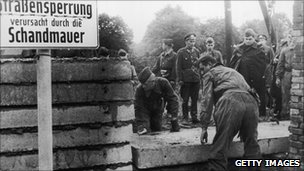 The construction of the wall started on the morning of 13 August 1961, when East German soldiers appeared at the Brandenburg Gate in Berlin and rolls of barbed wire were stretched across the border there.
Eventually they built a wall that spread for nearly 160km with more than 300 watchtowers to prevent fugitives.
The number of people who died trying to cross the Wall is disputed - at least 136 are known to have been killed but victims' groups say the true number is more than 700.
The first victim was thought to be Guenter Liftin on 24 August 1961 and the last Chris Gueffroy on 6 February 1989.
Although the Wall came down in 1989, it remains for some a symbol of continuing economic division between the richer west and poorer east.
A surprising number of Germans even say they wouldn’t mind seeing the barrier go back up, according to a survey, conducted two years ago during the celebrations collapse of the Communist East German regime.
Performed by the Leipzig Institute for Market Research for the daily Leipziger Volkszeitung newspaper, the survey found that 12 percent of Germans would like to see the once-feared border fortification be quickly rebuilt. There was almost no difference in responses between former East and West Germans, suggesting equal levels of disenchantment with a reunified Germany on both sides of the former Iron Curtain.
 Those who want to see the Wall rebuilt are mostly unemployed, working class and vote for The Left party, successors to the East German Socialist Unity Party which ruled the country until 1990 before being voted out of power months before German reunification on October 3, 1990.
The poll’s respondents were generally happy that the Wall opened and that Germany reunited, with 79 percent describing the event as a godsend and again, almost no difference in perception between eastern and western Germans.
Inequality in the new Germany was the biggest complaint for those surveyed, with 35 percent saying that generous social protections in both parts of the once-divided country have fallen away since 1989. Eastern Germans were more concerned about inequality, with 49 percent describing it as a problem, compared to 32 percent of West Germans.
A quarter of the respondents said their standard of living has fallen since 1989 - though western Germans complained of this more than those from the East.
Europe is undergoing a fundamental shift in how it approaches defense, moving beyond increased spending toward the creation of an entirely new industrial ecosystem
The Bulgarian National Bank (BNB) has decided to increase the countercyclical capital buffer to 2.25%, in a move aimed at easing pressure on the rapidly growing housing credit market and strengthening the resilience of the banking system.
Fuel prices in Germany have recently reached new highs, with diesel briefly exceeding 2.40 euros per litre during the Easter holiday period before easing slightly afterward
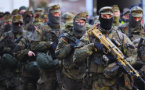
A recently revised German military service framework has triggered public debate after it emerged that it places new travel-related obligations on men aged between 17 and 45
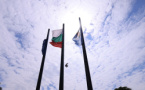
A total of 147 years have passed since Sofia was officially designated as the capital of Bulgaria
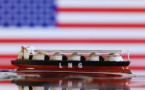
The United States is expanding shipments of liquefied natural gas to Southeast Europe and Ukraine via Greece, according to remarks by the US Ambassador to Athens, Kimberly Guilfoyle
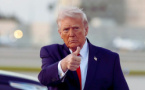
US President Donald Trump said the conflict with Iran is “very close to over,” pointing to the possibility of a new round of direct talks expected to take place in Pakistan in the coming days

A shooting at a school in southeastern Turkey left 16 people injured after a former student opened fire before taking his own life, according to local authorities.
Despite the US-imposed naval blockade targeting Iranian-linked maritime traffic through the Strait of Hormuz, several sanctioned vessels have continued to pass through the strategic waterway

The European Union has agreed on a major overhaul of its steel import regime, effectively doubling tariffs in an effort to protect domestic producers from what officials describe as a growing wave of low-cost foreign, particularly Chinese, exports
U.S. President Donald Trump has again escalated rhetoric beyond the ongoing war with Iran, suggesting that Cuba could become Washington’s next target
Hungary’s incoming prime minister Péter Magyar has signaled that his government will not obstruct the European Union’s €90 billion loan for Ukraine, while making clear that Budapest itself will not participate in the mechanism

Aniventure Comic Con Returns to Bulgaria with Star Guest Christopher Judge!
Global Fuel Shock: Oil Jumps Over 40% Since Iran War Began