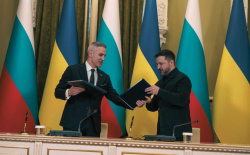
Russian Drone Crosses Into Romania, Fighter Jets Scrambled
Romania’s Ministry of National Defense has confirmed that a military drone crossed into Romanian airspace and later crashed, after being diverted during Ukrainian air defense activity
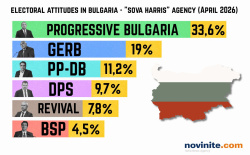
HOT: » Which party would you vote for (if you could) in the upcoming snap vote in Bulgaria on April 19?
 Send to Kindle
 Gazprom CEO Alexei Miller (left) pictured with Russian PM Vladimir Putin. Photo by EPA/BGNES
Russian energy giant Gazprom and Romania have started negotiations for the latter’s inclusion in the South Stream gas transit pipeline project, whose primary Balkan hub is supposed to be Bulgaria.
The matter of the talks entailed discussing Romania’s possible participation in South Stream by constructing a transit pipeline through its territory, says the statement of Gazprom as cited by RIA Novosti.
The negotiations were opened in Moscow with a meeting of Gazprom CEO Alexei Miller and Romanian Economy Minister Adrian Videanu as well as the heads of Romanian companies Romgaz SA and Transgaz SA.
“The parties have agreed that in the next few months they are going to conduct the technical and economic survey for the construction of a transit pipeline through Romanian territory within the South Stream project as well as a technical and economic survey of the construction of an underground gas storage facility in Romania,” Gazprom has announced adding that other energy projects such as electricity production should also be considered by the two parties in order to increase the economic feasibility of the gas transit pipeline.
The Russian and Romanian representatives have agreed that the bilateral energy relations have a good potential for development, and that the joint projects of Gazprom and Romgaz and Transgaz would guarantee the welfare of millions of people.
“We had a very honest and specific conversation today. We can now say that with these talks we have set on the agenda the question about Romania’s joining the South Stream project,” stated the head of Gazprom Alexei Miller.
He will be visiting Romania in the fall of 2010 when the Russian-Romanian South Stream talks will continue.
Romania’s desire to join the Russian-sponsored South Stream project have led many to comment that it might replace Bulgaria as the major Balkan hub of the gas transit pipeline if the Bulgarian government fails to iron out its differences with Russia with respect to the three large-scale Russian energy projects in the country – the Burgas-Alexandroupolis oil pipeline, the Belene nuclear power plant, and the South Stream gas transit pipeline.
In April 2010, Alexei Miller said that Romania could not replace Bulgaria in the South Stream project but that Gazprom might build a link from the major pipeline to Romania either from Bulgaria or through the Black Sea.
The South Stream pipe will start near Novorosiysk on the Russian Black Sea coast, and will go to Bulgaria’s Varna; the underwater section will be 900 km.
In Bulgaria, the pipe is supposed to split in two – one pipeline going to Greece and Southern Italy, and another one going to Austria and Northern Italy through Serbia, Croatia and Slovenia.
The project was initiated by Gazprom and the Italian company Eni, and the French company EdF is also planned to join as a shareholder. It is seen as a competitor to the EU-sponsored project Nabucco seeking to bring non-Russian gas to Europe.
The first deliveries through the South Stream pipe are planned for 2015; the pipeline will have a total transit capacity of 63 billion cubic meters of natural gas per year.
For the realization of the project, Russia has already signed bilateral agreements with Bulgaria, Serbia, Hungary, Greece, Austria, and Slovenia.
South Stream seems to be the most unproblematic of the three Russian sponsored large energy projects in Bulgaria. Yet, one issue of contention has been a demand of the Russian side to use the existing internal Bulgarian gas transit infrastructure as part of the pipeline on Bulgarian territory instead of laying brand-new pipes.
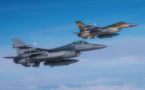
Romania’s Ministry of National Defense has confirmed that a military drone crossed into Romanian airspace and later crashed, after being diverted during Ukrainian air defense activity
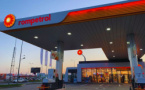
The Romanian government is set to introduce an emergency ordinance declaring a crisis on the oil and petroleum products market, alongside a package of measures aimed at shielding both the economy and consumers.
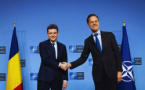
NATO Secretary General Mark Rutte has stated that the alliance is prepared to defend Romania in the event of any threat linked to Iran. His remarks came after talks in Brussels with Romanian President Nicușor Dan

Iran has issued a warning to Romania, stating that it will take political and legal action if the country permits the United States to operate military bases on its territory for operations targeting Iran
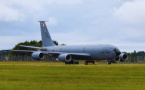
The first three US aerial refueling aircraft have arrived in Romania as part of a temporary deployment requested by Washington amid the ongoing Middle East conflict
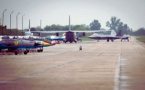
Romania has approved a request from the United States to deploy military personnel and equipment on its territory, including facilities located relatively close to the Bulgarian border
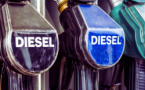
Bulgaria’s fuel market has recorded a sharp upward shift since the outbreak of the war in Iran, with diesel and petrol prices rising significantly across the country
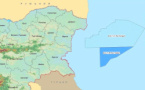
The second exploration drilling in the Krum-1 area of the Khan Asparuh block in Bulgaria’s Black Sea has also failed to identify commercially significant natural gas deposits, according to OMV Petrom

The Ombudswoman institution has voiced strong opposition to the proposed increase in heating prices in Sofia, which is expected to approach nearly 30 percent
The Energy and Water Regulatory Commission (EWRC) in Bulgaria has set the price of natural gas for April 2026 at 34.27 euros per megawatt-hour, excluding access, transmission, excise duties and VAT
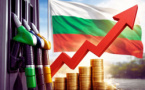
Fuel prices in Bulgaria have recorded a sharp upward movement over the past month, with diesel showing the most significant increase, according to data from the Fuelo platform
Bulgargaz has defended its previously submitted proposal for a 5% rise in natural gas prices for April before the Energy and Water Regulatory Commission, with CEO Veselin Sinabov stressing that there is currently no justification for any further increases

Aniventure Comic Con Returns to Bulgaria with Star Guest Christopher Judge!
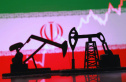
Global Fuel Shock: Oil Jumps Over 40% Since Iran War Began