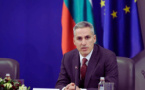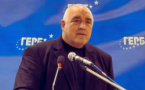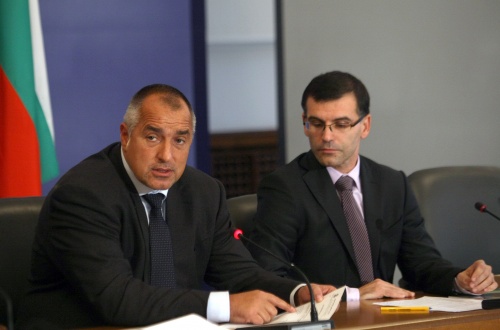
The government of Borisov has adopted its program for 2009-2013. Photo by BGNES
Bulgaria's government of the GERB party has adopted its governmental program for the period 2009-2013 during its Wednesday's meeting.
The program contains 7 major policies and 157 more specific goals, and is to be uploaded on the website of the Bulgarian government in the coming days.
All Ministries are going to hold individual press conferences on their own priorities starting Thrusday, Finance Minister Simeon Djankov said.
“Bulgaria has so far been known for the taking of many secret decisions,” he stated while explaining that the ultimate priorities for the GEBR government were maintaining a balanced budget, and accession to the ERM 2 as a last step before joining the Eurozone and adopting the common European currency.
The seven priority policy areas of the Borisov government are:
1)Reform and modernization of the state administration, including reforming the health care, education, and public safety systems, public services, the energy and utilities sector.
2)Cracking down on corruption and the draining of state funds. “There will be transparency in the spending of the state budget, the fiscal reserved, the state-owned companies. How can the National Company “Railway Infrastructure” have a deficit of half a billion of BGN?! This means they did not do their job,” Minister Djankov said.
3)Economic and financial feasibility and soundness of the governance decisions. As an example here, Djankov mentioned the increase of the number of auditors at the Environment Ministry, which was approved on Wednesday.
4)Optimization of the state expenditures. The Finance Minister said the prioritizing of state spending after an open public dialogue was key in an economy in and after a crisis.
5)Adjustment to the EU and global realities, which entails effort to be more competitive on the EU Common Market, including by channeling investment into certain sectors.
6)Integrated approach of decisions, measures, and actions - “When we prepare a strategy in one sector, we must account for how it would influence other sectors,” Djankov explained pointing out the connection between regional development and environment as an exmaple.
7)Openness, transparency, and dialogue in decision-making. One of the specific measures here is publishing the records from decision-making meetings of the government.