A recent Novinite.com poll asked readers to assess the broader implications of the ongoing conflict involving Iran, the United States and Israel, a confrontation that has increasingly expanded beyond military targets into critical energy infrastructure across the Middle East. The question was: "What is your view on the ongoing war involving Iran, the US and Israel?"
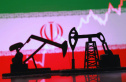
The vote comes against the backdrop of a rapidly escalating regional war that has included strikes on Iranian energy facilities, reported disruptions around the Strait of Hormuz, and retaliatory attacks across Gulf states. The strategic waterway is especially significant, as it carries roughly a fifth of global oil trade, making it highly sensitive to any military escalation. Recent reporting has shown that even partial disruptions or heightened risk perceptions have been enough to push oil prices sharply higher, feeding global inflation concerns and energy market volatility.
Within this context, the poll results reflect a strong emphasis among readers on economic consequences rather than military or political outcomes.
It threatens global energy security and will raise fuel prices
The overwhelming majority of respondents, 262 votes, selected the view that the conflict threatens global energy security and will lead to higher fuel prices. This aligns with broader market concerns about instability in key oil and gas corridors and the potential for sustained price pressure if the conflict continues to escalate.
A further 33 respondents said the war is unjustifiable and should not have happened. Meanwhile, 19 participants believed military action was justified to prevent greater threats, and 14 saw a risk of further regional destabilization.
Only 8 respondents supported prioritizing diplomatic solutions over military action, while no participants selected the options suggesting the conflict would not have a direct impact or expressing uncertainty.
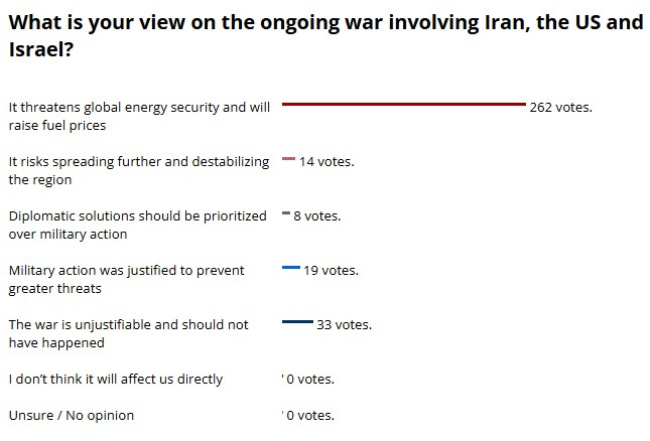
The results highlight a dominant perception among readers that the war’s most immediate consequence is economic, particularly through its potential impact on global energy markets and fuel prices, rather than limited regional military effects.


 @Wikimedia Commons