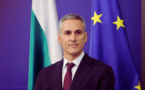
Marin Raykov, Acting Deputy Foreign Minister
Marin Raykov, Acting Deputy Foreign Minister, described the agreement between Bulgaria and Ukraine as a political document rather than a binding international arrangement, noting that it was adopted by the Council of Ministers in 2024.
Speaking in an interview on BNT, he stated that the text does not include any concrete obligations, financial figures, or material commitments. According to him, it primarily reflects Bulgaria’s political backing for Ukraine and aligns with the position of European partners, with no deviation from the EU consensus on the conflict and a clear understanding of who is the aggressor and who is the victim.
Further reading: What Bulgaria and Ukraine Actually Signed in Kyiv
Raykov also addressed the issue of a diplomatic note sent by Iran, stressing that Bulgaria’s Foreign Ministry does not normally publish such correspondence unless it directly relates to war, peace, or places the country within an active conflict framework. He underlined that Bulgaria is not a participant in the conflict and that NATO is not engaged in warfare, describing allied aircraft stationed at Vasil Levski airport as part of NATO’s forward deployment. He added, with a note of irony, that receiving a diplomatic note is not a reason for Bulgaria to reconsider its NATO membership. He also cautioned against using such communication in the domestic pre-election environment for speculation or fear-driven narratives, confirming that Bulgaria’s diplomatic stance toward Iran remains unchanged and well known in Tehran.
Further reading: Bulgaria's Acting PM Signed the Right Agreement at the Wrong Time for All the Wrong Reasons
Commenting further on Iran, Raykov said Bulgaria views several aspects of the country’s policies as problematic, including its nuclear program, ballistic missile development, and military actions in the region, which he described as unacceptable.
He also referenced positions expressed by Acting Foreign Minister Nadezhda Neynski during a videoconference focused on efforts to secure access through the Strait of Hormuz.
Turning to relations with North Macedonia, Raykov reacted to statements by Prime Minister Hristijan Mickovski suggesting that constitutional changes and guarantees for the rights of Bulgarians would not be implemented for decades. He argued that such positions reflect an unwillingness to move forward with EU accession requirements.
According to him, some political actors in Skopje are diverting responsibility and delaying progress by engaging Brussels while blaming Bulgaria and the EU. He insisted that the issue should not be framed as a bilateral dispute, but rather as a matter between North Macedonia and the European Union linked to unmet obligations.